
1. Understanding BIM Beyond 3D
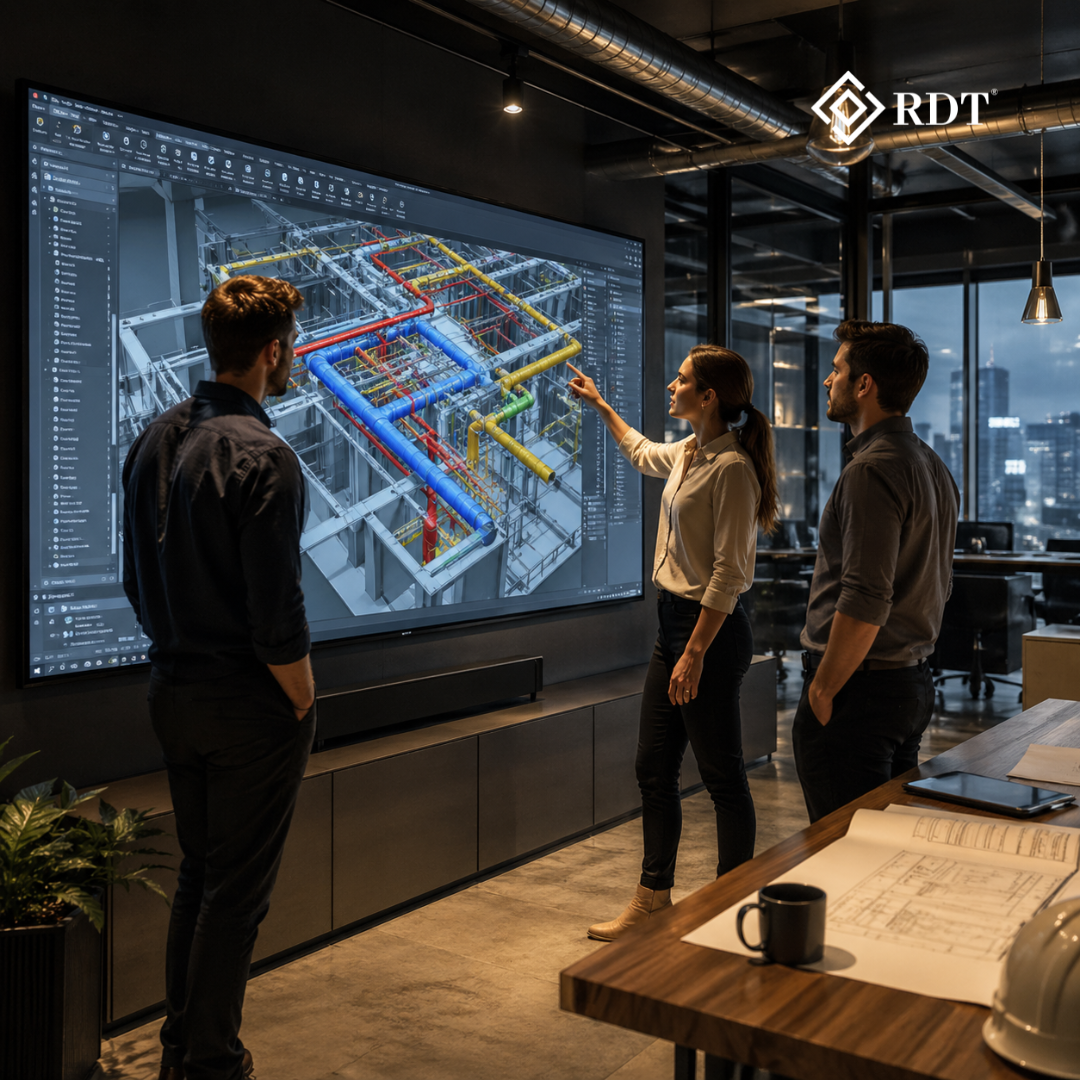
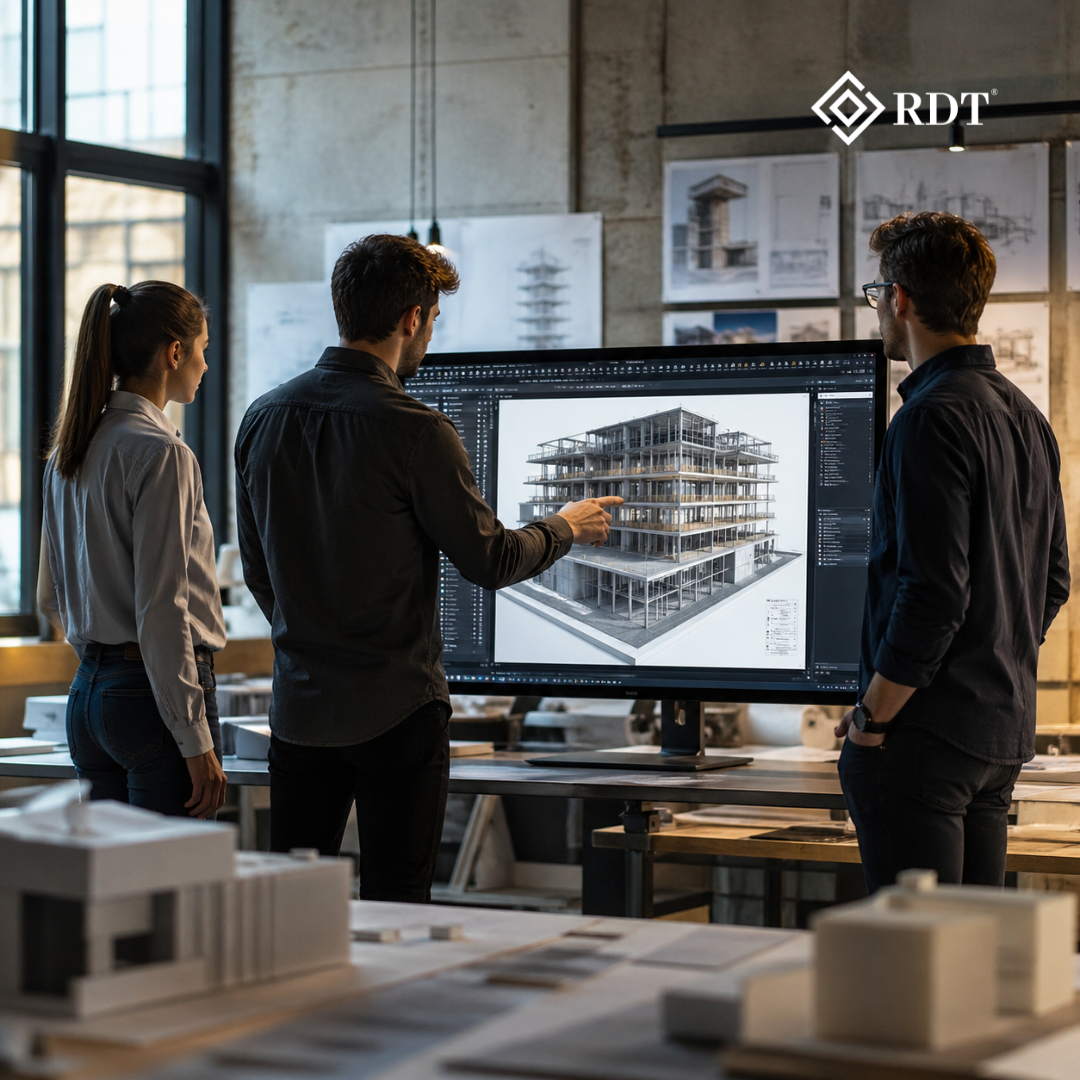
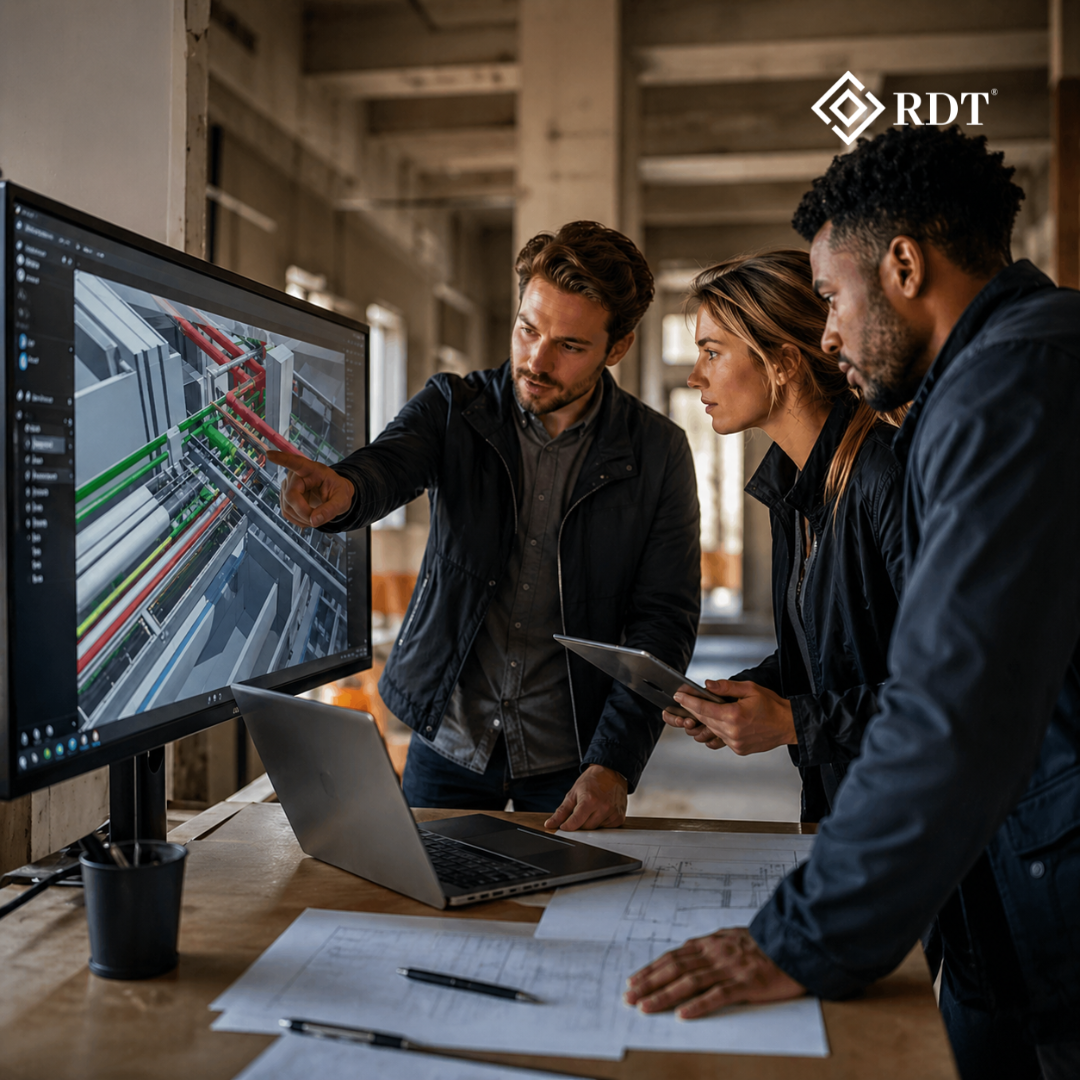
When we discuss advanced construction, one of the most famous terms that usually comes up is BIM, which stands for Building Information Modeling. At its most fundamental level, BIM is the procedure of making and handling digital versions of buildings & infrastructure projects. Commonly, architects & engineers utilized 2D drawings on paper to plan construction. Later, 3D models became the regular, as they permitted everybody to actually see how a project would look in actual life previously it was built. But the story does not finish with 3D. BIM has developed far beyond simple 3-dimensional visualization. It has miscellaneous layers, which are normally referred to as dimensions—4D, 5D, 6D, & 7D. All of these proportions include new layers of details & intelligence to the virtual model which changes it from a basic design into a solid decision-making tool.
To put it easily, think of Building Information Modeling (BIM) like a smartphone. Initially, a phone could just make calls (like 2D drawings). Then entered smartphones with touchscreens & applications (like 3D modeling). But over time, phones became even more vigorous with the internet, GPS, cameras, payments, and many more. Likewise, BIM has developed into something that does much more as compared to shapes & designs. The dimensions of BIM—4D, 5D, 6D, & 7D—assist architects, engineers, & project owners understand time, cost, sustainability, & facility administration in ways that were not achievable earlier. These additional dimensions make construction plans intelligent, quicker, and more effective. For anyone beyond the construction industry, it’s simplest to think of these BIM proportions as diverse “upgrades” that enable effective planning & wiser implementation of projects.
The actual value of these additional proportions is not merely for engineers or architects—it is for everybody involved, from building managers to clients. Each extra “D” in Building Information Modeling provides the project team the capability to see challenges previously, save money, improve schedules, & make decisions that minimize waste & enhance sustainability. Rather than being merely a digital drawing, Building Information Modeling (BIM) becomes a real-time digital twin of the project, able to forecast, evaluate, & support decisions during the whole lifecycle of a building. Let’s now look at what 4D, 5D, 6D, & 7D in BIM actually mean and why they matter.
2. What is 4D BIM? (Time & Scheduling)
When a construction project is planned in 3D, you can view the walls, floors, windows, & entire design. But construction is not merely around how something looks—it’s also about when things will be constructed. That’s where 4D BIM enters. The 4th dimension in BIM adds the component of time to the model. In easier words, 4D BIM enables project teams to link each component of the building plan with a construction schedule. Instead of viewing a static 3D model, crews can now view how the project will be built progressively, like a movie timeline.
For instance, if you are building a hospital, 4D BIM can reveal how the groundwork will be positioned in January, the walls elevated in February, & the roof installed in March. This sequencing assists construction squads plan assets, workforce, & substances more efficiently. It also assists in detecting potential conflicts—like 2 teams requiring the similar space at the same time—before they actually occur on-site. For clients, this grade of imagination is extraordinarily precious. They can see how longer the project will take, either the deadlines are lifelike, and where postpones might happen.
Imagine it as Google Maps for construction. Similar to how maps show not merely the route but additionally the approximate time to arrive at your destination, 4D BIM displays not merely the design but also the timeframe of implementation. This diminishes chaos, skips revision, and keeps projects on path. For architects, 4D BIM is an exceptional method to announce project schedules through clients & contractors. For project owners, it acts like a game plan that visually displays how construction unfolds, guaranteeing improved coordination & smarter planning.
3. What is 5D BIM? (Cost & Budgeting)
While 4D BIM links the design with time, 5D BIM adds an additional crucial component: cost. This means that each element in the 3D model—either a wall, window, pipe, or floor—can be connected to its real cost of material, labor, & installation. As an outcome, project teams can make real-time cost evaluations directly from the digital model. Rather than functioning with rough budget numbers in spreadsheets, 5D BIM enables decision-makers to view how design changes instantly affect costs.
For example, let’s say an architect transforms the design of the flooring from tiles to wooden panels. With 5D BIM, the system immediately recalculates the price of the project based on the new substantial option, comprising labor, installation, & long-term upkeep if data is accessible. This type of real-time economic insight forms budgeting much more precisely & transparently. Clients understand this because they can see precisely where their money is moving, while project teams can ignore surprises & overflows.
In practical words, 5D BIM assists answer the questions: “How much will this project cost?” and “What will happen to the budget if we make this alteration?” It gives managers & clients peace of mind, and it assists architects make wiser decisions when balancing design creativity with economic responsibility. For individuals outside the industry, you can assume a 5D BIM similar to an online shopping cart. When you include or eliminate an item, the entire expense shifts immediately. Likewise, with 5D BIM, when something is included or altered in the design, the entire cost is revised automatically, giving everybody real-time budget transparency.
4. What is 6D BIM? (Eco-friendly and energy-saving)
Nowadays, sustainability is not a choice—it’s a requirement. Buildings swallow a vast amount of energy & resources, so designing with sustainability in mind has become a first priority. This is where 6D BIM enters. The sixth proportion in BIM is all regarding sustainability, energy evaluation, & life-cycle performance of the building. It enables architects & engineers to simulate how a building will perform eventually in terms of energy intake, ecological impact, & operational effectiveness.
For example, 6D BIM can examine how well natural daylight registers in a building, how much energy an AC will swallow, or how well various insulation substances will minimize heating expenses. These foresights enable project squads to choose eco-friendly substances, refine building tours, & design systems that swallow diminished energy & diminish carbon footprints. For clients & building owners, this indicates long-term savings on energy bills & compliance with green building principles such as LEED or BREEAM.
Consider 6D BIM like a fitness tracker for your building. Exactly as a tracker commands you how many calories you burned, how properly you slept, or how energetic you were, 6D BIM tells you how effectively a building will execute once it’s engaged. It assists architects present environmentally friendly designs to clients with proof, not just pledges. At a time when sustainability is becoming a universal focus, 6D BIM authorizes project teams to plan buildings that are both beautiful as well as ecologically liable.
5. What is 7D BIM? (Facility Administration & Operations)
Once a building is planned, built, & delivered, its actual journey starts—the stage of operation & upkeep. This is where 7D BIM plays a crucial part. The 7th proportion adds the component of facility administration to the BIM model. This means that the digital model does not stop being beneficial after construction—it remains to act as an active reference for building owners & facility administrators during the building’s lifespan.
For example, suppose you are handling a huge office complex. Rather than turning through paper manuals or searching for records, the facility supervisor can open the BIM model and immediately pinpoint where a particular AC unit is positioned, when it was last repaired, and what segments may require alternatives. This saves time, diminishes downtime, and enhances building performance. Likewise, the model can offer details about assurances, supplier information, & upkeep schedules, all in the same place.
For a non-industry audience, think about 7D BIM as a digital well-being record for a building. Just as doctors utilize your medical record to give you superior treatment, facility owners utilize the BIM model to sustain and enhance building performance over years. It guarantees that managers get the highest ROI while expanding the life of the building.
And this is where companies like RDT Technology (www.rdttech.co) enter the scene. At RDT, we differentiate in providing BIM solutions that go beyond just design—we enable architects, engineers, & construction experts with tools such as 4D, 5D, 6D, & 7D BIM to plan intelligently, minimize costs, enhance sustainability, and handle buildings better. Our goal is simple: to link the gap between what is & what can be. Whether you are planning a domestic project, a hospital, or a huge official complex, RDT Technology can assist you turn complicated visions into effective, sustainable, & evolutionary realities.