In today’s architecture engineering and construction landscape, visualization has become one of the most powerful tools for communication. High quality renders, immersive walkthroughs, and cinematic presentations have transformed how projects are sold, approved, and understood. Clients no longer rely solely on drawings and technical explanations. They expect to see the future before it is built.
At first glance, this shift feels like progress. Better visuals create better understanding. Better understanding leads to faster decisions. Faster decisions move projects forward.
But beneath this polished surface lies a growing problem that many in the industry are beginning to feel but not openly discuss.
Visualization is starting to mislead.
Not because it is wrong, but because it is incomplete. Because it prioritizes perception over reality. Because it sells certainty where uncertainty still exists.
And that is where the trap begins.
When Beauty Becomes Authority
A powerful render does more than show a design. It creates belief.
When clients see a perfectly lit space with flawless materials and ideal conditions, they do not just understand the design. They emotionally connect with it. They begin to trust it. They assume that what they are seeing is not just possible, but inevitable.
This is where visualization starts to carry unintended authority.
The problem is that renders are often built to impress, not to inform. They highlight the best angles, the cleanest lines, and the most appealing finishes. They remove imperfections. They ignore construction constraints. They present an idealized version of the project.
Once this image is accepted, it becomes the reference point for every future decision.
Any deviation from it feels like a compromise.
Even when that deviation is necessary for the project to be built correctly.
The Gap Between Visual Promise and Physical Reality
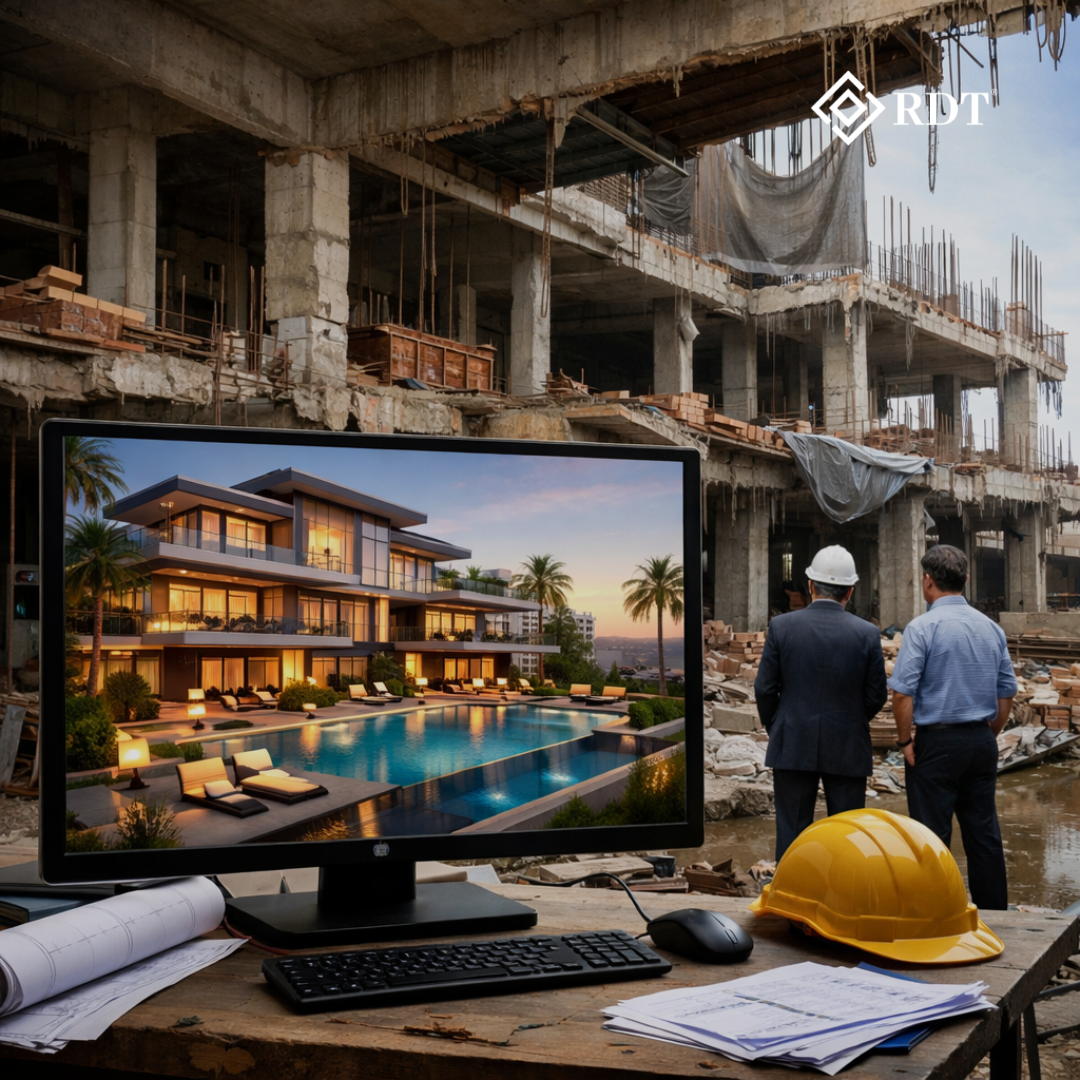
A render exists in a controlled digital environment. Lighting is perfect. Materials behave exactly as intended. Space is uninterrupted. Every element is placed with precision.
Construction does not work this way.
On site conditions introduce variability. Materials have tolerances. Installation requires adjustments. Services compete for space. Unexpected challenges appear.
When the visual promise created by a render does not account for these realities, a gap forms between expectation and execution.
This gap is where problems begin.
Clients question why the built result does not match the image they approved. Teams struggle to explain constraints that were never communicated visually. Changes become conflicts instead of informed decisions.
The render did its job in securing approval.
But it failed in preparing the project for reality.
The Speed of Yes and the Cost of Regret
Visualization has accelerated decision making in the AEC industry. Clients can review designs quickly and provide approvals with confidence. Meetings become shorter. Feedback becomes simpler.
This speed is often celebrated as efficiency.
But fast decisions are not always good decisions.
When clients say yes based on visual appeal rather than technical understanding, they may overlook critical aspects such as constructability, cost implications, and long term performance.
A material may look stunning in a render but be difficult to source or maintain. A design feature may appear simple but require complex installation. A spatial arrangement may feel open but ignore essential service requirements.
These issues do not surface during visualization reviews.
They surface later.
And by then, reversing decisions becomes expensive.
The project moves forward on a foundation of assumptions rather than clarity.
When Teams Start Designing for the Image
One of the most subtle but impactful consequences of the visualization trap is how it influences design behavior.
Teams begin to design for the render rather than for the building.
Angles are chosen based on visual impact rather than functional logic. Elements are emphasized because they look good rather than because they perform well. Details are refined in areas that will be seen while others receive less attention.
Over time, the priorities shift.
The goal becomes creating a compelling image instead of a constructible solution.
This does not happen intentionally. It happens gradually as visualization becomes a central part of client engagement and project approval.
The danger is that the image starts driving the design instead of supporting it.
And when that happens, the project loses balance.
The Missing Layer of Truth
What most visualizations fail to communicate is limitation.
They do not show what cannot be done. They do not highlight risks. They do not reveal dependencies between systems. They do not explain sequencing challenges or installation constraints.
They show the result without the process.
This creates a one sided understanding of the project.
Stakeholders see what they will get, but not what it will take to get there.
Without this context, decisions are made in isolation. Aesthetic choices are approved without considering their impact on structure, services, or cost. Design changes are accepted without understanding their ripple effects.
The visualization becomes a story with a perfect ending but no visible journey.
And in construction, the journey is everything.
The Role of Trust and Misinterpretation
Visualization builds trust quickly. It gives clients confidence that the team understands their vision and can deliver it.
But this trust can be fragile if it is based on incomplete information.
When the final outcome differs from the initial visualization, even for valid reasons, clients may feel misled. They may question the credibility of the team. They may lose confidence in the process.
This is not just a communication issue. It is a risk to relationships.
The intention behind the render was to clarify.
The result was misinterpretation.
And once trust is affected, it is difficult to rebuild.
Breaking Free from the Visualization Trap
The solution is not to reduce visualization. It is to use it more responsibly.
Visualization should be treated as a communication tool, not a decision making shortcut. It should inform, not persuade. It should clarify possibilities while acknowledging limitations.
This requires a shift in how visual content is created and presented.
Renders should be grounded in realistic conditions. Materials should reflect actual availability and performance. Spatial layouts should consider service integration and construction constraints.
More importantly, visualization should be paired with explanation.
Clients should understand what they are seeing and what they are not seeing. They should be guided through the assumptions behind the image. They should be made aware of areas that may change during construction.
This does not reduce confidence.
It builds informed confidence.
Integrating Visualization with Reality
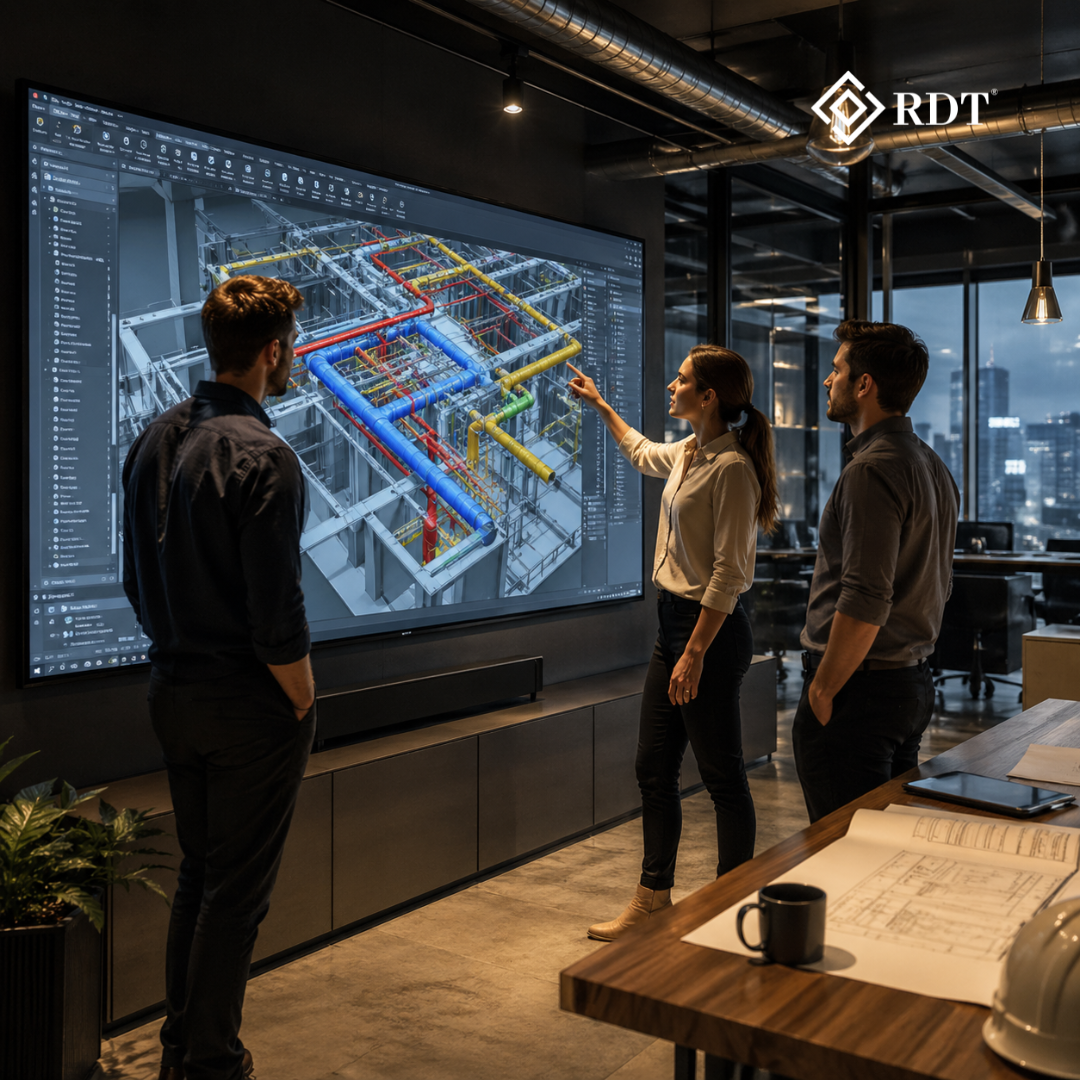
To truly unlock the value of visualization, it must be integrated with technical workflows rather than separated from them.
When visualization is connected to accurate models, coordinated data, and real world constraints, it becomes more than an image. It becomes a reliable representation of the project.
This integration ensures that what is shown aligns with what can be built.
It reduces the gap between expectation and execution.
It transforms visualization from a sales tool into a strategic asset.
A More Honest Way Forward
The AEC industry is evolving. Clients are more informed. Projects are more complex. Expectations are higher.
In this environment, honesty becomes a competitive advantage.
Teams that present realistic visualizations, communicate limitations clearly, and align design with construction realities will stand out.
They may not always produce the most dramatic images.
But they will deliver the most reliable outcomes.
And in the long run, that matters more.
Final Thought
A stunning render can win approval in minutes.
But if it hides complexity, ignores constraints, and creates false expectations, it can cost months in delays, rework, and frustration.
The real power of visualization is not in how good it looks.
It is in how truthfully it represents what will be built.
Because in construction, reality always wins.
The only question is whether your visualization prepared you for it.
If you want visualization that goes beyond surface level beauty and actually supports smarter construction decisions, it is time to rethink your approach.
RDT Technology helps AEC firms create visualization backed by real data, real coordination, and real world feasibility. Partner with RDT Technology to ensure what you present is not just impressive, but buildable, reliable, and aligned with reality.