
Introduction: Technology Remodeling the Built World
Architecture & construction have always been industries of conversion. From ancient culture designing temples to current urban centers shaping skylines, every era has pushed the limits of innovation & engineering. Yet, the speed of transformation has never been quicker than it is today. Technological invention has changed the way buildings are invented, designed, built, & operated.
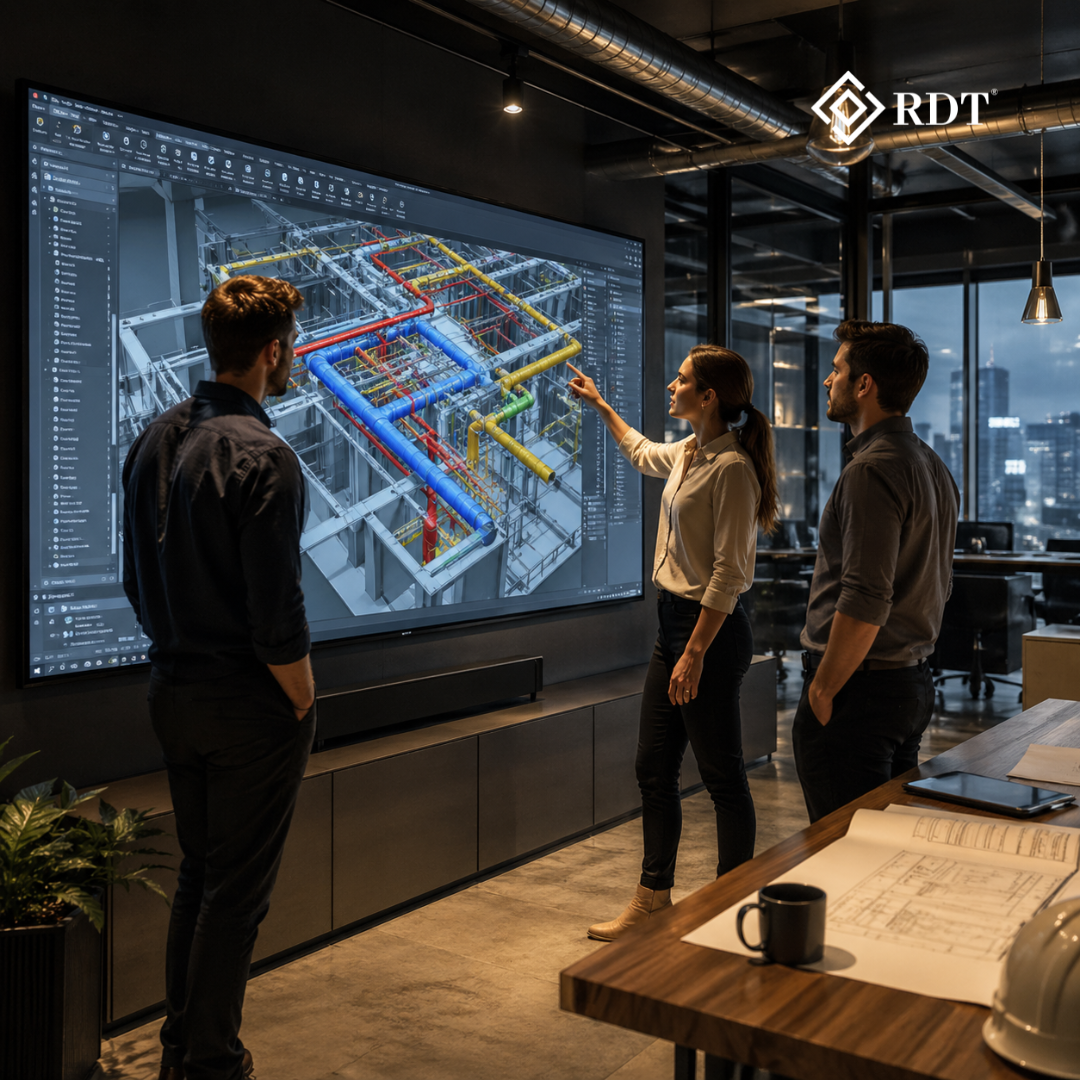
At the front line of this revolution are visualization techniques, expanded & virtual reality (AR/VR), & point cloud modeling. These inventions are not merely gradual enhancements, but they also show a major change in how professionals collaborate, how clients take a decision, and how projects progress from vision to reality.
Rather than depending entirely on drawings or 2D representations, stakeholders can now step into deeply engaging virtual environments, overlay digital designs on real-world sites, or capture current conditions with millimeter accuracy. The outcome is a construction ecosystem that is wiser, quicker, more sustainable, & more harmonious.
In this blog, we will examine how these 3 pillars—visualization, AR/VR, & point cloud modeling—are forming advanced architecture & construction, their role throughout the project lifecycle, and their potential to change the future of the built environment.
Visualization: Revolving Ideas into Captivating Realities
Visualization has always been primary to architecture. It is the bridge between imagination & reality, an approach for architects to disclose ideas and for clients to see the invisible. But the meaning of visualization has developed dramatically with technology.
From Sketches to Data-packed Models
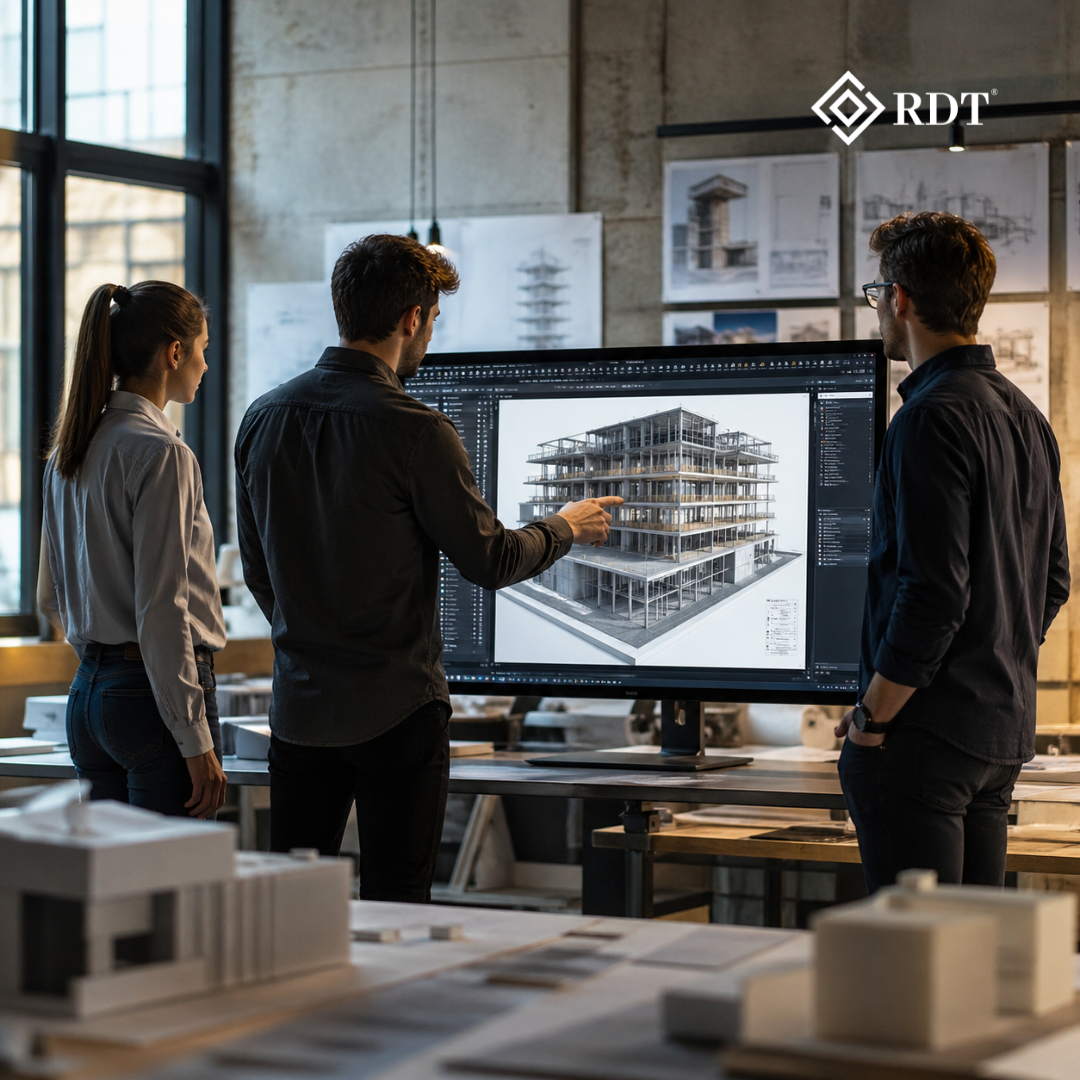
For ages, visualization meant hand written material, sketches, blueprints, & scale models. Although these methods had artistic value, they overlooked accuracy and usually left room for misunderstanding. The rise of CAD (Computer-Aided Design) & later BIM (Building Information Modeling) started a modern age—one where designs were not only digital but also data packed. BIM models implant structural, mechanical, & material information directly within 3D environments which enables accurate planning & teamwork.
Photorealistic Rendering
Today’s rendering engines are competent at generating images so realistic they are commonly indistinguishable from photographs. These photorealistic offers simulate organic light, shadows, textures, & materials which permits stakeholders to notice precisely how a finalized space will look. Clients can imagine a lobby with marble floors, understand the atmosphere of a restaurant during sunset, or evaluate the aesthetics of a glass surface.
Animations & Interactional Walkthroughs
Motionless images are no longer enough. Interactive 3D walkthroughs & animations let clients discover designs vigorously. They can “walk” through a hotel lobby, discover various apartment layouts, or look at outdoor spaces from several points of view. Such experiences lessen guesswork and guarantee smarter decisions.
The Power of Communication
Visualization bridges the knowledge gap between specialists & non-specialists. While engineers can read technical drawings, most clients can not. Imagination liberalizes design which ensures every stakeholder has the same knowledge of the project vision. It speeds up approvals, minimizes revisions, & builds confidence.
In today’s world, visualization is not an add-on—it is a decision-making atomic power plant that drives transparency, alignment, & trust throughout all stakeholders.

AR & VR: Immersive Tools Changing Design & Construction
If imagination is about seeing, AR & VR are about experiencing. They place stakeholders directly inside designs which enables them to engage with projects before they exist.
Virtual Reality (VR): Stepping Inside Designs
VR immerses users in completely digital environments through headsets. This allows clients, architects, & engineers to experience designs at individual scale long before construction starts.
Major benefits of VR include:
- Immersive design reviews: Stakeholders can discover spaces at 1:1 scale.
- Error identification: Layout faults, low visibility, or ergonomic issues are caught early.
- Scenario trial: Users can pretend lighting, finishes, or furniture preparations immediately.
For example, in hospital design, VR allows doctors to test the placement of equipment & evaluate workflows within operating theaters which guarantees effectiveness & patient security.
Augmented Reality (AR): Coating Digital on Physical
Unlike VR’s fully digital world, AR mixes digital models with the real world using smartphones, tablets, or AR glasses.
Applications of AR include:
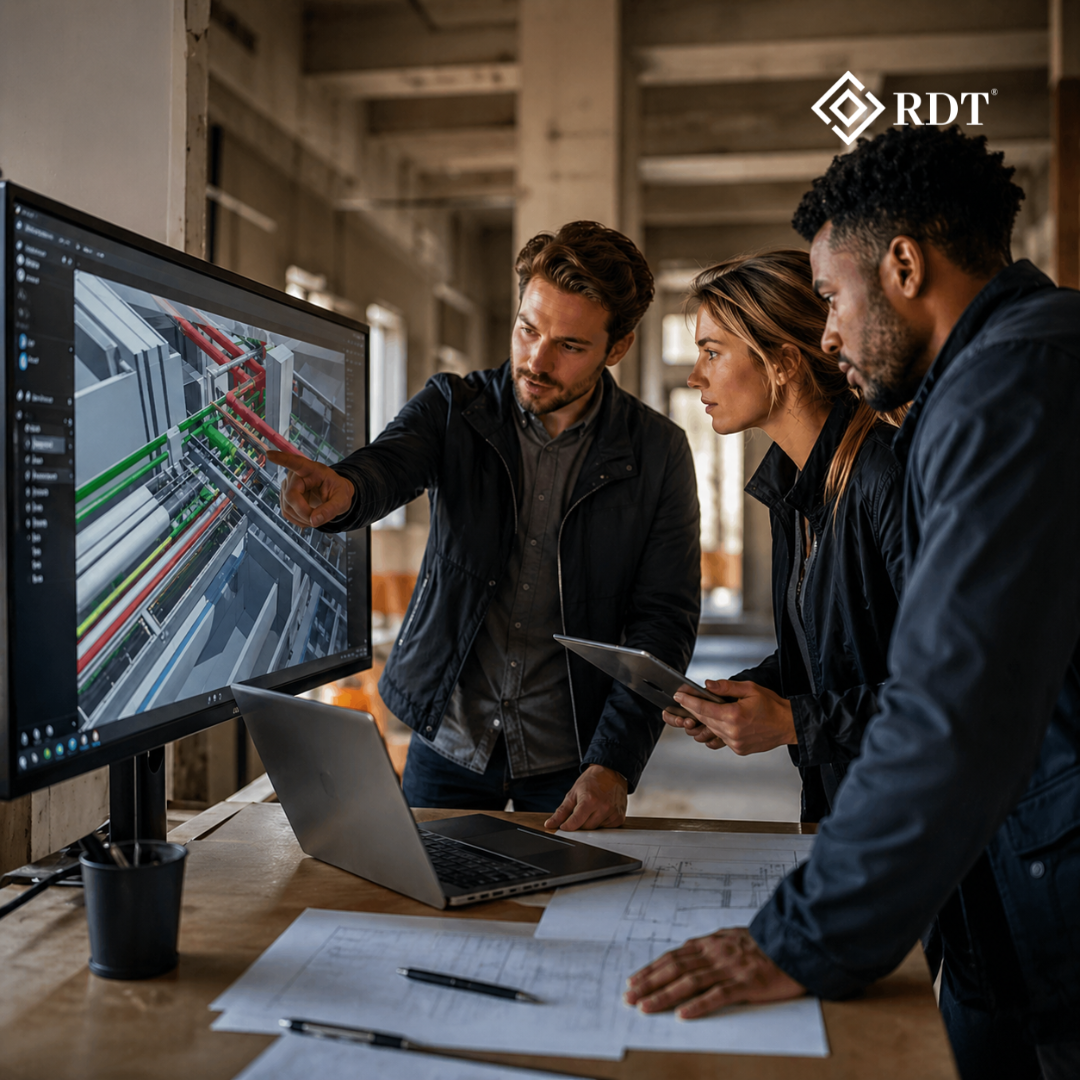
- Coating BIM models on active construction sites to guarantee precise fitting.
- Offering workers with real-time direction & orders.
- Finding conflicts between planned designs & real-world conditions.
Suppose a contractor standing on-site and surveying where ducts, pipes, or walls should be placed with the help of an AR device. This diminishes expensive mistakes and improves confidence in implementation.
Beyond Design: Training & Safety
AR & VR also transform training & security. Workers can practice dangerous tasks in practical environments before entering real construction sites. Security protocols can be simulated, and workers can be trained to manage severe scenarios.
For clients, immersive VR presentations build excitement & faith which guarantees that what they see is precisely what they will get.
Simultaneously, AR & VR change architecture & construction into interactional, experiential, & accurate procedures that diminish risks & maximize value.
Point Cloud Modeling: Accuracy Through Reality Capture
While visualization & AR/VR focus on experience, point cloud modeling concentrates on precision. It is the basis for guaranteeing that digital designs coordinate accurately with physical reality.
What is Point Cloud Modeling?
Point cloud modeling utilizes laser scanners or photogrammetry to take millions of 3D data points. Each point has accurate coordinates (X, Y, Z), which forms a digital replica of physical buildings or environments. These models are highly precise, often within millimeters which makes them precious for design, construction, & operations.
Applications in Architecture & Construction
- Refurbishment & Retrofits: Scans of present buildings guarantee designs coordinate with present circumstances.
- Heritage Preservation: Historical sites can be digitally conserved and recovered precisely.
- Construction Validation: Comparing point clouds with Building information models discloses deviations between design & actual build.
- As-Built Documentation: Precise digital records help long-term facility administration.
Example in Action
Consider changing an ancient industrial warehouse into an advanced office space. Conventional surveys might miss consistency, but point cloud scans uncover uneven floors, asymmetrical walls, or hidden utilities. Designers can adapt plans consequently which prevents surprises & expensive rework.
Point cloud modeling is significantly the digital truth which ensures every design decision is informed by the real-world environment.
Lifecycle Advantages: Technology Across Every Stage
The actual power of visualization, AR/VR, & point cloud modeling lies in how they improve the whole project lifecycle.
1. Conceptual Design
Visualization tools enable architects to present creative concepts with clarity. Point cloud data ensures feasibility by aligning new ideas with existing site conditions.
2. Design Development
VR helps clients test layouts, ergonomics, and aesthetics. AR reveals potential clashes early by overlaying models on-site. Point clouds provide precise base models for coordination.
3. Construction Phase
AR devices guide contractors in real time, ensuring installations match digital plans. VR training prepares workers for complex procedures. Point clouds validate progress and identify deviations before they escalate into costly issues.
4. Handover and Commissioning
Digital twins created from point cloud data offer clients accurate as-built models. These models serve as precious resources for facility owners.
5. Operations & Facility Administration
Point cloud-based digital twins & AR interfaces assist predictive maintenance, fast upgrades, & improved energy performance. Imagination united with IoT data assists managers in tracking & handling buildings effectively.
During these stages, the outcome is similar: minimized costs, diminished risks, accelerated time frames, & enhanced sustainability.

Integration with Artificial intelligence, IoT, & Digital Twins
Visualization, AR/VR, & point cloud modeling are useful today, but their future relies on integration with comprehensive digital ecosystems.
- Artificial intelligence + Visualization: AI algorithms will create improved designs, find risks automatically, & simulate energy performance.
- IoT + AR/VR: Real-time sensor data united with AR/VR will enable operators to track building performance in deeply engaging environments.
- Point Clouds + Digital Twins: Constant scans will upgrade digital twins, making living replicas of buildings for predictive upkeep & lifecycle enhancement.
- Mainstream Adoption: As AR glasses, VR headsets, & scanning technologies become more economical, these tools will become standard on each and every project site.
The convergence of these technologies will build a future where each and every building is born digital, built digital, & administered as a living digital asset.
Sum Up: Building Smarter, Quicker, & Superior
The role of visualization, AR/VR, & point cloud modeling in architecture & construction is revolutionary.
- Visualization brings precision, assurance, & involvement to design.
- AR & VR offer immersive, interactional experiences that diminish risks & enhance precision.
- Point cloud modeling grabs the physical world with accuracy which guarantees alignment between design & reality.
Simultaneously, these technologies change each and every phase of the project lifecycle, from idea to operations. They are not advanced luxuries but crucial tools for providing wiser, safer, & more sustained projects.
The firms that accept these inventions today will dominate tomorrow’s construction industry, building not just structures but smart, strong environments that stand the test of time.
Call to Action
At RDT Technology, we particularize in providing top notch solutions in Building information modeling (BIM), visualization, AR/VR, & point cloud modeling. Our expertise helps architects, engineers, & contractors to simplify operations, minimize risks, & accomplish perfection in design & construction. Whether you are planning modern developments, upgrading old structures, or looking for modern digital tools for project consignment, we can assist you in transforming vision into reality.
👉 Explore how RDT Technology can upgrade your projects—visit www.rdttech.co today.