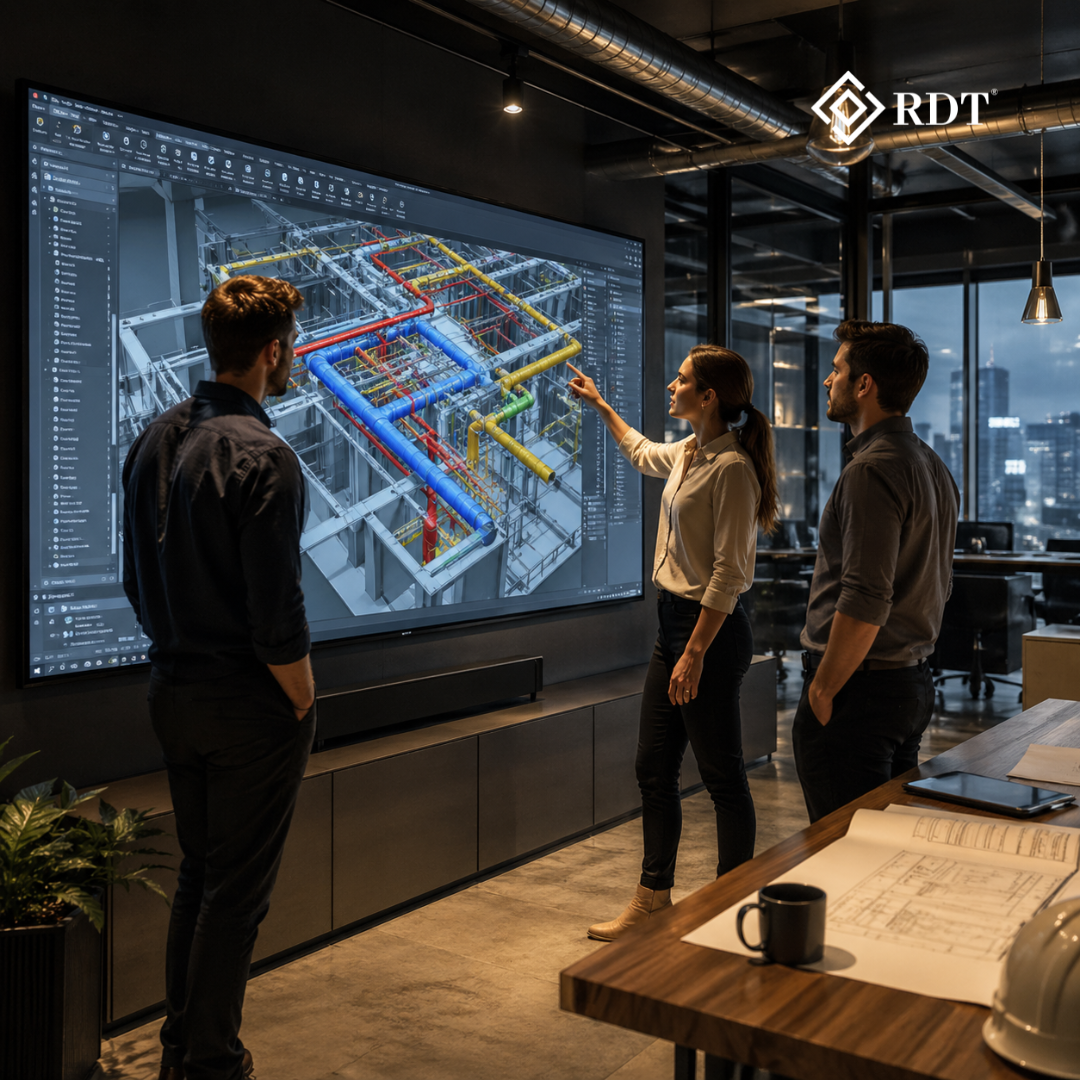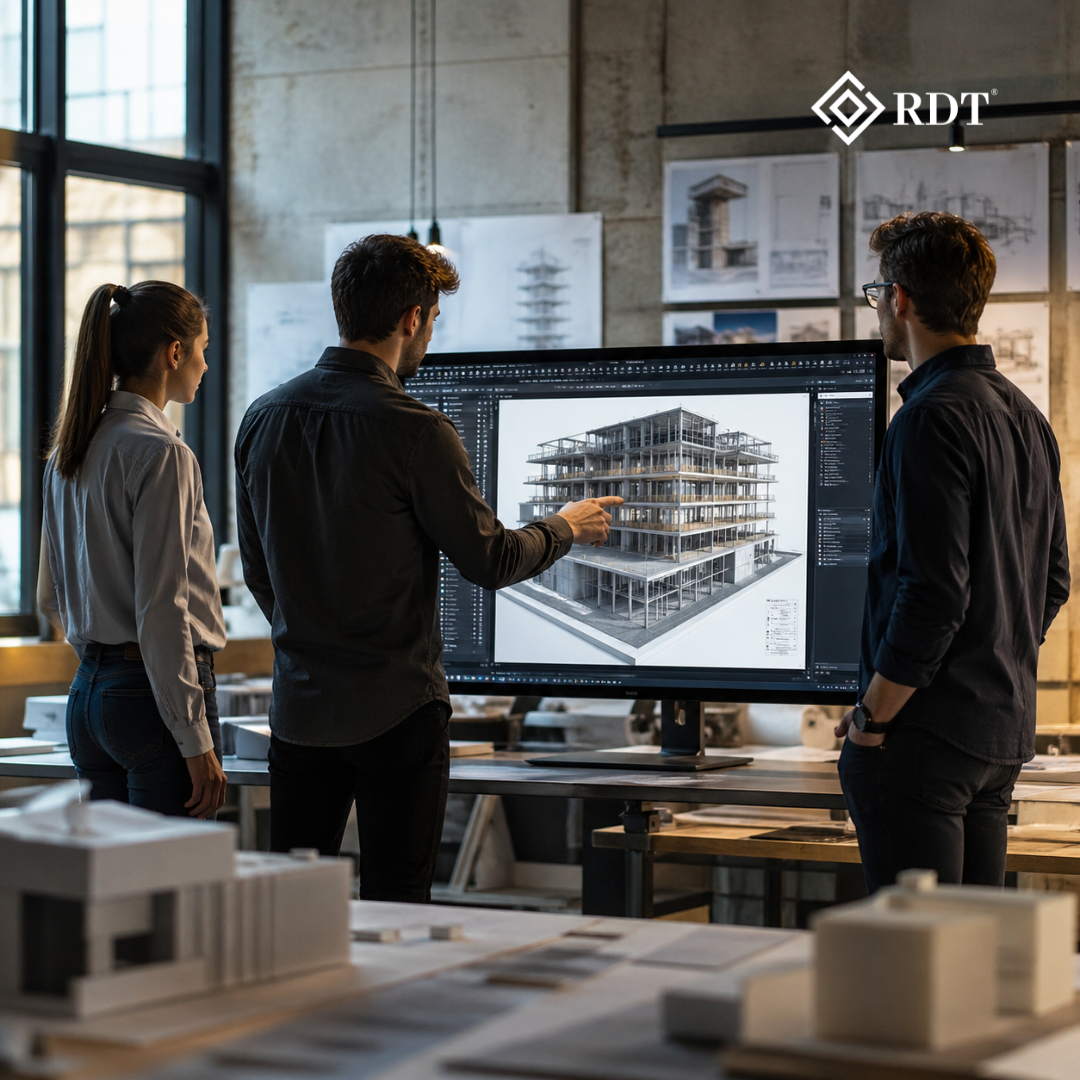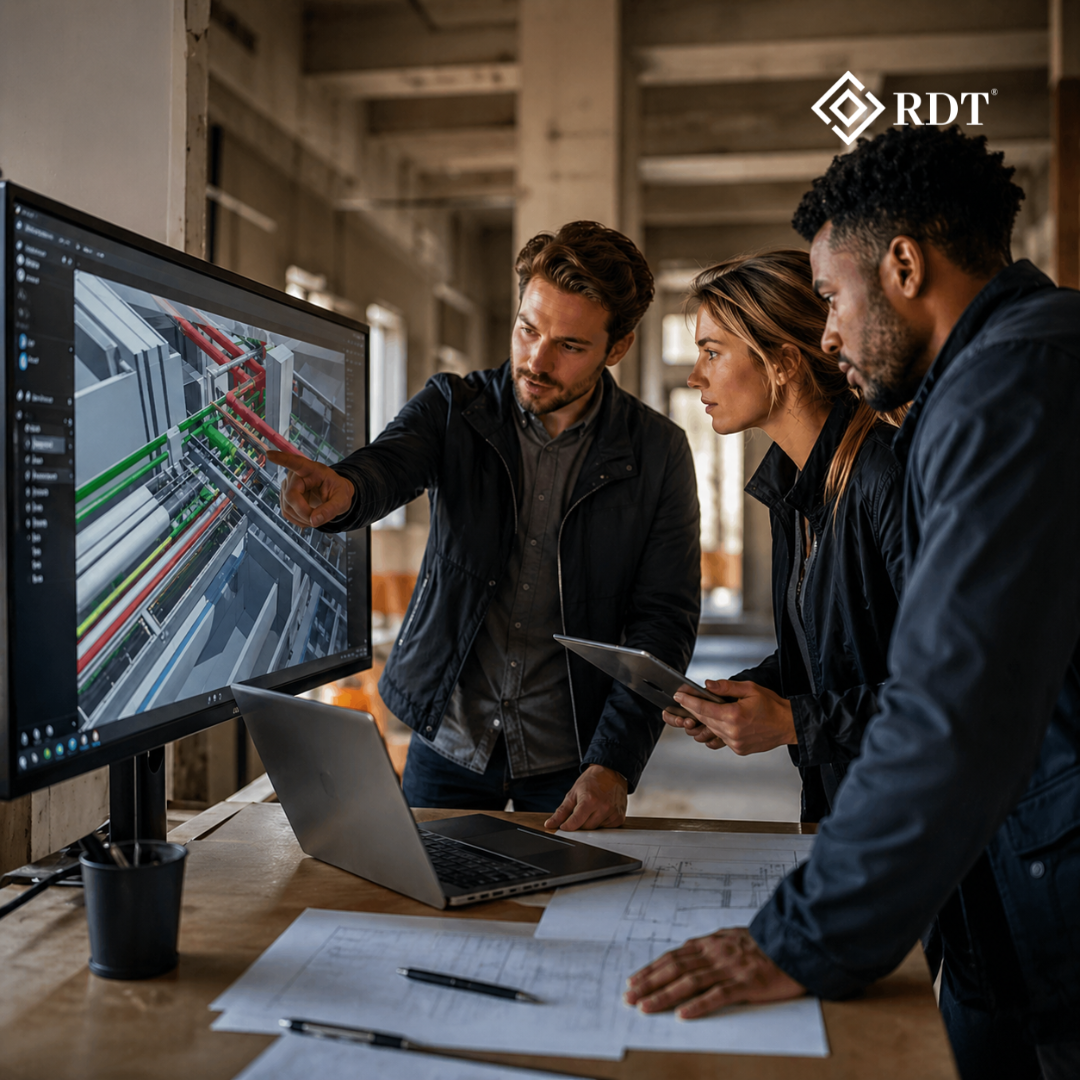
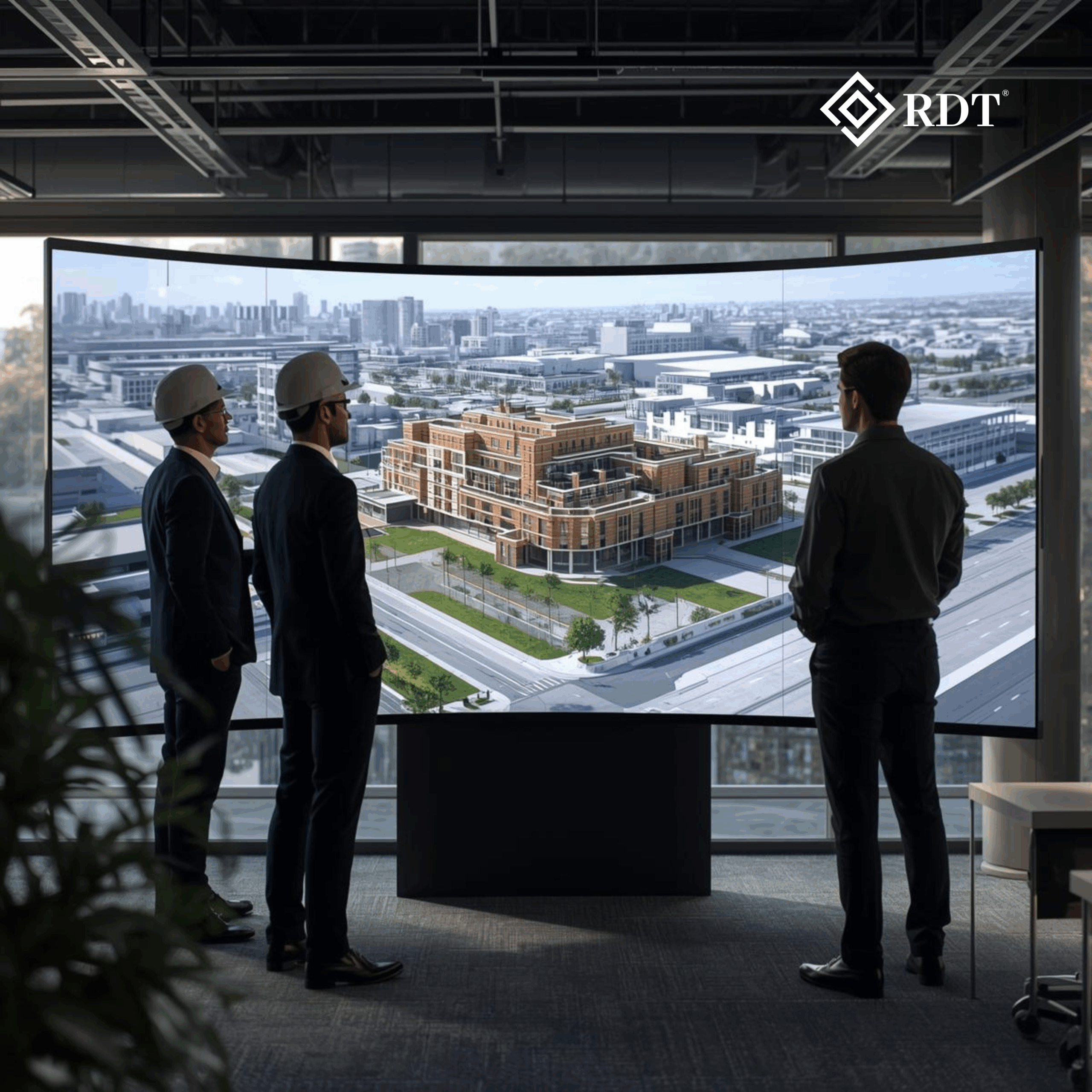
The Architecture, Engineering and Construction industry has always relied on drawings, technical models and detailed documentation to communicate design intent. For decades, blueprints, CAD drawings and static 3D renders have been the primary tools used to explain projects to clients and stakeholders. While these tools are essential, they often fail to communicate the true experience of a space.
Today, real time rendering is changing that reality.
Real time rendering allows architects, engineers and designers to visualize projects instantly and interactively. Instead of waiting hours or days for rendered images, teams can explore a model in real time, adjust materials, lighting, geometry and design elements instantly and present immersive experiences to clients. This shift is transforming how AEC professionals design, collaborate and make decisions.
This blog explores how real time rendering is redefining design workflows, visualization standards and client decision making in the AEC industry.
Understanding Real Time Rendering in AEC
Real time rendering refers to the process of generating high quality visuals instantly as the user navigates a digital model. Unlike traditional offline rendering, which requires significant computing time to produce images or animations, real time rendering uses powerful engines such as Unreal Engine, Unity and Twinmotion to deliver immediate visual feedback.
In the AEC context, this means architects and engineers can walk through a building, adjust materials, simulate daylight and explore design options live during meetings. The technology brings designs to life in a way that static drawings and images never could.
Redefining the Design Process
Design in AEC has historically followed a linear process. Architects create drawings, engineers refine them, and visualization teams produce renders at the end of the workflow. Real time rendering changes this sequence by integrating visualization into every stage of design.
With real time tools, designers can test ideas instantly. They can experiment with façade materials, lighting conditions, furniture layouts and landscaping without waiting for separate rendering cycles. This accelerates creativity and encourages design exploration.
Real time rendering also supports iterative design. Teams can present multiple options in a single session and receive immediate feedback. Instead of revising designs based on assumptions, decisions are guided by visual clarity.
Transforming Visualization Standards
Visualization in AEC is no longer limited to photorealistic still images and pre rendered animations. Real time rendering enables immersive experiences such as virtual walkthroughs, interactive presentations and virtual reality simulations.
Clients can navigate spaces before construction begins. They can experience room proportions, lighting quality and spatial flow on a real scale. This level of immersion builds confidence and reduces uncertainty.
Real time visualization also enhances marketing and stakeholder presentations. Developers and architects can showcase projects interactively at exhibitions, sales offices and investor meetings. This creates a strong emotional connection with the design and improves project approval rates.
Enhancing Collaboration Across Teams
AEC projects involve multidisciplinary teams including architects, engineers, contractors and clients. Communication gaps often lead to misunderstandings, rework and cost overruns.
Real time rendering acts as a shared visual language. All stakeholders can view and interact with the same model, reducing ambiguity. Engineers can verify constructability, designers can refine aesthetics and clients can provide informed feedback.
Cloud based real time platforms allow teams across different locations to collaborate simultaneously. This is particularly valuable for global projects where teams are distributed across regions and time zones.
Improving Client Understanding and Trust
Clients often struggle to interpret technical drawings and BIM models. Even high quality static renders may not fully convey how a space will feel.
Real time rendering changes how clients perceive projects. When clients can walk through a digital model, they understand the design intuitively. They can see how sunlight enters rooms, how materials reflect light and how spaces connect.
This visual clarity builds trust. Clients feel more confident approving designs because they can experience the project before it is built. This reduces design revisions and accelerates approvals.
Supporting Faster Decision Making
Decision making in AEC can be slow due to uncertainty and lack of clarity. Real time rendering provides immediate visual feedback, allowing stakeholders to make decisions during meetings.
For example, a client can choose between material options instantly. An architect can adjust lighting scenarios in real time. An engineer can demonstrate how structural elements integrate with the design.
This real time interaction shortens feedback loops and reduces project delays. Decisions that previously took weeks can now be made in minutes.
Reducing Risk and Cost
Design errors and misunderstandings are major contributors to cost overruns in construction projects. Real time rendering helps identify issues early by visualizing designs in detail.
Clash detection and spatial conflicts become easier to identify when teams can navigate the model interactively. Designers can evaluate constructability and maintenance considerations visually.
By resolving issues during the design phase, firms reduce rework, change orders and on site errors. This leads to significant cost savings and improved project outcomes.
Integrating with BIM and Digital Twins
Real time rendering integrates seamlessly with Building Information Modeling workflows. BIM models can be imported into real time engines to create interactive environments.
This integration supports digital twin applications where a live model reflects real world data. Facility managers can visualize building performance, maintenance schedules and occupancy patterns in real time.
The convergence of BIM and real time rendering is pushing the AEC industry toward smarter and more data driven project delivery.
Elevating Marketing and Sales Strategies
Real time rendering is becoming a powerful tool for real estate marketing and sales. Developers use interactive models to showcase properties before construction begins.
Prospective buyers can explore apartments, offices and retail spaces virtually. They can customize finishes, layouts and furnishings in real time. This personalized experience increases engagement and conversion rates.
Sales teams can use real time visualization in showrooms and online platforms to create immersive presentations that differentiate their projects in competitive markets.
Enabling Virtual Reality and Augmented Reality
Real time rendering is the foundation for virtual reality and augmented reality applications in AEC. Virtual reality allows users to experience projects in full immersion, while augmented reality overlays digital information onto physical environments.
Architects and engineers use VR to review designs, conduct design reviews and train teams. Clients use VR to experience spaces before construction. Contractors use AR to visualize models on site and guide construction.
These technologies enhance understanding, reduce errors and improve collaboration throughout the project lifecycle.
Changing the Role of Visualization Professionals
The rise of real time rendering is reshaping the role of visualization teams. Instead of producing static images at the end of a project, visualization professionals are becoming integral to the design process.
They collaborate with architects and engineers from early stages, creating interactive models and immersive experiences. This shift increases the strategic value of visualization in AEC firms.
Visualization specialists now require skills in game engines, scripting and interactive design, expanding the scope of their profession.
Challenges and Adoption Barriers
While real time rendering offers significant benefits, adoption comes with challenges. High performance hardware and software are required to achieve high quality real time visuals.
Training teams to use real time tools effectively requires time and investment. Integrating real time workflows with existing BIM and CAD processes can also be complex.
However, as technology becomes more accessible and cloud based solutions evolve, these barriers are gradually decreasing. Many firms are already recognizing the return on investment through improved efficiency and client satisfaction.
The Future of Real Time Rendering in AEC
The future of AEC is increasingly digital, immersive and data driven. Real time rendering will play a central role in this transformation.
Advancements in hardware, cloud computing and artificial intelligence will further enhance real time capabilities. Photorealistic quality, real time ray tracing and AI driven optimization will become standard.
Real time environments will integrate with project management systems, IoT sensors and smart city platforms, enabling comprehensive digital twins of buildings and infrastructure.
As clients become more accustomed to immersive experiences in other industries, their expectations in AEC will continue to rise. Firms that adopt real time rendering will gain a competitive advantage in design quality, communication and project delivery.
Conclusion
Real time rendering is not just a visualization tool. It is a transformative technology that is redefining how AEC projects are designed, communicated and approved. By enabling interactive design exploration, immersive visualization and real time collaboration, it bridges the gap between technical complexity and human understanding.
AEC firms that embrace real time rendering can improve design quality, reduce risk, accelerate decision making and build stronger relationships with clients. As the industry moves toward digital transformation, real time rendering will become an essential component of modern project workflows.
If you want to elevate your AEC projects with immersive real time visualization and cutting edge digital design workflows, partner with RDT Technology. Our experts deliver world class BIM, visualization and real time rendering solutions that help you communicate designs clearly, accelerate approvals and optimize project outcomes. Take advantage of RDT Technology to transform how your clients see, understand and trust your designs.