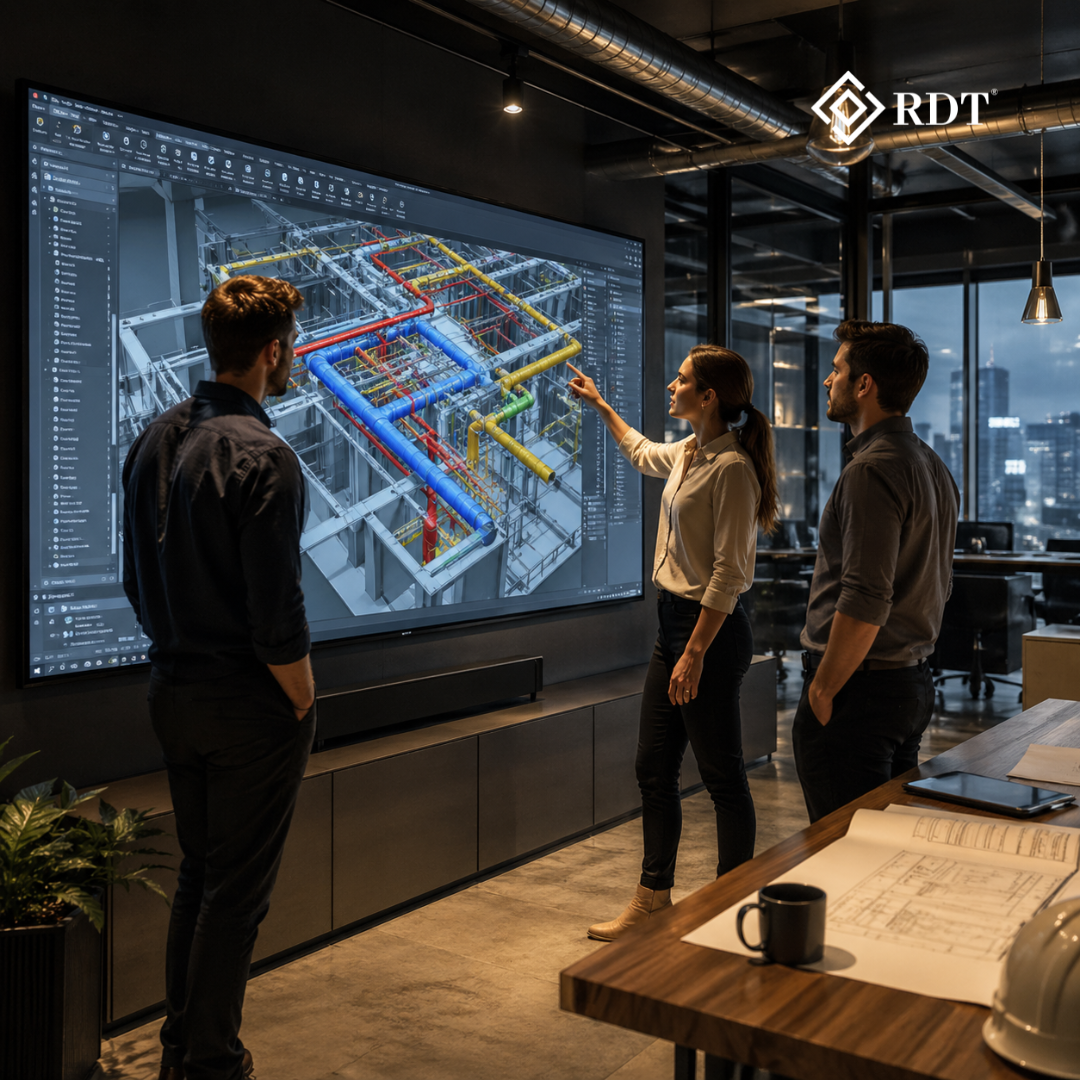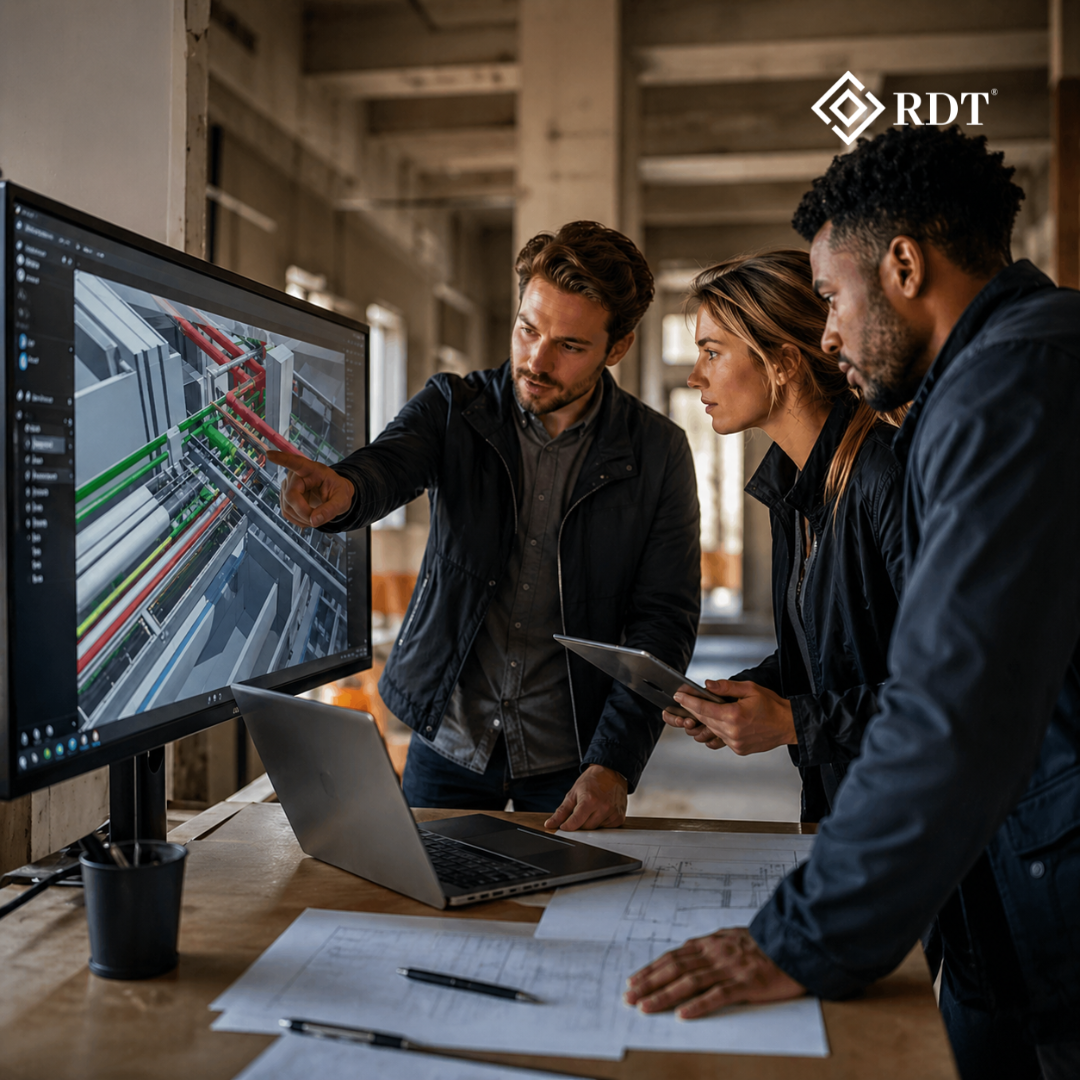

In today’s fast paced construction landscape, understanding the Power of Clash Detection in Modern Construction is no longer optional for AEC leaders. It has become a critical factor in protecting project budgets, timelines, and overall execution quality. With projects becoming increasingly complex and tightly scheduled, even a single unresolved conflict between systems can trigger a chain reaction of delays and financial losses. The ability to identify and resolve these conflicts early is what separates profitable projects from those that spiral out of control.
The Hidden Cost of Undetected Clashes
Clashes in construction are not always obvious during the design stage. They often remain buried within drawings and only surface when work begins on site. At that point, the cost of fixing them increases dramatically.
A duct running through a beam, a pipe interfering with a cable tray, or insufficient clearance for maintenance access can halt progress instantly. Workers are forced to stop, redesign decisions are made under pressure, and materials may need to be reworked or replaced.
These interruptions are not minor inconveniences. They directly impact labor productivity, material usage, and project schedules. Over time, these small disruptions accumulate into significant financial losses.
Clash Detection as a Preventive Strategy
Clash detection is not just a technical process. It is a preventive strategy that allows teams to identify conflicts before construction begins.
By analyzing coordinated models, project teams can visualize how different systems interact within the building. This enables them to spot potential issues early and make informed decisions before any physical work starts.
The real value lies in prevention. Fixing a clash in the design stage is far more efficient than resolving it on site. It saves time, reduces costs, and eliminates unnecessary stress for the project team.
Moving from Reactive to Proactive Execution
Traditional construction workflows often rely on reactive problem solving. Issues are addressed only after they arise on site. This approach leads to delays, confusion, and increased costs.
Clash detection shifts the approach from reactive to proactive. Instead of waiting for problems to occur, teams anticipate and resolve them in advance.
This proactive mindset brings greater control to the project. It allows leaders to plan with confidence and execute with precision.
Enhancing Coordination Across Disciplines
Modern construction involves multiple disciplines working simultaneously. Mechanical, electrical, plumbing, structural, and architectural teams must all align their work within limited space.
Without proper coordination, conflicts are inevitable. Clash detection acts as a bridge between these disciplines. It brings all systems together into a unified environment where conflicts can be identified and resolved collaboratively.
This level of coordination improves communication and ensures that all teams are working towards a common goal.
Improving Project Timelines
Time is one of the most valuable resources in construction. Delays can have a ripple effect, impacting every aspect of the project.
Clash detection helps maintain timelines by eliminating unexpected disruptions. When conflicts are resolved early, construction activities can proceed without interruption.
This leads to smoother workflows, better resource utilization, and more predictable project schedules.
Reducing Rework and Material Waste
Rework is one of the biggest contributors to cost overruns in construction. It often results from poor coordination and unresolved clashes.
When clashes are detected and resolved in advance, the need for rework is significantly reduced. Materials are used more efficiently, and waste is minimized.
This not only saves money but also contributes to more sustainable construction practices.
Strengthening Decision Making
Clash detection provides valuable insights that support better decision making. By visualizing potential conflicts, project teams can evaluate different solutions and choose the most effective one.
This clarity allows leaders to make informed decisions rather than relying on assumptions. It also reduces the risk of errors and improves overall project quality.
Building Confidence on Site
One of the biggest challenges in construction is uncertainty. When teams are unsure about design accuracy, it affects their confidence and productivity.
Clash free models create a sense of reliability. Workers can trust that the information they are working with is accurate and coordinated.
This confidence translates into better performance on site and smoother execution.
Aligning Design with Real World Execution
Designs often look perfect on paper but face challenges during construction. Clash detection helps bridge the gap between design intent and real world execution.
By simulating how systems will fit within the building, teams can ensure that designs are practical and achievable. This alignment reduces the risk of surprises during construction.
It also improves collaboration between design and construction teams.
Creating a Competitive Advantage
In a highly competitive industry, efficiency and reliability are key differentiators. Companies that implement strong clash detection processes gain a clear advantage.
They deliver projects faster, reduce costs, and maintain higher quality standards. This builds trust with clients and enhances their reputation in the market.
Over time, this competitive edge leads to more opportunities and long term growth.
The Role of Leadership in Effective Clash Detection
Technology alone cannot guarantee successful clash detection. Leadership plays a crucial role in ensuring that the process is implemented effectively.
AEC leaders must prioritize coordination, establish clear workflows, and encourage collaboration across teams. They must also ensure that clash detection is integrated into the project lifecycle rather than treated as a one time activity.
Strong leadership creates a culture where issues are addressed proactively and continuously.
Conclusion
Clash detection is no longer just a technical step in the design process. It is a powerful tool that drives project success. By identifying and resolving conflicts early, it protects budgets, maintains timelines, and improves overall quality.
The projects that succeed today are those that embrace proactive strategies and invest in proper coordination. The difference between profit and loss often comes down to how well clashes are managed.
Understanding and applying the real power of clash detection can transform the way construction projects are delivered.
If you are ready to eliminate costly clashes and take full control of your project execution, it is time to work with a team that delivers precision and reliability.
At RDT Technology, we support AEC firms as a dedicated backend partner, helping you detect, resolve, and manage clashes with accuracy and efficiency. Let us help you reduce rework, save costs, and deliver projects with complete confidence.