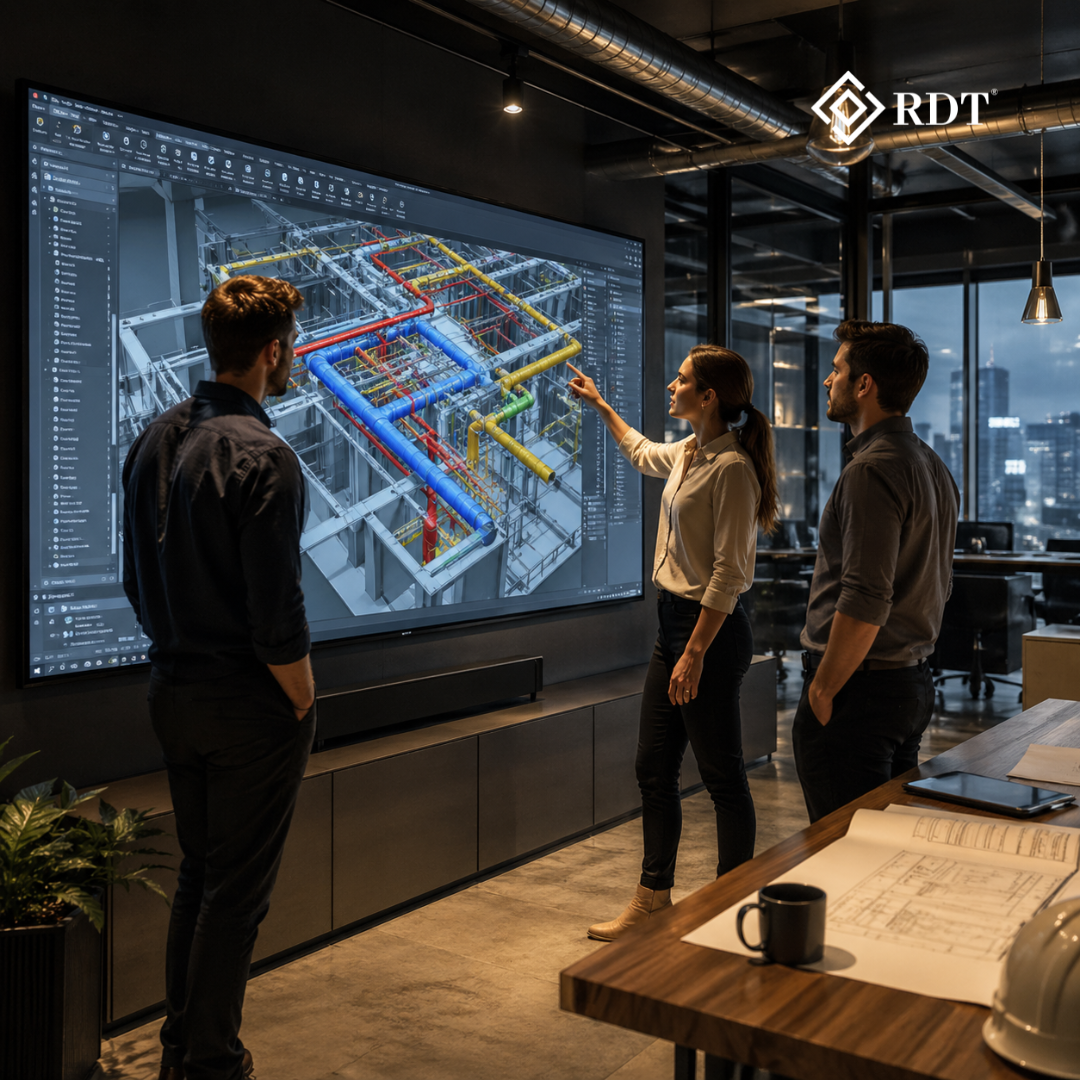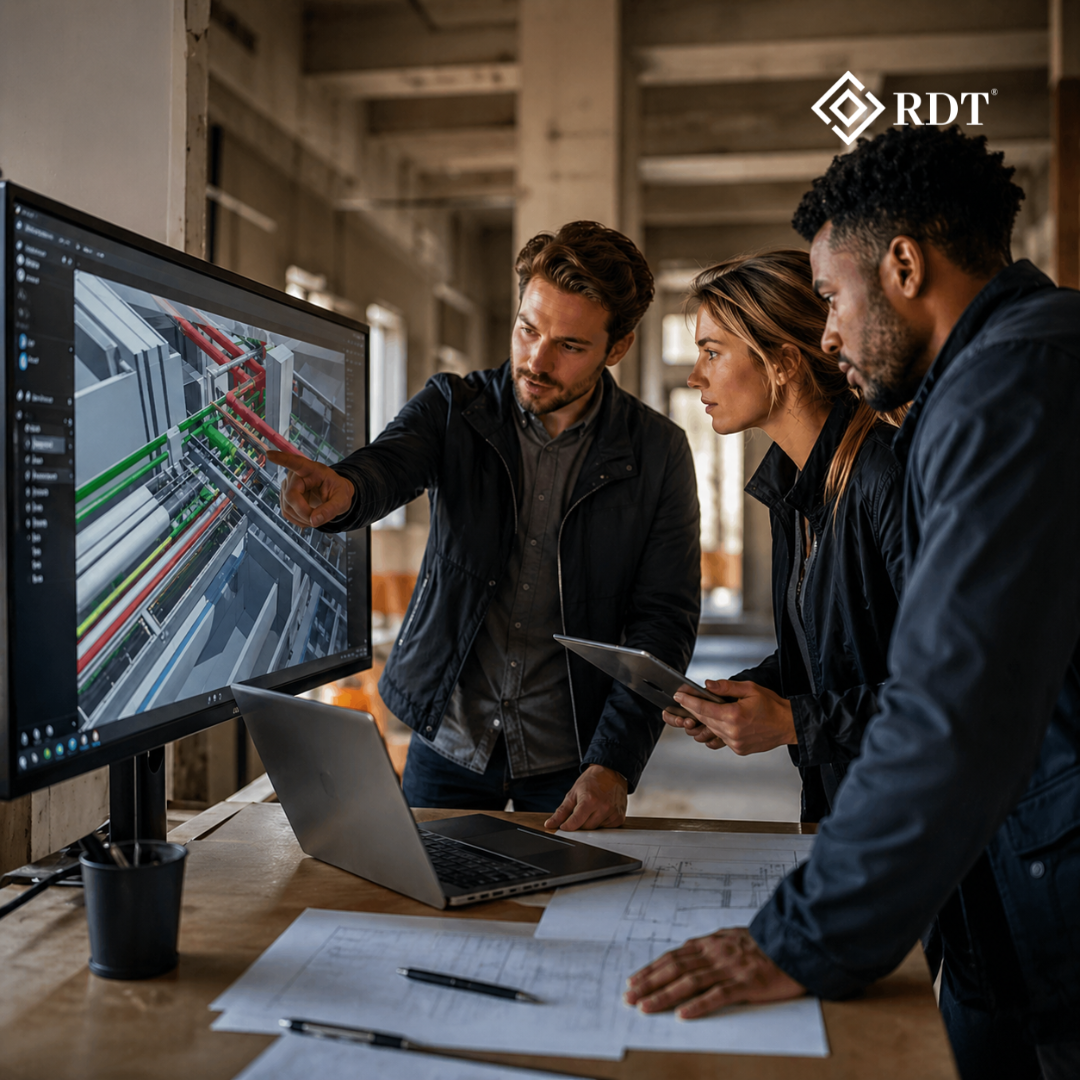
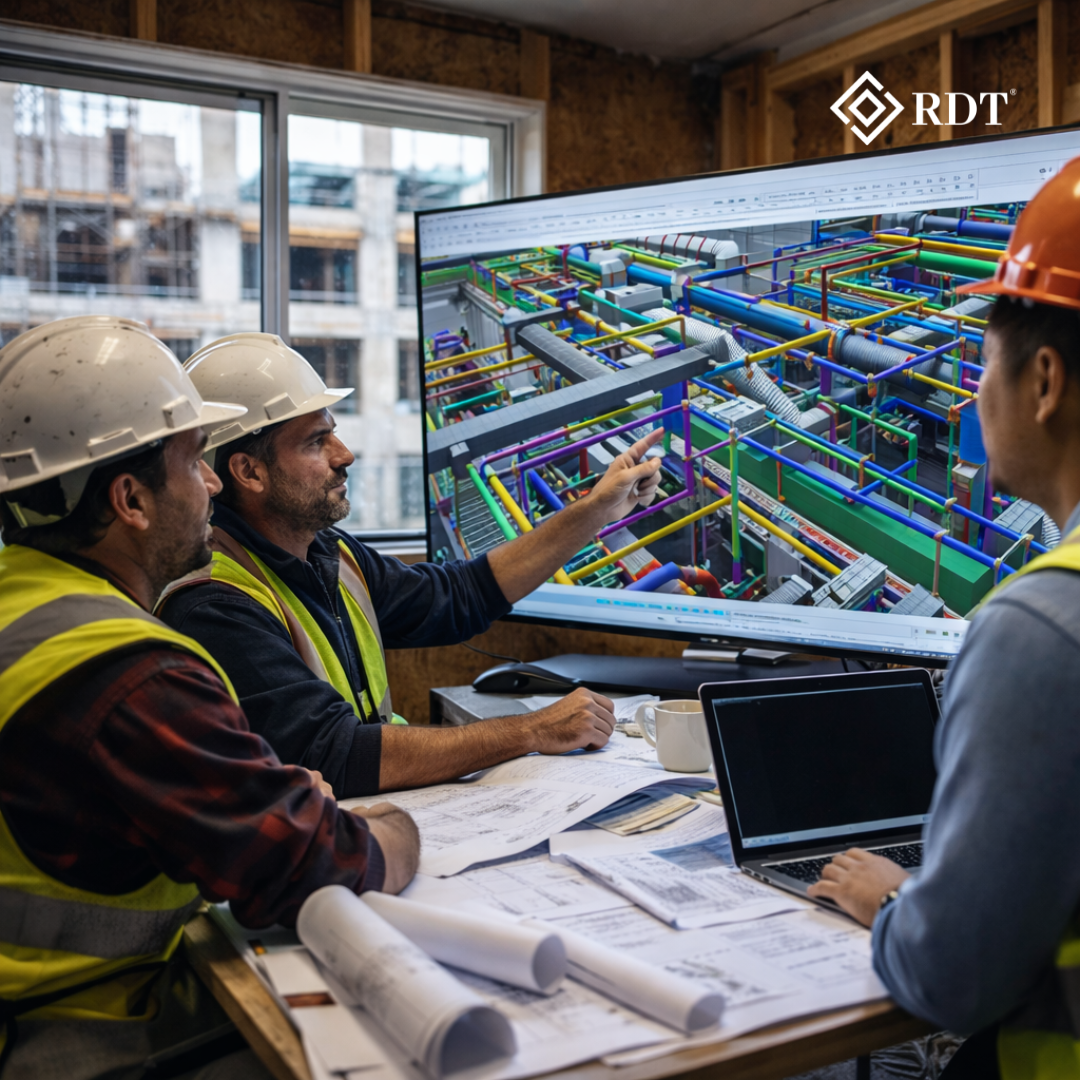
The success of any modern construction project depends heavily on how well different building systems work together. Electrical conduits, mechanical ducting, plumbing lines, and fire protection systems must coexist within limited space without interfering with structural and architectural elements. This is where the real challenge begins. The MEP Coordination Secrets that top performing teams rely on are not just about software or tools. They are rooted in discipline, process, and a clear commitment to precision before construction even begins.
Clashes do not appear randomly on site. They are almost always the result of poor planning, incomplete coordination, or rushed documentation. When teams fail to resolve these issues in the preconstruction stage, the consequences show up during execution in the form of delays, rework, and rising costs. The difference between average teams and high performing teams lies in how early and how effectively they address these risks.
Why MEP Coordination Is the Backbone of Modern Construction
Every building today is more complex than ever. Mechanical systems are more advanced, electrical layouts are denser, and plumbing networks are more integrated. All these systems must fit within tight spatial constraints while meeting performance and safety standards.
Without proper coordination, these systems compete for space instead of working together. A duct may pass through a beam, a cable tray may collide with a sprinkler line, or maintenance access may be blocked by another service. These are not small issues. They directly impact constructability and long term building performance.
MEP coordination ensures that every component has its defined space and function. It creates a structured approach where conflicts are identified and resolved before they reach the construction site.
The Real Cost of Ignoring Coordination
Clashes that are not resolved in the design stage become expensive problems on site. Fixing a coordination issue after installation has begun requires dismantling work, modifying systems, and sometimes redesigning entire sections.
This leads to material wastage, increased labor costs, and delays that affect the entire project schedule. It also puts pressure on teams who are forced to make quick decisions under tight timelines. These rushed fixes often compromise quality and increase the risk of future maintenance issues.
Top teams understand that every unresolved clash is a potential cost waiting to happen. They invest time upfront to eliminate these risks rather than dealing with them later.
Early Coordination Is Non Negotiable
One of the most important principles followed by high performing teams is starting coordination early. Waiting until construction begins to address clashes is a recipe for failure.
Coordination should begin as soon as initial design models are available. At this stage, even basic alignment between disciplines can prevent major conflicts later. As the design develops, coordination becomes more detailed and precise.
Early coordination allows teams to explore multiple solutions, evaluate feasibility, and make informed decisions. It also ensures that all stakeholders are aligned before moving forward.
The Power of Detailed BIM Models
Building Information Modeling has transformed how coordination is carried out. Instead of relying on separate drawings, teams can work with integrated models that represent all building systems in a shared environment.
These models provide a clear visual representation of how different elements interact. They allow teams to identify clashes, test solutions, and validate designs before construction begins.
However, the effectiveness of BIM depends on the quality of the models. Incomplete or inaccurate models can lead to false confidence and missed issues. Top teams focus on developing models with the right level of detail and accuracy.
They ensure that every component is modeled correctly and aligned with project requirements. This attention to detail is what makes BIM a powerful tool for coordination.
Clash Detection Is Only the Beginning
Many teams believe that running clash detection is enough. In reality, it is just the starting point. Identifying clashes is important, but resolving them effectively is what truly matters.
Top teams follow a structured approach to clash resolution. They prioritize clashes based on impact, involve relevant stakeholders, and document decisions clearly. Each resolution is validated to ensure that it does not create new conflicts.
This process requires strong communication and collaboration. It is not just about fixing issues but about finding the best possible solution for the project as a whole.
Standardization Brings Consistency
Consistency is a key factor in successful coordination. When different teams follow different standards, it creates confusion and increases the risk of errors.
Top teams establish clear standards for modeling, naming conventions, and documentation. These standards ensure that all models and drawings are aligned and easy to understand.
Standardization also improves efficiency. Teams can work faster when they follow a consistent structure. It reduces the need for rework and simplifies coordination across disciplines.
Communication Drives Coordination
Technology alone cannot solve coordination challenges. Effective communication is equally important. Teams must share information openly and collaborate closely throughout the project.
Regular coordination meetings play a crucial role in this process. They provide a platform to review clashes, discuss solutions, and align on next steps. These meetings ensure that everyone is on the same page and working towards common goals.
Clear communication also helps in managing expectations. When all stakeholders understand the coordination process, it becomes easier to achieve consensus and move forward efficiently.
Managing Space with Precision
One of the biggest challenges in MEP coordination is managing space. Every system requires adequate clearance for installation, operation, and maintenance.
Top teams carefully plan the placement of each component to optimize space usage. They consider factors such as access requirements, future maintenance, and system performance.
This level of planning ensures that systems are not only coordinated but also practical and efficient. It reduces the risk of issues during installation and operation.
Continuous Review and Improvement
Coordination is not a one time activity. It is an ongoing process that continues throughout the project lifecycle. As designs evolve, new challenges may arise that require attention.
Top teams continuously review and update their models and documentation. They track changes, validate updates, and ensure that coordination remains intact.
This proactive approach helps in maintaining accuracy and preventing issues from slipping through the cracks.
The Role of Skilled Teams
Behind every successful coordination effort is a skilled team. Tools and processes are important, but they are only as effective as the people using them.
Top teams invest in training and development to build expertise in BIM and coordination. They understand the importance of having dedicated professionals who can manage complex coordination tasks.
These professionals bring experience, attention to detail, and problem solving skills that are essential for eliminating clashes.
Turning Coordination into a Competitive Advantage
When done right, MEP coordination becomes more than just a technical process. It becomes a competitive advantage. Projects with strong coordination are delivered faster, with fewer issues and better quality.
Clients value teams that can deliver predictable results. They trust teams that can minimize risks and maintain control over the project. This trust leads to repeat business and long term success.
Top teams recognize this opportunity and invest in coordination as a core capability.
Final Thoughts
Clashes are not unavoidable. They are the result of gaps in planning and coordination. The teams that consistently deliver successful projects are the ones that take coordination seriously from the very beginning.
The MEP Coordination Secrets are not hidden behind complex systems. They are built on simple principles done right. Start early, focus on detail, communicate clearly, and maintain consistency.
When these principles are applied, coordination becomes a strength rather than a challenge. Projects move smoothly from design to construction, and costly surprises are eliminated.
If your projects are struggling with clashes, delays, or coordination issues, it is time to fix the root cause.
RDT Technology supports your team with precise MEP coordination, BIM modeling, and clash free documentation to keep your projects on track.
Partner with RDT Technology and turn coordination into your biggest advantage.