In Architecture Engineering and Construction, clarity is everything. Every drawing, every model and every document exists for one purpose. To communicate intent. When that intent is not immediately understood, conversations begin. Questions follow. Meetings multiply. Emails grow longer. At that moment, the problem is rarely competence or experience. The problem is visualization.
If explanation is required, visualization was missing.
This simple idea exposes one of the most persistent and costly gaps in the AEC industry. Projects are still being delivered with information that technically exists but is not truly understood. Teams assume that because data is present, clarity is achieved. In reality, understanding only happens when information is visualized in a way that aligns with how people think, interpret and decide.
The cost of poor visualization is not dramatic at first. It starts quietly. A contractor interprets a detail differently. A consultant assumes a clearance that was never intended. A client nods in approval without fully grasping spatial relationships. These moments seem minor until construction begins. That is when misunderstandings transform into rework, delays, disputes and budget overruns.
Visualization is not decoration. It is decision making infrastructure.
Why explanation becomes a warning sign
In high performing project teams, the best visual outputs require very little explanation. Stakeholders understand intent quickly. Risks surface early. Coordination happens naturally. When clarification becomes required, it usually signals that the visual language used was insufficient or disconnected.
Traditional documentation concentrates strongly on compliance & entirety. It guarantees each requirement is technically met. What it often fails to ensure is comprehension across disciplines. Plans sections and schedules may be correct, but they rarely tell the full story of how systems interact in real space.
When teams rely solely on static drawings, they force interpretation onto the reader. Every reader brings assumptions. Every assumption introduces risk. Visualization removes that burden by showing rather than telling.
In today’s AEC environment, where margins are tighter and timelines less forgiving, reliance on explanation is a liability. Projects no longer have room for ambiguity.
Visualization as a coordination tool
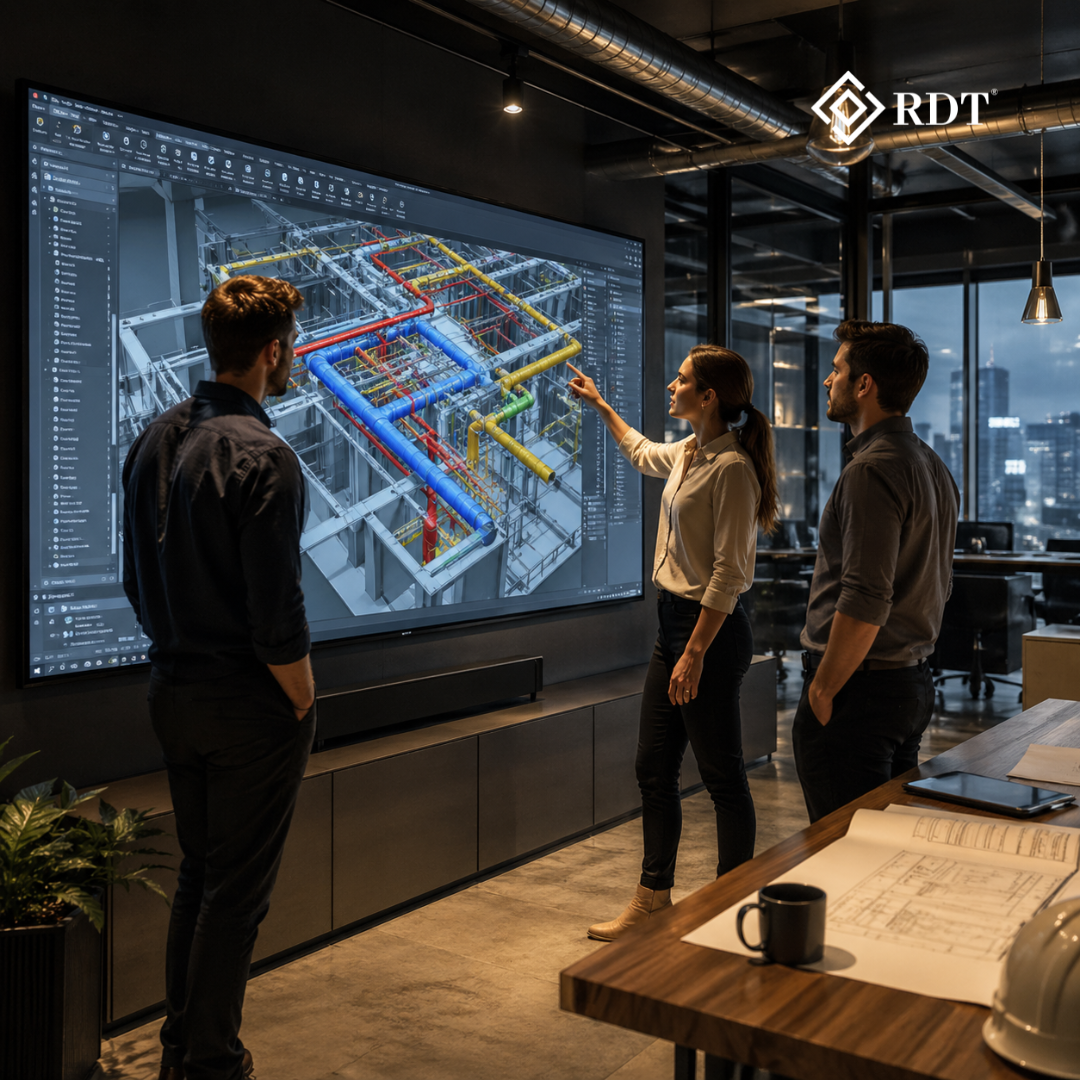
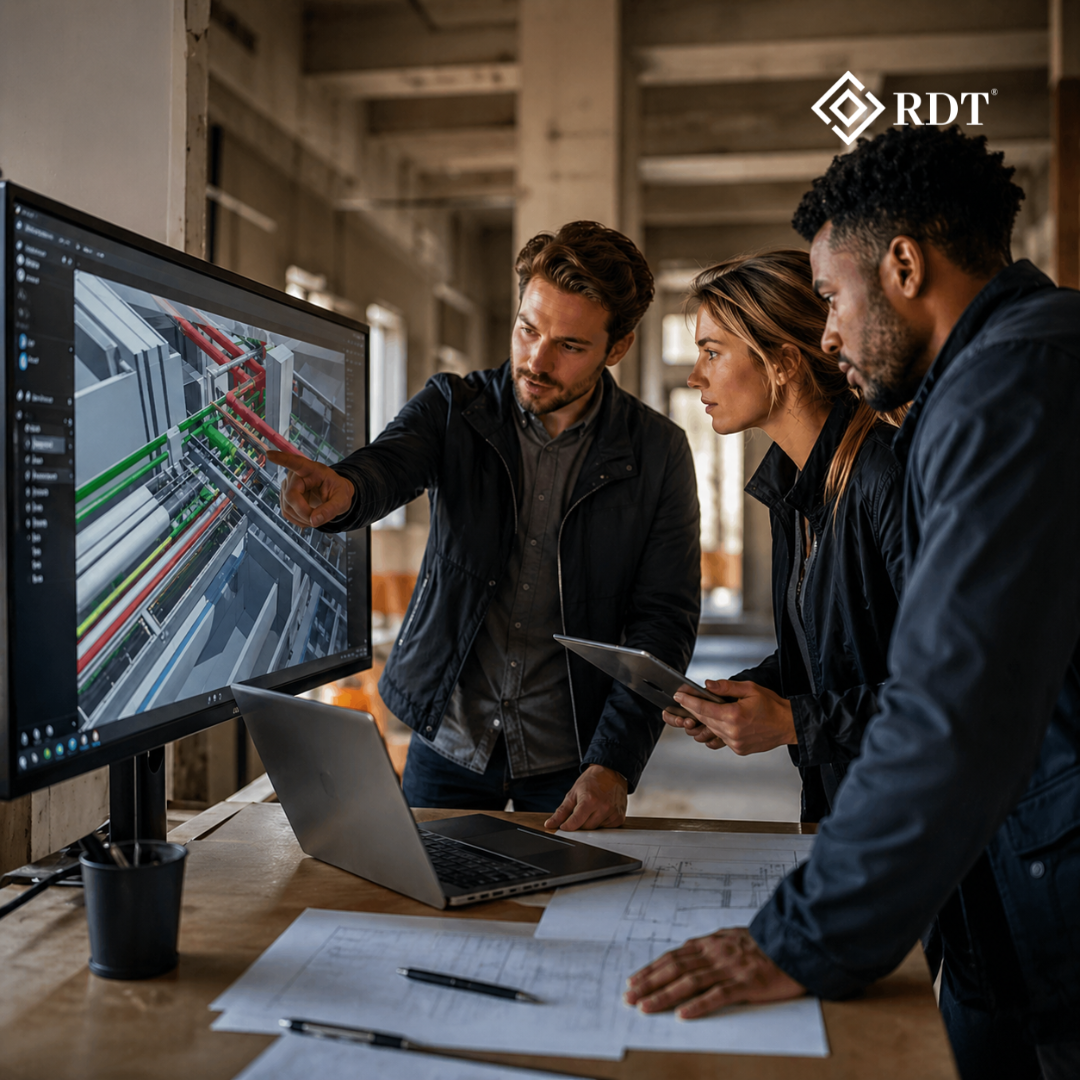
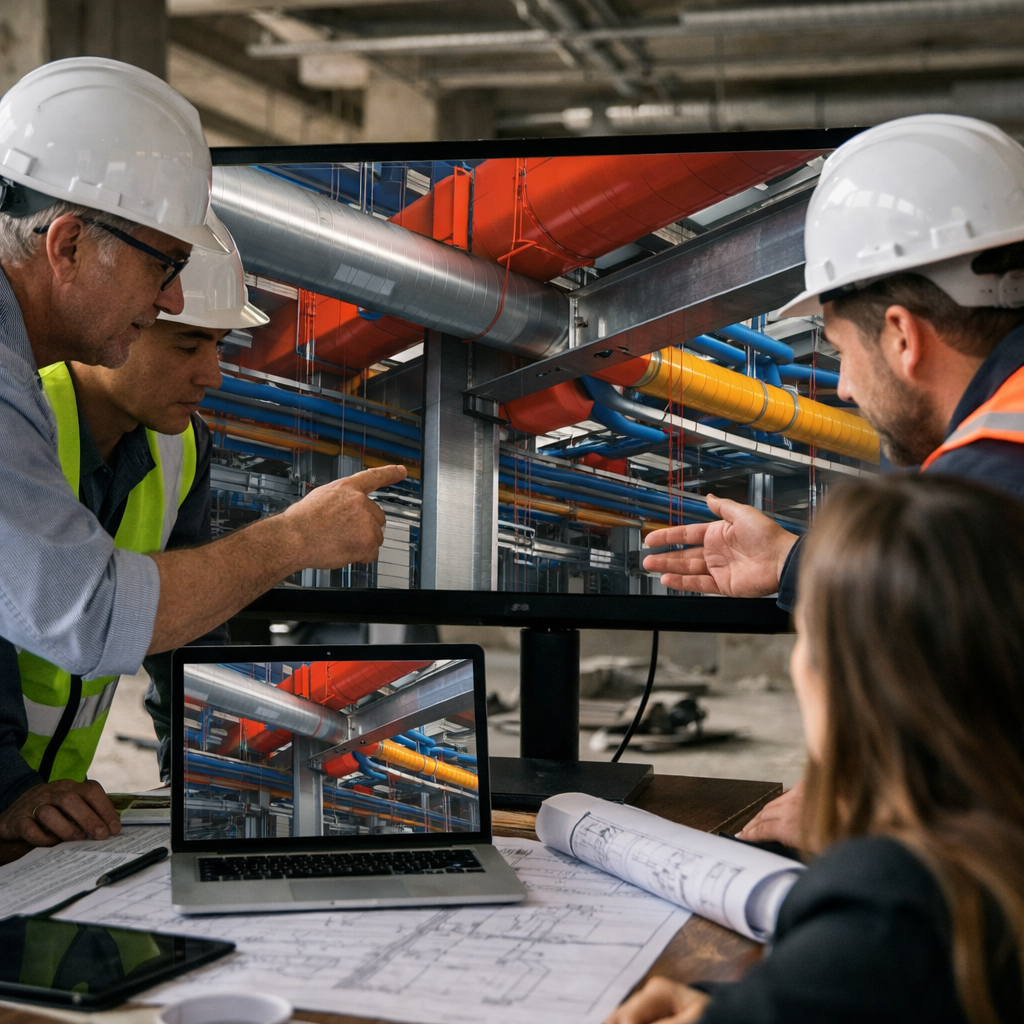
True visualization goes beyond presentation. It acts as a coordination engine. When architectural, structural and MEP systems are visualized together, conflicts are no longer theoretical. They become visible. A duct passing through a beam is no longer discovered on site. It is resolved in the model.
This is where Building Information Modeling fundamentally changes project outcomes. BIM is not valuable because it is digital. It is valuable because it creates a shared visual truth. All investors work from a similar source of data. Decisions are located on what is seen, not what is presumed.
Visualization allows squads to harmonize actively instead of responsively. It shifts effort from problem solving during construction to problem prevention during design. The financial impact of this shift is substantial. Rework reduces. RFIs decrease. Schedules stabilize. Confidence increases.
At RDT, visualization is embedded into every stage of project delivery because coordination without visualization is incomplete coordination.
The cognitive power of visual understanding
Human minds are connected to process visual data quicker than text or numbers. Spatial knowledge occurs instinctively when data is submitted visually. This is why well visualized models often resolve debates that hours of discussion could not.
When a project team sees a federated BIM model, alignment happens naturally. Questions become more precise. Decisions become faster. Accountability becomes clearer.
This cognitive benefit is particularly crucial when working with complicated buildings such as hospitals, official complexes, industrial facilities & huge residential developments. The more complicated the project, the higher the requirement for visualization that streamlines without distorting.
Clarification should help visualization, not remunerate for its absence.
Visualization and client confidence
Clients may not speak the technical language of drawings or specifications, but they understand space, flow and experience. Visualization bridges this gap. When clientele can view their project before it is constructed, they engage more significantly. Response becomes productive instead of reactive.
Poor visualization often leads to late stage changes. Clients realize something does not feel right only after construction begins. At that point, changes are expensive and disruptive.
Effective visualization builds trust. It demonstrates competence. It reassures clients that the team understands not just how to build but what to build.
RDT’s visualization services are designed to align technical accuracy with experiential clarity. Whether through detailed BIM models or high quality visual outputs, the goal is always the same. Make understanding immediate.
Documentation without visualization is incomplete
Documentation remains critical. It governs contracts approvals and compliance. However, documentation without strong visualization becomes a reference tool rather than a decision tool.
When documentation is supported by coordinated models and visual context, it becomes more powerful. Drawings are no longer isolated instructions. They are connected components of a larger system.
This integration reduces errors that arise from misinterpretation. It also improves accountability. When issues are visualized, responsibility is clearer. There is less room for ambiguity.
At RDT, documentation is never treated as an afterthought. It is developed alongside BIM and visualization workflows to ensure consistency, clarity and constructability.
Technology enabling better visualization
Modern AEC projects demand more than traditional modeling. They require intelligent systems that adapt to project complexity and speed requirements.
RDT’s proprietary AI powered RDT MEP+ software plays a critical role in this evolution. By automating coordination checks, improving accuracy and accelerating turnaround times, the platform enhances visualization quality across the project lifecycle.
Faster models mean earlier insights. More accurate models mean fewer explanations. Integrated intelligence means teams spend less time resolving conflicts and more time optimizing outcomes.
Technology should reduce explanation, not create new layers of complexity. When used correctly, it amplifies human expertise rather than replacing it.
Visualization as risk mitigation
Every unexplained element in a project carries risk. Visualization exposes risk early. It reveals constructability challenges, access issues sequencing conflicts and maintenance concerns long before they impact the site.
Risk mitigation is not about avoiding complexity. It is about understanding it fully. Visualization makes complexity manageable.
In sectors such as healthcare aviation and large scale commercial developments, the cost of late discovery is immense. Visualization transforms risk from an unknown into a visible and manageable factor.
RDT’s approach focuses on proactive risk identification through coordinated visual workflows that support asset management and long term operational efficiency.
Bridging what is and what can be
The AEC industry stands at a critical point. Projects are more complex. Expectations are higher. Margins are tighter. Traditional methods are no longer sufficient.
The gap between what is and what can be is often a gap of visualization. The information exists. The expertise exists. What is missing is the ability to see clearly and act confidently.
When visualization is done right, explanation becomes optional. Teams move faster. Decisions improve. Outcomes strengthen.
At RDT, redefining design technologies means redefining how understanding is created. Through BIM documentation visualization and intelligent software solutions, RDT empowers AEC enterprises to work with clarity, confidence and control.
Because when a project truly speaks for itself, explanation is no longer required.