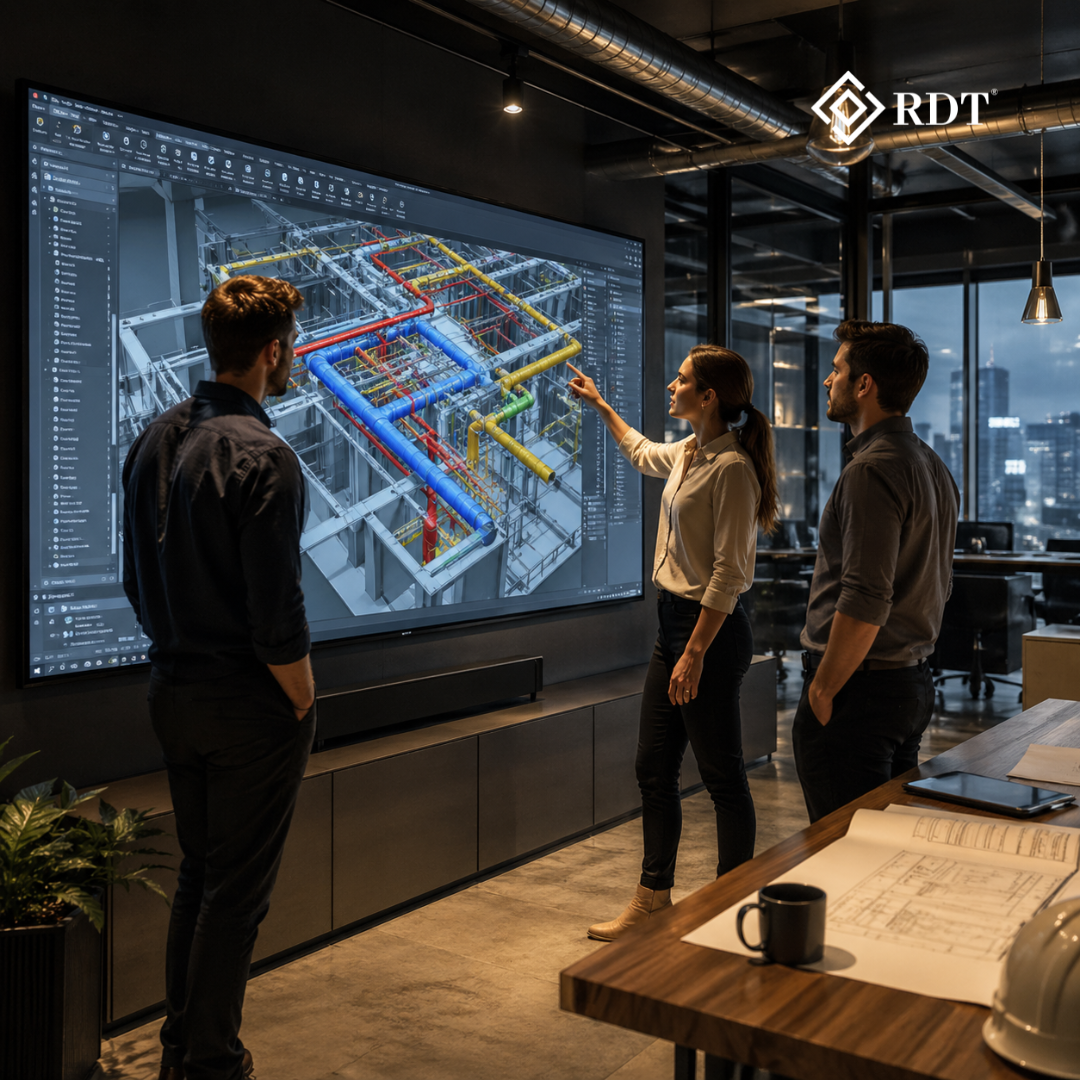

The architecture industry is evolving rapidly as digital technologies continue to reshape the way buildings are designed, coordinated, and constructed. Building Information Modeling has emerged as one of the most powerful tools that architects can use to improve project efficiency and accuracy. Instead of relying solely on traditional drawings, architects today work with intelligent digital models that contain detailed information about every component of a building.
BIM is not simply about creating three dimensional models. It is a structured process that connects design, data, collaboration, and construction workflows. When used effectively, BIM helps architects reduce design conflicts, improve communication with project teams, and deliver projects with greater confidence.
To take full advantage of this technology, architects must understand the essential BIM workflows that support efficient design development and successful construction outcomes. Mastering these workflows allows professionals to transform digital models into powerful decision making tools throughout the entire project lifecycle.
Understanding the Importance of BIM Workflows
A BIM workflow refers to the structured sequence of processes used to create, manage, and exchange building information within a project. These workflows guide how models are developed, how data is shared among disciplines, and how project teams collaborate throughout the design and construction phases.
Without clearly defined workflows, BIM models can quickly become disorganized and difficult to manage. Proper workflows ensure that every team member understands how information flows through the project and how updates are communicated.
For architects, strong BIM workflows help maintain consistency in design documentation, improve coordination with engineers, and ensure that models accurately reflect the evolving building design.
Conceptual Modeling Workflow
The BIM journey typically begins with conceptual modeling. During this stage, architects explore design ideas, spatial arrangements, and building forms using digital modeling tools.
Conceptual BIM models help architects visualize massing, building proportions, and relationships between different spaces. Instead of relying on sketches alone, designers can quickly generate three dimensional studies that provide a clearer understanding of the project.
This workflow allows architects to test multiple design options while considering site conditions, environmental factors, and zoning requirements. Early modeling also helps project teams communicate ideas more effectively with clients and stakeholders.
Conceptual BIM models often remain flexible and simplified during the early stages of design. As the project progresses, these models gradually evolve into more detailed and information rich building representations.
Design Development Workflow
Once the overall concept is approved, the design development workflow begins. During this phase, the BIM model becomes more detailed and begins to include architectural elements such as walls, floors, windows, doors, and structural systems.
Architects use BIM tools to define materials, dimensions, and spatial relationships between building components. The model begins to reflect the technical aspects of the building design while maintaining visual clarity.
Design development workflows allow architects to study building performance, refine layouts, and evaluate design decisions before moving forward to construction documentation.
This stage is also where coordination with structural engineers and building services consultants becomes increasingly important. BIM allows architects to integrate different design disciplines within a shared digital environment.
Interdisciplinary Coordination Workflow
Modern construction projects involve multiple disciplines working together to create a functional building. Architects must coordinate their designs with structural engineers, mechanical engineers, electrical engineers, and plumbing consultants.
BIM coordination workflows allow all disciplines to contribute their models into a shared project environment. Each team works within their specialized area while maintaining alignment with the overall building design.
Through coordinated BIM workflows, architects can detect conflicts between building systems early in the design process. For example, mechanical ducts may intersect with structural beams or plumbing pipes may conflict with architectural ceilings.
Identifying these issues digitally allows teams to resolve conflicts before construction begins. This greatly reduces costly changes and delays during the building phase.
Clash Detection Workflow
Clash detection is one of the most valuable BIM workflows that architects should master. This process involves analyzing different discipline models to identify conflicts between building components.
Specialized BIM software tools automatically detect when elements from different systems occupy the same physical space. These conflicts are known as clashes.
Architects review these clashes together with engineers and contractors to determine the best design solution. Adjustments can be made to routing systems, structural layouts, or architectural elements.
By resolving clashes during the design phase, project teams avoid expensive on site modifications and construction delays. Effective clash detection workflows contribute significantly to smoother project execution.
Construction Documentation Workflow
One of the most important BIM workflows for architects is the generation of construction documentation. BIM models contain precise geometric and data driven information that can be used to produce drawings required for construction.
Architects can extract floor plans, elevations, sections, and detail drawings directly from the model. Because all drawings are connected to the same digital model, changes made to the design automatically update across the entire documentation set.
This workflow improves drawing consistency and reduces the risk of discrepancies between different construction documents.
Construction documentation created through BIM workflows also helps contractors understand building assemblies, material specifications, and dimensional relationships with greater clarity.
Visualization and Presentation Workflow
Architects often need to communicate their designs clearly to clients, investors, and regulatory authorities. BIM workflows support the creation of visual presentations that help stakeholders understand complex architectural ideas.
From the BIM model, architects can generate realistic renderings, walkthrough animations, and presentation visuals that represent the future building environment.
These visual assets play a crucial role in project approvals and client presentations. Clear visualization allows decision makers to evaluate design proposals with confidence.
Visualization workflows also help architects communicate design intent during coordination meetings with engineers and construction teams.
Quantity Takeoff and Data Management Workflow
Another powerful BIM workflow involves extracting project data directly from the model. Because BIM elements contain detailed information about materials and quantities, architects can generate schedules and quantity reports automatically.
Quantity takeoffs help project teams estimate material requirements and construction costs more accurately.
For example, BIM models can generate lists of doors, windows, wall areas, and flooring materials within seconds. This data supports budgeting, procurement planning, and project cost control.
Accurate information management also ensures that design changes are reflected in updated quantities throughout the project lifecycle.
Construction Collaboration Workflow
BIM workflows continue to play an important role even after the design phase is complete. During construction, contractors and project managers rely on BIM models to understand building systems and coordinate site activities.
Architects may collaborate with construction teams to review design details, clarify specifications, and address field conditions that arise during construction.
Digital models provide a clear visual reference that helps builders interpret design intent more accurately than traditional drawings alone.
This collaborative workflow improves communication between architects and contractors, resulting in more efficient project execution.
Facility Management and Lifecycle Workflow
The value of BIM extends beyond the construction phase. Once a building is completed, the BIM model can serve as a digital record of the entire structure.
Facility managers can use the model to track building systems, equipment locations, maintenance schedules, and operational data.
Architects who understand lifecycle BIM workflows contribute to creating models that remain valuable long after the project is finished. Accurate digital information supports efficient building maintenance and long term asset management.
The Growing Importance of BIM Expertise for Architects
As digital technology continues to reshape the architecture and construction industry, BIM expertise has become an essential skill for architects. Clients and developers increasingly expect design teams to deliver coordinated digital models that support efficient project delivery.
Architects who master BIM workflows gain a significant advantage in managing complex building projects. They are able to communicate design intent clearly, coordinate effectively with other disciplines, and reduce risks during construction.
The integration of BIM with emerging technologies such as cloud collaboration platforms and advanced visualization tools is further expanding its role within the industry.
Architects who continue to refine their BIM skills will be better equipped to lead projects that demand precision, collaboration, and innovation.
Conclusion
Building Information Modeling has transformed the way architects approach design, coordination, and project delivery. By mastering essential BIM workflows, architects can create intelligent digital models that improve communication, reduce design conflicts, and support efficient construction processes.
From conceptual modeling to interdisciplinary coordination and construction documentation, each workflow contributes to a more organized and collaborative project environment. These structured processes allow architects to manage complex information while maintaining creative control over their designs.
As the architecture and construction industry continues to evolve, BIM will remain at the center of digital project delivery. Architects who invest time in mastering these workflows will play a key role in shaping smarter and more efficient buildings for the future.
If you want to streamline your architectural projects with advanced BIM expertise and efficient digital workflows, professional support can make a significant difference. RDT Technology provides high quality BIM solutions designed to enhance design accuracy, improve coordination, and support smooth construction delivery. Connect with RDT Technology today to transform your architectural ideas into intelligent BIM driven projects that deliver efficiency, clarity, and long term project success.