
Rework is rarely planned, yet it appears on almost every construction project. It shows up as revised drawings, altered site instructions, material wastage, or unexpected delays. Teams often accept it as unavoidable, something that simply comes with the complexity of building. Over time, this mindset has made rework feel normal rather than problematic.
In reality, rework is not a construction stage failure. It is usually the result of unresolved decisions, incomplete coordination, or unclear information long before site activity begins. Once construction starts, the opportunity to prevent rework is already gone. At that point, teams are only managing the damage.
Building Information Modeling addresses this issue by changing when problems are exposed. Instead of allowing conflicts to surface during execution, BIM brings them forward into the planning stage, where they can be solved with far less impact.
The Real Reasons Rework Continues to Occur
Most construction professionals are experienced and capable. Rework does not happen because people do not know what they are doing. It happens because projects move forward with partial understanding.
Design disciplines usually function in parallel, each responding to its own needs & chronology. Architectural layouts may proceed while engineering systems are still developing. Basic decisions may be concluded before service routing is fully resolved. Every move makes sense in separation, but collectively they form intervals.
Conventional documentation does not forever expose these intervals. Two dimensional drawings communicate intent, but they do not always show how elements occupy the same physical space. A drawing can appear complete and coordinated while still hiding conflicts that only become obvious during installation.
Another common cause of rework is assumption. When data is absent or vague, squads make logical choices to keep work moving. These choices are scarcely incorrect on their own, but they usually clash with choices made elsewhere. Once substances are established, these clashes become expensive to rectify.
For many years, projects absorbed these issues through contingency and time buffers. Today, those buffers are much smaller. What was once manageable now has immediate financial and scheduling consequences.
How BIM Changes the Timing of Problem Solving
BIM does not simplify construction. It reveals it.
When a project is developed within a coordinated digital model, systems are no longer separated by discipline or drawing type. They coexist in the same environment. This makes it easier to understand how decisions interact.
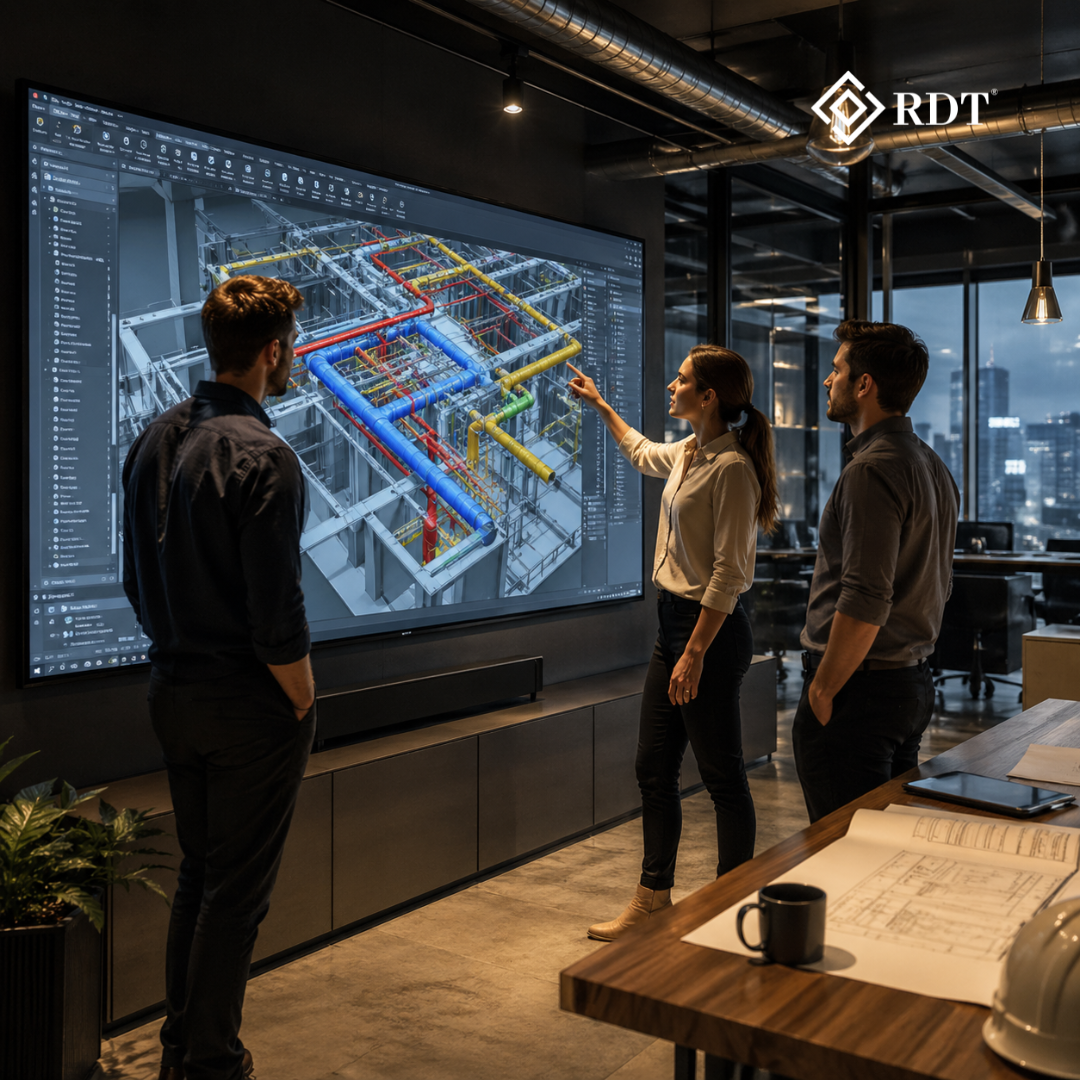
Conflicts that would normally remain hidden until site execution become visible during coordination. A service route that clashes with structure or an access space that does not meet maintenance requirements becomes obvious when viewed spatially. These are not theoretical problems. They are practical issues that would have caused rework later.
By identifying them early, teams can discuss alternatives without pressure. Alterations made throughout planning are far less troublesome than modifications made after installation has commenced.
More essentially, BIM inspires squads to question design presumptions earlier. Can this system be installed safely? Is there enough space to work? Will this sequence cause congestion on site? These conversations are often missing in traditional workflows.
Coordination Becomes Continuous Instead of Occasional
Coordination is not a one time task. It is an ongoing process that evolves as design information develops.
In many projects, coordination happens at fixed milestones. Drawings are reviewed, comments are issued, and coordination is considered complete until the next submission. This approach assumes that information is static, which it rarely is.
BIM supports continuous coordination. As models are updated, the effects of those updates are immediately visible to other disciplines. This makes it easier to respond to changes before they create downstream issues.
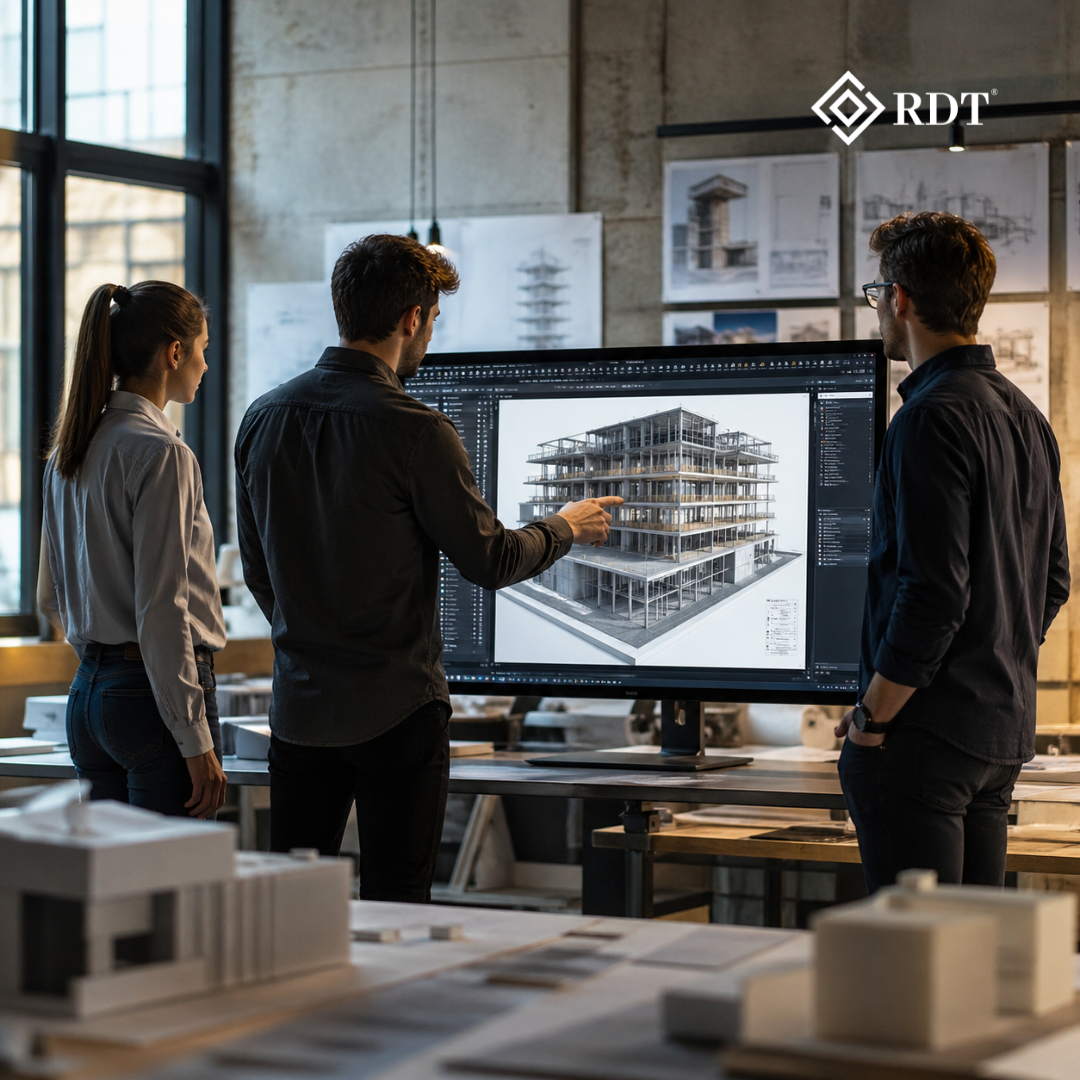
Model based coordination meetings also change how teams communicate. Instead of reviewing marked up drawings, participants review actual building conditions. Discussions become more direct and misunderstandings are resolved faster.
This common understanding diminishes the opportunity of one discipline making choices in separation. When everybody views the similar data, coordination becomes a joint obligation instead of a specific assignment.
Quantities Reflect Reality Earlier
Material related rework often begins with inaccurate estimates. When quantities are taken from drawings that are still evolving, errors are almost inevitable. These errors may lead to excess materials, shortages, or last minute procurement changes.
With BIM, quantities are derived from modeled elements rather than interpreted drawings. Because components are defined with actual dimensions, takeoffs are closer to reality. When changes occur, quantities adjust accordingly.
This permits squads to plan acquisition with improved conviction. It also diminishes the gamble of finding differences after substances have already been installed.
Diminishing substantial waste may not constantly be noticeable on site, but it has a crucial effect on project price & effectiveness.
Buildability Is Tested Before Work Begins
Many rework issues are not technical failures. They are buildability issues.
A design may meet code and performance requirements while still being difficult to construct. Tight tolerances, limited access, or complex sequencing can turn an otherwise sound design into a site challenge.
BIM allows these issues to be identified early. Contractors can review how elements will be installed, where temporary access is required, and whether sequencing creates conflicts. Adjustments made at this stage are usually minor compared to changes made during construction.
This early evaluation reduces the need for improvisation on site. When crews have clear information and realistic conditions, work progresses more smoothly and with fewer corrections.
Clearer Information Reduces Guesswork
Rework often begins with uncertainty. When instructions are unclear, people fill in the gaps.
BIM reduces this uncertainty by providing a clearer representation of design intent. Stakeholders can see spatial relationships, verify dimensions, and understand constraints without relying solely on notes or assumptions.
This is particularly valuable in areas where multiple systems converge. Instead of resolving conflicts under time pressure, teams resolve them during planning discussions.
Clear information reduces disputes and corrections because expectations are aligned from the beginning.
Design Changes Become Easier to Control
Change is part of every project. What matters is when it happens.
When changes occur during design within a BIM environment, their impact can be evaluated quickly. Teams can see how a change affects other systems, quantities, and sequences before it reaches the site.
This visibility allows informed decisions. Some changes move forward, others are modified, and some are rejected based on their consequences. By addressing changes early, BIM prevents them from becoming disruptive site events.
Starting Construction With Confidence
One of the most valuable outcomes of BIM is confidence at the start of construction.
When teams begin work with a coordinated model, fewer unknowns remain. Major conflicts have already been discussed. Drawings are supported by spatial validation. Expectations are clearer.
This confidence reduces defensive behavior and constant second guessing. Teams spend less time reacting and more time executing planned work.
Projects that start with confidence typically experience less rework because uncertainty has already been reduced.
Conclusion
Rework is not an unavoidable feature of construction. It is a symptom of problems identified too late.
BIM reduces rework by shifting problem solving to the stage where it is most effective. Through early coordination, spatial clarity, reliable quantities, buildability review, and clearer communication, BIM addresses issues before construction begins.
Rather than fixing mistakes on site, BIM helps prevent them altogether. In an industry where efficiency and predictability are increasingly critical, this shift is not optional. It is essential.
Partner with RDT Technology to collaborate on BIM driven coordination that eliminates rework before construction begins and delivers projects with clarity, confidence, and control.