The construction industry has always faced uncertainty. Weather disruptions, material shortages, coordination conflicts, design revisions, and labor constraints can significantly impact project outcomes. For decades, project teams relied on experience, historical data, and reactive adjustments to manage these risks. While expertise remains valuable, modern construction demands a more precise and proactive approach.
Building Information Modeling has emerged as a powerful solution that transforms how projects are planned and delivered. By integrating geometry, data, scheduling, and cost information into a unified digital environment, BIM enables predictive construction planning. Instead of reacting to problems after they occur, teams can anticipate challenges, simulate outcomes, and make informed decisions before construction begins.
Predictive planning supported by BIM is reshaping project delivery by improving accuracy, reducing risk, and enhancing overall efficiency.
Understanding Predictive Construction Planning
Predictive construction planning refers to the ability to forecast project outcomes based on structured data and digital simulations. It involves analyzing how design elements, schedules, costs, and resources interact across the project lifecycle. Rather than relying solely on static drawings and traditional schedules, predictive planning uses intelligent models to evaluate different scenarios and identify potential conflicts.
This approach allows project teams to answer critical questions early in the process. What happens if the construction sequence changes. How will a design revision affect material quantities? What is the financial impact of accelerating a particular phase? Where are the most likely coordination risks?
By addressing these questions before work begins on site, teams can minimize uncertainty and improve delivery performance.
The Role of BIM in Predictive Planning
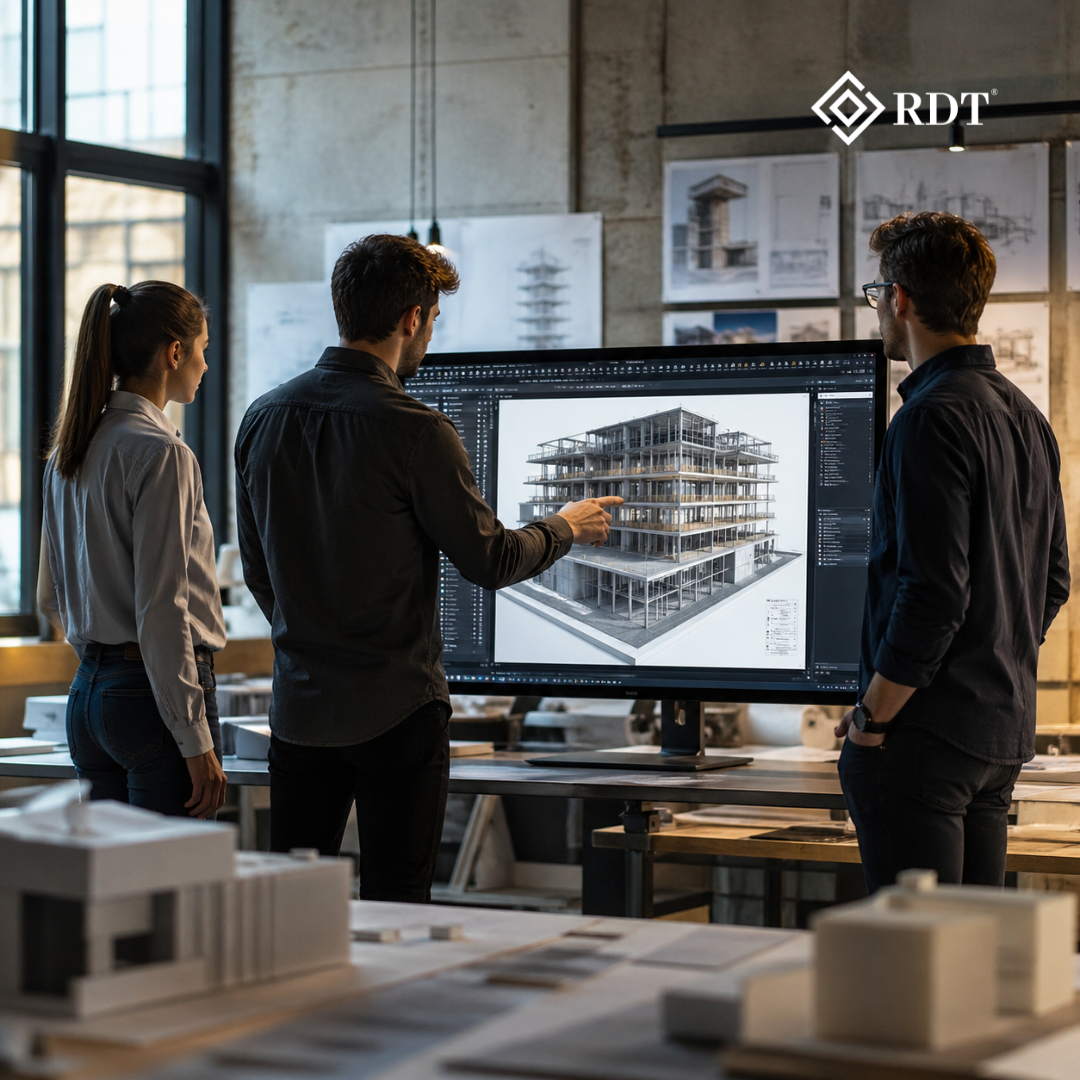
Building Information Modeling serves as the foundation for predictive construction planning. A BIM model is not just a three dimensional representation of a structure. It is a data rich environment that contains information about materials, quantities, systems, timelines, and costs.
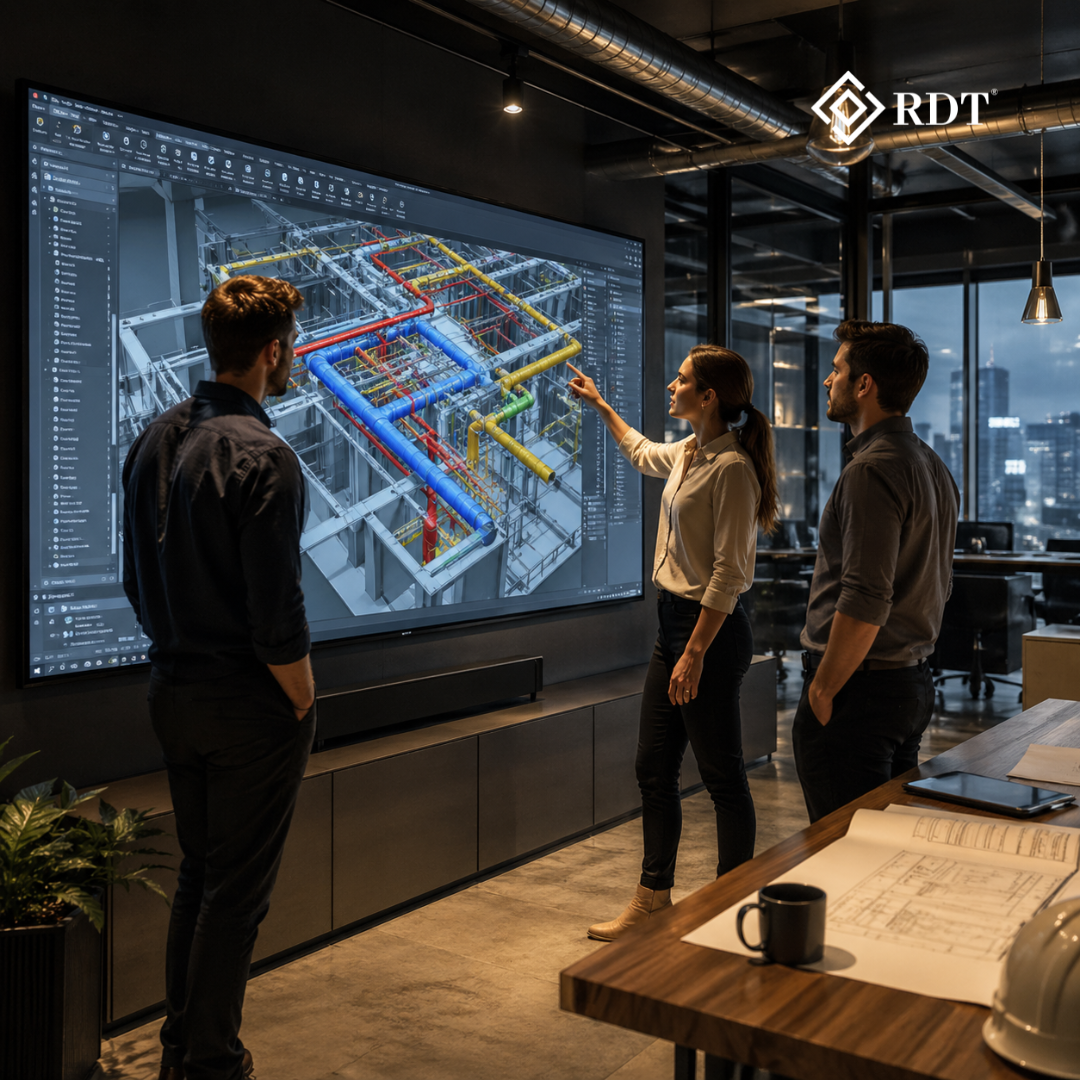
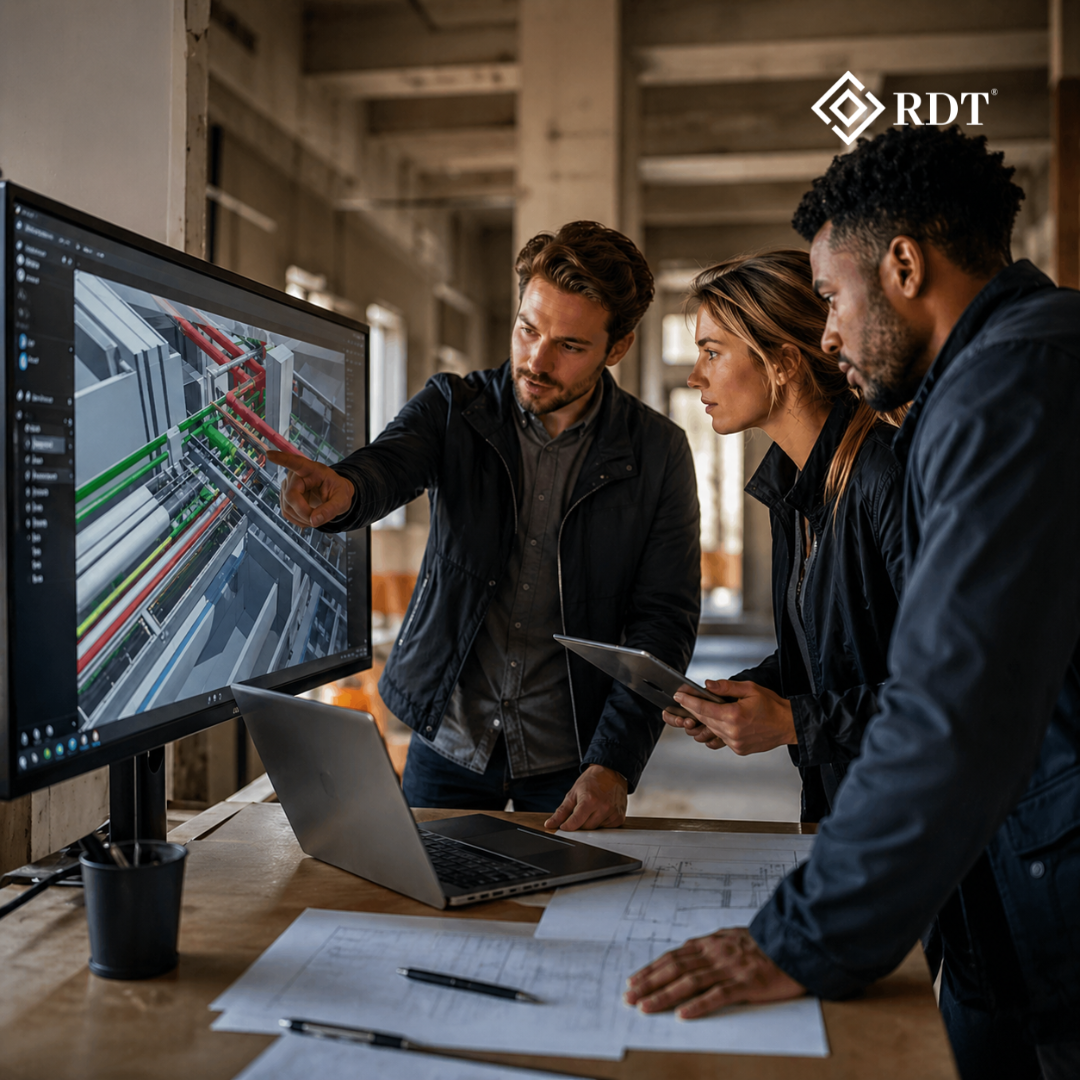
When architectural, structural, and MEP disciplines collaborate within a coordinated model, conflicts can be identified and resolved early. Clash detection eliminates many coordination issues that traditionally surfaced during construction. This alone significantly reduces rework and project delays.
However, the predictive capabilities of BIM extend beyond coordination. By linking the model to scheduling and cost data, teams gain deeper insights into project behavior.
4D BIM and Schedule Forecasting
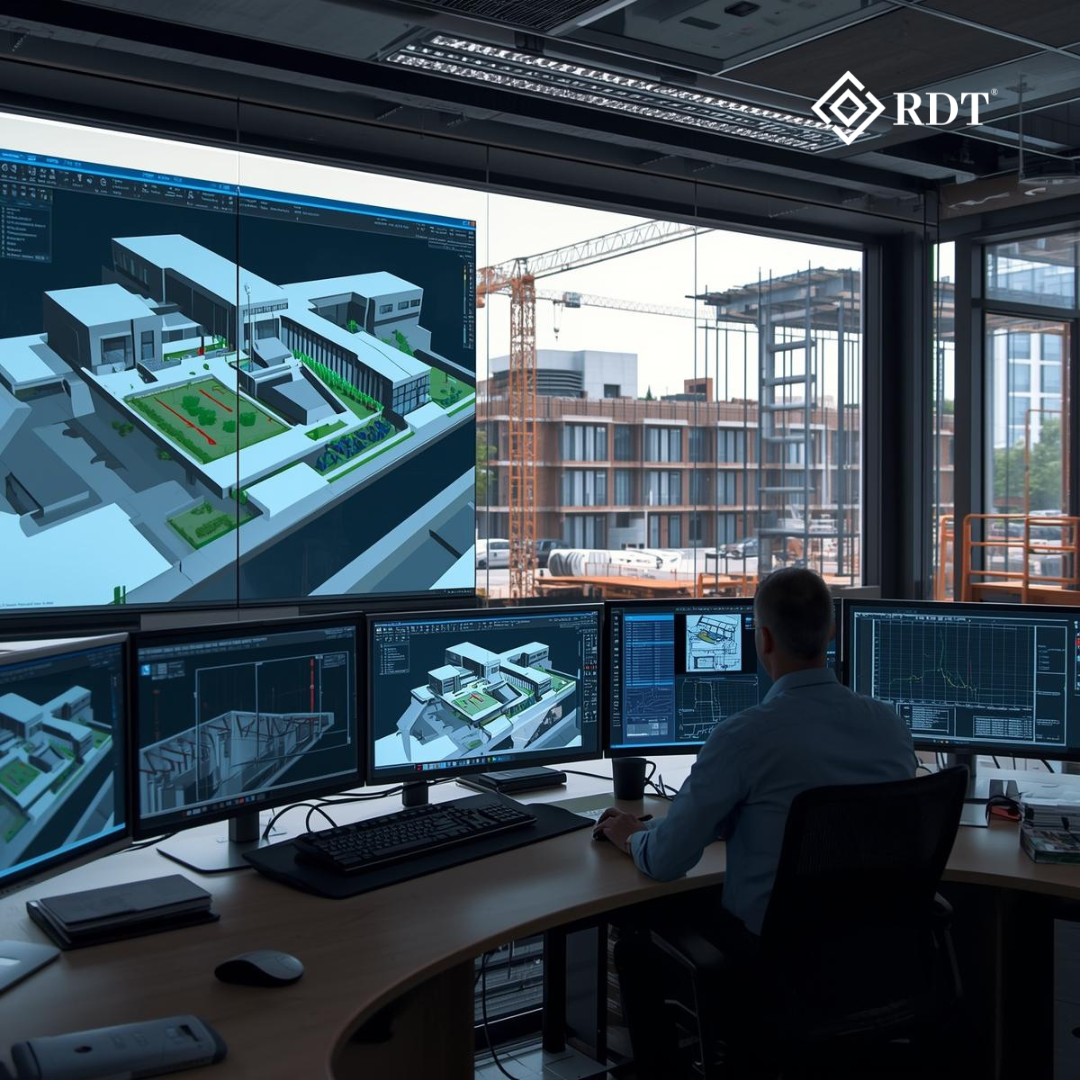
One of the most powerful aspects of predictive planning is the integration of time with the digital model. When construction schedules are connected to BIM elements, the project becomes a visual simulation of the build sequence.
This time based modeling approach allows teams to analyze construction phasing, sequencing, and resource allocation. Project managers can identify bottlenecks before they occur. Overlapping trades can be reorganized to avoid site congestion. Critical path activities become easier to monitor and manage.
Instead of relying solely on Gantt charts, stakeholders can visualize how the building will evolve over time. This clarity enhances communication and strengthens coordination among contractors, consultants, and clients.
When schedule changes are required, their impact can be assessed immediately within the model. This predictive insight improves decision making and supports realistic timeline commitments.
5D BIM and Cost Predictability
Cost overruns are a common concern in construction projects. Traditional estimating methods often rely on manual quantity takeoffs and assumptions that may not reflect design changes accurately. Predictive construction planning addresses this challenge through cost integrated modeling.
When quantity data is extracted directly from the BIM model, estimates become more precise. Any design modification automatically updates material quantities, enabling real time budget evaluation. This reduces the risk of financial surprises later in the project.
Linking cost data to scheduling information also allows teams to forecast cash flow requirements. Project managers can anticipate expenditure peaks and adjust procurement strategies accordingly. This level of financial visibility strengthens project control and enhances stakeholder confidence.
By combining geometry, time, and cost within a unified framework, BIM transforms cost management from reactive adjustment to proactive forecasting.
Risk Identification and Mitigation
Risk is inherent in every construction project. However, many risks can be anticipated through detailed digital analysis. Predictive planning supported by BIM allows teams to identify potential issues early and implement mitigation strategies.
For example, spatial conflicts between structural and mechanical systems can be resolved virtually before materials are ordered. Construction sequencing can be evaluated to prevent unsafe site conditions. Alternative material selections can be assessed for performance and budget implications.
Scenario modeling enables teams to test different approaches without incurring physical costs. If a particular method introduces scheduling pressure or budget strain, adjustments can be made before implementation.
This proactive approach to risk management enhances project stability and reduces the likelihood of disputes or delays.
Enhancing Resource Optimization
Construction projects depend on efficient resource allocation. Labor, equipment, and materials must be available at the right time and in the right quantities. Predictive construction planning helps optimize these resources through data driven analysis.
By simulating construction sequences, teams can forecast labor requirements and avoid overstaffing or shortages. Equipment usage can be scheduled more effectively, reducing idle time and unnecessary rental expenses.
Material procurement becomes more accurate when quantities are derived from coordinated models. This reduces waste and minimizes storage challenges on site. Improved resource planning also contributes to sustainability by limiting excess consumption.
When resources are managed proactively, productivity improves and project margins become more secure.
Improving Stakeholder Communication
Clear communication is essential for successful project delivery. Predictive planning supported by BIM enhances communication by providing visual and data driven insights that are easy to understand.
Owners and clients can review model based simulations to gain confidence in project timelines and budgets. Contractors can coordinate more effectively by referencing a shared digital environment. Consultants can validate design decisions through performance analysis.
Because the model serves as a single source of truth, misunderstandings are reduced. Decisions are documented within the system, creating transparency and accountability across teams.
This collaborative environment strengthens relationships and supports smoother project execution.
Supporting Sustainable Construction
Sustainability has become a critical priority in modern construction. Predictive planning enables more accurate evaluation of environmental performance before construction begins.
Energy analysis can be conducted during the design phase to optimize building systems. Material quantities can be calculated precisely to reduce waste. Construction sequencing can be adjusted to minimize environmental impact.
By integrating sustainability considerations within the digital model, project teams can balance performance, cost, and environmental responsibility more effectively.
Predictive insights also support long term operational efficiency. Buildings designed with accurate data and performance forecasting are better positioned to meet energy targets and regulatory standards.
From Planning to Lifecycle Integration
Predictive construction planning does not end at project completion. The data developed during design and construction can support facility management and future renovations.
As built BIM models provide accurate records of installed systems and components. Facility managers can reference this information for maintenance planning and performance monitoring. Predictive maintenance strategies can be developed based on asset data and historical trends.
This continuity ensures that the value created during planning extends throughout the building lifecycle. Owners benefit from reduced operational costs and improved asset management.
Building a Culture of Proactive Delivery
Adopting predictive construction planning requires more than technology. It involves a cultural shift toward data driven decision making and collaborative workflows.
Teams must be trained to interpret model based insights and apply them effectively. Leadership must support integrated processes and encourage transparency. When predictive planning becomes part of organizational culture, the benefits extend beyond individual projects.
Companies that embrace BIM enabled forecasting position themselves as reliable partners capable of delivering complex developments with confidence and clarity.
Conclusion
Predictive construction planning represents a significant advancement in how projects are delivered. By leveraging the power of Building Information Modeling, teams can anticipate challenges, evaluate scenarios, and make informed decisions before physical work begins.
Integrating geometry, time, and cost within a unified digital environment reduces uncertainty and enhances control. Risks are identified early, resources are optimized efficiently, and stakeholder communication becomes more transparent.
In an industry where delays and budget overruns have long been accepted as inevitable, predictive planning offers a more intelligent alternative. It transforms construction from reactive problem solving to proactive strategy.
Organizations that adopt BIM enabled predictive planning are not only improving individual project outcomes. They are redefining standards for efficiency, accountability, and long term value.
If you are ready to strengthen your project delivery with data driven predictive planning, RDT Technology is your trusted partner. Our expertise in BIM based construction forecasting empowers you to reduce risk, control costs, and deliver projects with greater precision. Partner with RDT Technology to build smarter, plan better, and achieve predictable success in every development.