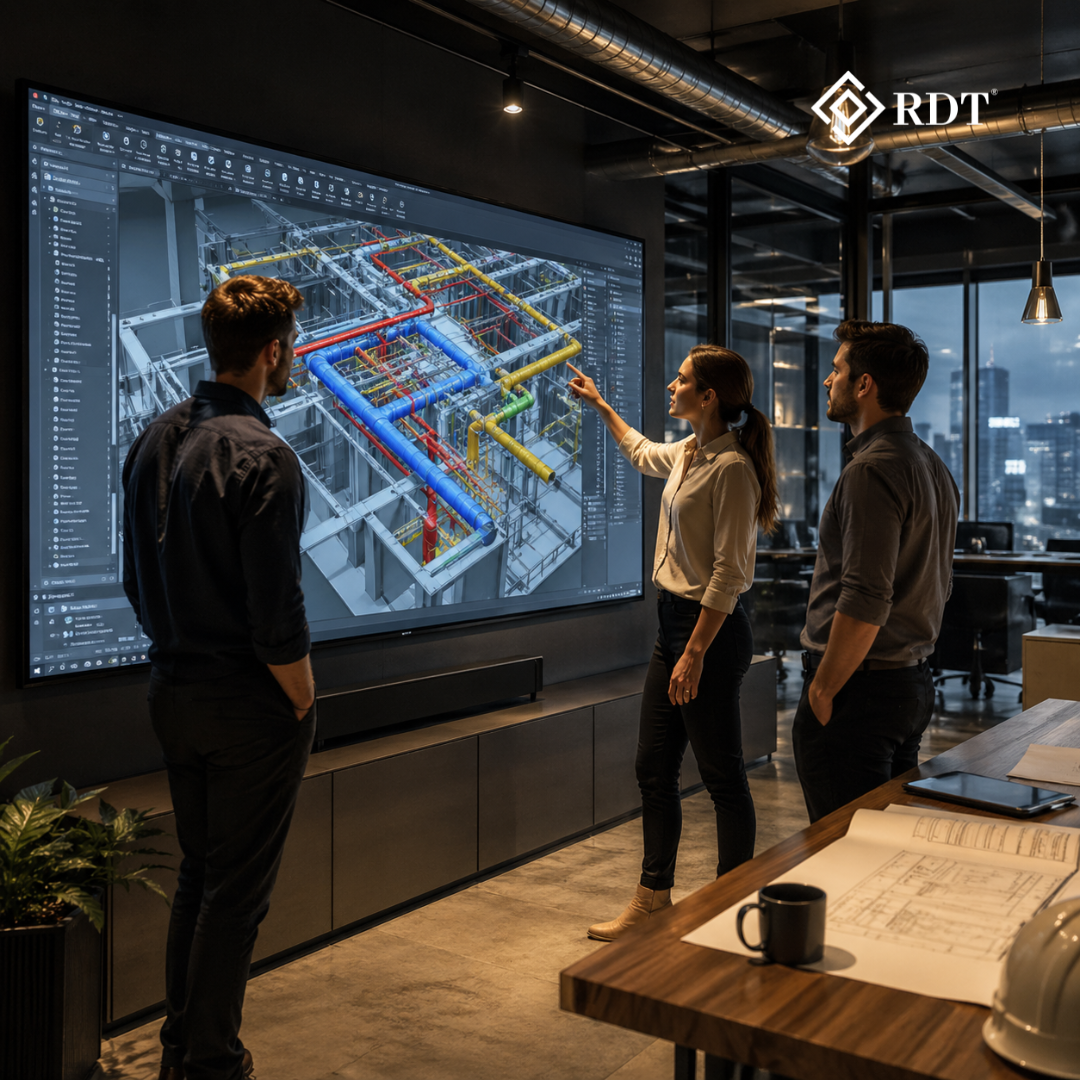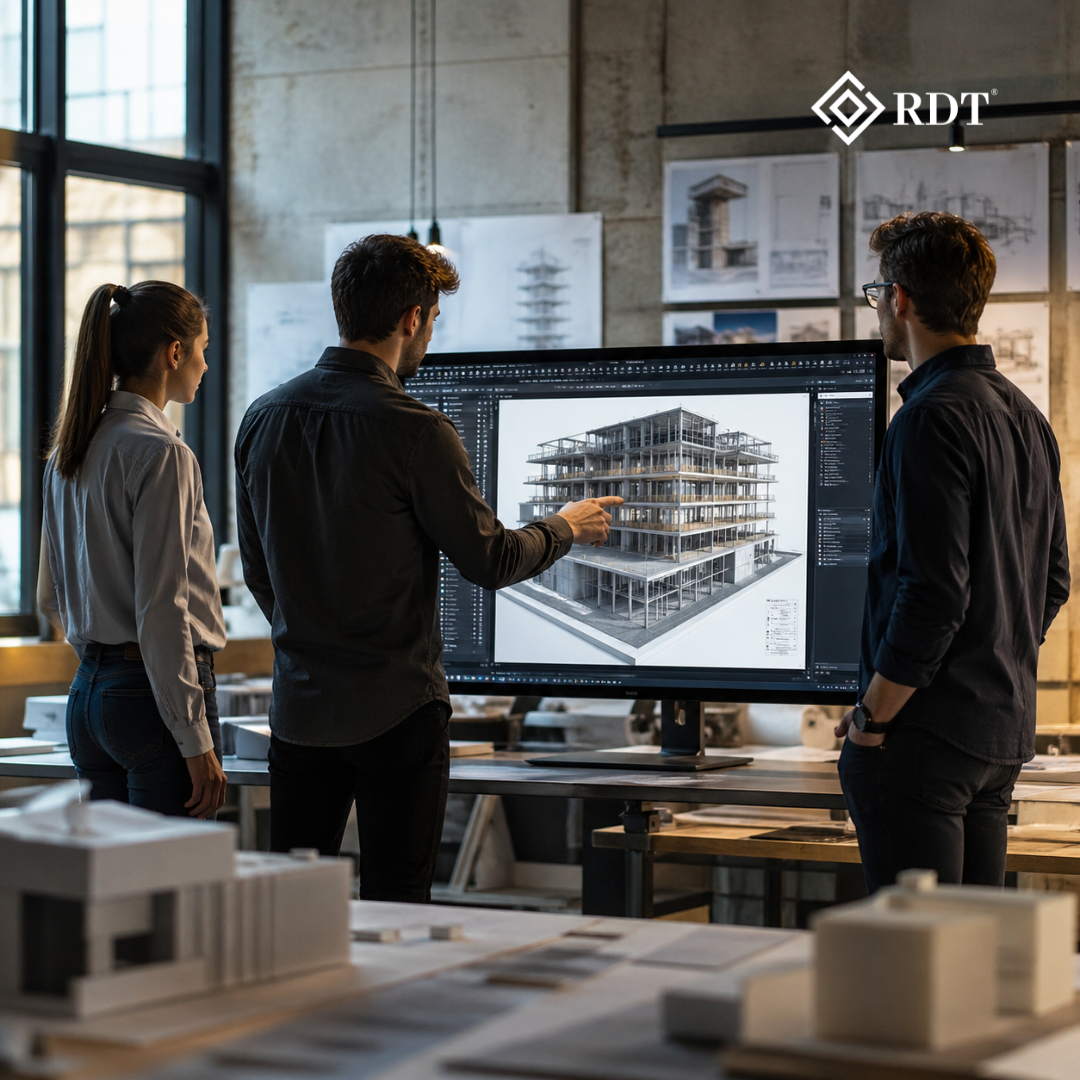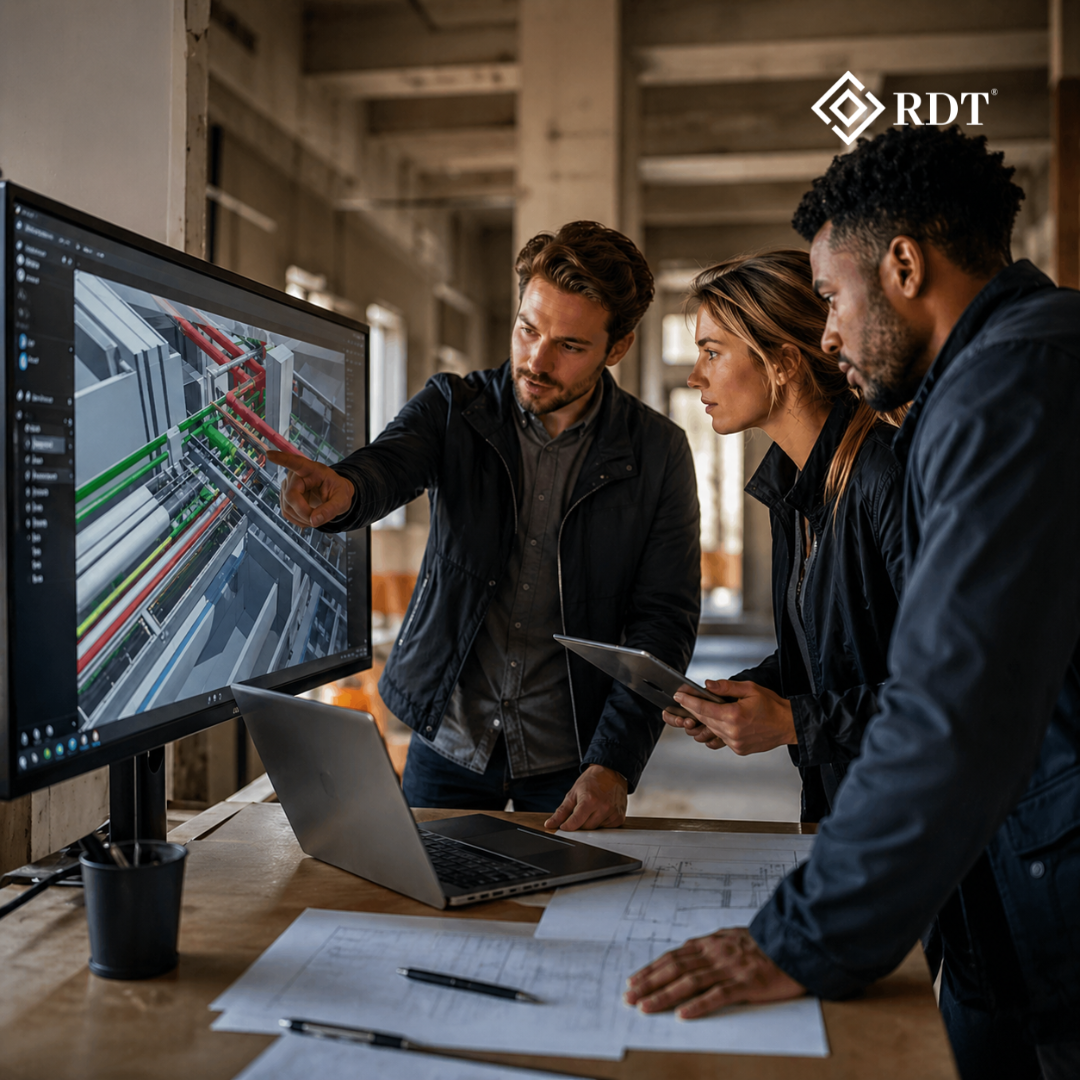
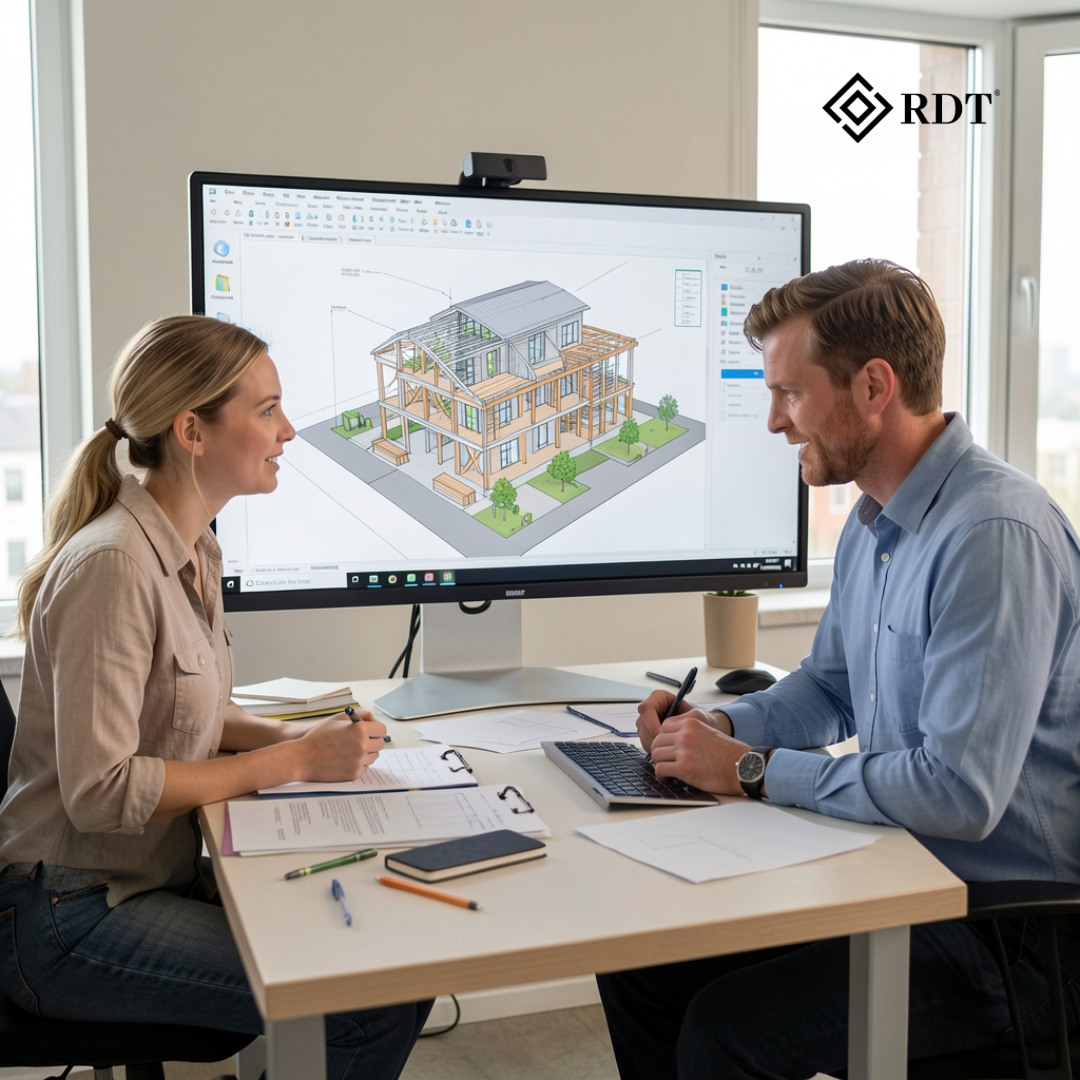
The Architecture Engineering and Construction industry is experiencing a significant transformation driven by technological innovation. Projects are becoming larger, more complex, and more demanding in terms of efficiency, cost control, and sustainability. To manage these challenges, companies are increasingly relying on digital solutions that can streamline workflows and improve decision making. One of the most influential advancements in this transformation is the integration of Artificial Intelligence with Building Information Modeling.
Building Information Modeling has already changed how buildings are designed, coordinated, and constructed by providing a digital representation of physical and functional building characteristics. When Artificial Intelligence is integrated into BIM processes, it adds a powerful layer of data analysis, automation, and predictive capabilities. AI powered BIM is not simply enhancing existing workflows. It is redefining how the AEC industry approaches planning, design, construction, and facility management.
This powerful combination is helping professionals reduce errors, improve efficiency, and make more informed decisions throughout the lifecycle of a building project. As technology continues to evolve, AI driven BIM will play an even more central role in shaping the future of the construction industry.
Understanding AI Powered BIM
Building Information Modeling functions as a comprehensive digital environment where architects, engineers, and construction professionals collaborate using a shared building model. This model contains information related to geometry, materials, structural systems, mechanical components, and other building elements.
Artificial Intelligence enhances this environment by enabling systems to analyze vast amounts of project data and identify patterns that might not be immediately visible to human users. Through machine learning and intelligent algorithms, AI powered BIM platforms can automate repetitive tasks, optimize design solutions, and provide predictive insights.
Instead of relying entirely on manual processes, teams can now benefit from systems that assist with decision making, design evaluation, and risk identification. This integration creates a smarter and more responsive project environment where information can be processed more efficiently.
Improving Design Efficiency and Accuracy
Design development is one of the most important stages of any construction project. Architects and engineers must carefully consider structural integrity, spatial functionality, regulatory requirements, and client expectations. Even minor design errors can lead to major challenges during construction.
AI powered BIM systems help improve design accuracy by analyzing design data and identifying potential inconsistencies early in the process. Intelligent algorithms can review complex models and highlight issues such as spatial conflicts, code compliance concerns, and inefficient design layouts.
Automation also plays a key role in improving efficiency. Tasks such as model checking, quantity extraction, and documentation preparation can be partially automated through AI integration. This reduces the time required for repetitive processes and allows professionals to focus on creative design and strategic planning.
With better accuracy and faster workflows, design teams can deliver higher quality projects while reducing the risk of costly revisions later in the project lifecycle.
Enhancing Collaboration Across Project Teams
Construction projects require constant collaboration between multiple disciplines. Architects, structural engineers, mechanical engineers, contractors, and project managers must work together to ensure that every aspect of the building functions as intended.
AI powered BIM improves collaboration by analyzing information across different disciplines and identifying coordination issues. Intelligent systems can detect conflicts between building components and suggest possible solutions before construction begins.
This proactive approach helps teams address problems early in the design phase rather than discovering them during construction. By resolving issues earlier, project teams can avoid delays and reduce the likelihood of expensive modifications.
AI can also support project coordination by organizing large volumes of project data and presenting it in ways that are easier to interpret. Clear data visualization and intelligent insights allow teams to communicate more effectively and make better informed decisions.
Optimizing Construction Planning
Construction planning involves complex scheduling, resource allocation, and cost management. Project managers must carefully coordinate materials, labor, and equipment to ensure that projects are completed on time and within budget.
AI powered BIM systems can analyze historical project data and identify patterns that help improve construction planning. By studying past project performance, AI algorithms can predict potential scheduling risks and recommend adjustments to improve efficiency.
Predictive analysis allows project teams to anticipate delays, resource shortages, or cost fluctuations before they occur. With these insights, project managers can make proactive decisions that keep the project on track.
AI can also support more accurate cost estimation by analyzing material quantities and market trends. Improved forecasting allows developers and contractors to plan budgets more effectively and reduce financial uncertainty.
Reducing Construction Risks
Risk management is an essential aspect of construction project delivery. Design errors, safety hazards, and coordination failures can all have significant impacts on project timelines and budgets.
AI powered BIM systems contribute to better risk management by identifying potential issues during the early stages of project development. Intelligent model analysis can highlight structural inconsistencies, spatial conflicts, or constructability concerns that might otherwise go unnoticed.
Safety planning can also benefit from AI driven insights. By analyzing construction site data and historical safety records, AI systems can help identify potential hazards and suggest preventive measures.
These capabilities support safer construction environments and reduce the likelihood of accidents or costly disruptions.
Supporting Sustainable Building Design
Sustainability has become a major priority within the AEC industry. Governments, developers, and communities are increasingly focused on reducing environmental impact and improving building performance.
AI powered BIM can support sustainable design by analyzing energy performance, material efficiency, and environmental conditions. Intelligent algorithms can simulate building performance under different scenarios and recommend design improvements that reduce energy consumption.
Design teams can evaluate factors such as daylight exposure, ventilation efficiency, and thermal performance before construction begins. This allows them to optimize building systems and create structures that are more energy efficient and environmentally responsible.
By combining data analysis with digital modeling, AI powered BIM helps professionals design buildings that meet both environmental and operational performance goals.
Transforming Facility Management
The benefits of AI powered BIM extend beyond the construction phase. Once a building is completed, the digital model can continue to support facility management and operational efficiency.
Building owners and facility managers can use BIM data to monitor building systems, track maintenance requirements, and plan upgrades. AI integration enhances this process by analyzing operational data and predicting maintenance needs.
Predictive maintenance allows facility managers to identify equipment issues before they lead to system failures. This reduces downtime and extends the lifespan of building systems.
AI driven insights can also support space management, energy optimization, and asset tracking within large facilities. As a result, building owners can maintain more efficient and cost effective operations over the long term.
The Role of Data in AI Powered BIM
Data plays a central role in the success of AI driven BIM systems. Construction projects generate vast amounts of information related to design, materials, scheduling, costs, and operational performance.
Artificial Intelligence relies on this data to identify patterns and generate meaningful insights. As more project data becomes available, AI algorithms continue to improve their predictive capabilities.
This growing data ecosystem will enable even more advanced applications in the future. Intelligent systems may eventually assist with automated design generation, advanced construction robotics, and fully integrated digital project environments.
The AEC industry is only beginning to explore the full potential of data driven construction technologies.
Preparing the AEC Industry for the Future
The integration of Artificial Intelligence with Building Information Modeling represents a significant step forward for the AEC industry. As projects continue to grow in scale and complexity, companies must adopt technologies that support better coordination, efficiency, and decision making.
AI powered BIM provides a powerful framework for achieving these goals. By combining digital modeling with intelligent analysis, it allows professionals to manage projects with greater clarity and precision.
Companies that embrace this technology will be better equipped to deliver high quality projects while maintaining competitive advantages in an increasingly digital construction landscape.
Training and technology adoption will play an important role in preparing the workforce for this transition. Professionals must develop new skills that allow them to work effectively with advanced digital tools and data driven systems.
The future of construction will depend on the successful integration of human expertise and intelligent technology.
Conclusion
AI powered BIM is transforming the way the AEC industry approaches design, construction, and building management. By combining intelligent data analysis with digital building models, this technology allows professionals to work more efficiently and make better informed decisions.
From improving design accuracy and project collaboration to optimizing construction planning and facility management, the benefits of AI driven BIM are reshaping the entire project lifecycle.
As the industry continues to adopt advanced digital technologies, AI powered BIM will play an increasingly important role in delivering smarter, safer, and more sustainable construction projects.
Organizations that invest in these capabilities today will be well positioned to lead the future of the AEC industry.
If your organization wants to stay ahead in the rapidly evolving construction landscape, integrating advanced BIM solutions is essential. Intelligent BIM workflows can improve collaboration, reduce risks, and enhance project efficiency from design through facility management.
Partner with RDT Technology to leverage advanced BIM expertise and digital solutions that help transform your construction projects into smarter and more efficient developments. RDT Technology delivers innovative BIM services designed to support modern AEC professionals and drive successful project outcomes.