
In the architecture, engineering, & construction (AEC) industry, documentation is usually the quiet backbone of each successful project. Drawings, models, submittals, schedules, RFIs, markups, handover packages, & compliance documentation—each of these contains the load of making decisions, coordination, & future facility execution. Yet, for decades, project documentation has remained disconnected, variable, and heavily dependent on manual effort.
At RDT, after helping over 3300+ professionals, project teams, engineers, architects, contractors, and owners across diverse sectors, one truth has consistently emerged: documentation isn’t just a deliverable—it’s a deciding factor for project success. And when documentation goes wrong, everything else does too: cost escalates, timelines stretch, teams argue, and mistakes multiply.
This is where RDT’s integrated BIM-powered processes make a measurable difference.
In this blog, we break down How RDT Enhances Documentation across every project phase—design, coordination, construction, and handover—ensuring clarity, accuracy, and complete project transparency.
1. Turning Data Into Structured Intelligence—not scattered files
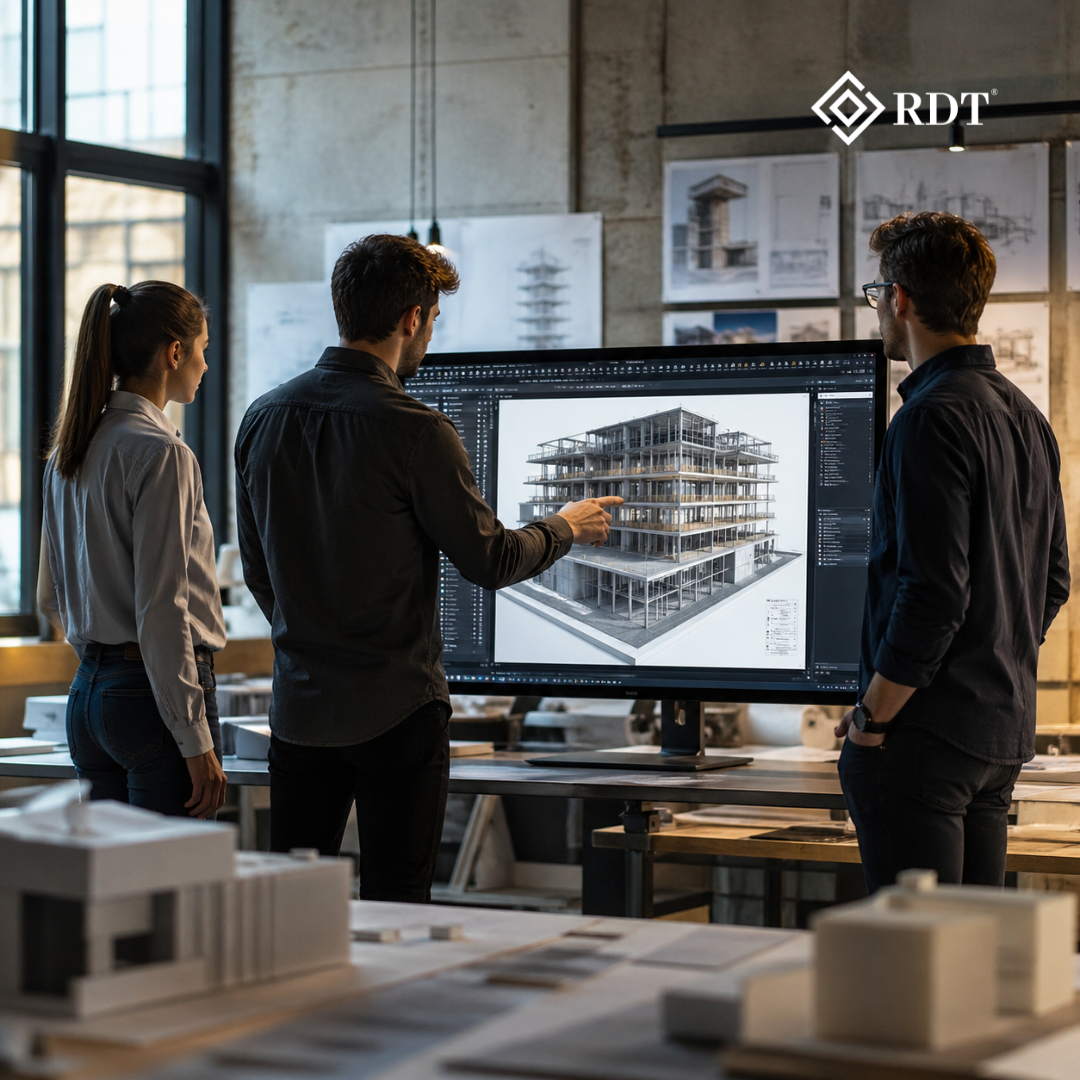
Majority projects deal with dispersed PDFs, old-fashioned DWGs, and variable Excel sheets. Even when BIM is utilized, numerous teams fail to withdraw the full value from the model. RDT handles this difficulty by changing raw design details into structured, interrelated data.
How we enhance documentation at this stage:
- We create model-first documentation, ensuring drawings, schedules, quantities, and sheets are auto-generated directly from BIM.
- Every update in the model instantly reflects across all documentation—reducing human error and maintaining consistency.
- Teams receive documentation that behaves like a single source of truth, not a collection of disconnected files.
This approach eliminates outdated sheets, duplicated information, and contradictory drawings, leading to fast decision-making and minimal confusion between teams.
2. Creating Clarity with Standardized Documentation Formats
Unclear documentation causes more project delays than design changes, budget issues, or manpower limitations.
After working with thousands of people across different organizations, RDT identified one major cause of chaos: everyone follows a different documentation standard.
To solve this, RDT built a highly refined documentation framework based on:
- Industry best practices
- ISO-compliant drawing standards
- Universal BIM norms
- Trade-specific requirements
Our documentation workflow ensures:
- Sheet naming conventions follow a consistent logic
- Notes, legends, callouts, grids, and symbols are standardized
- Detail levels (LOD 200–LOD 500) match the project phase
- Model parameters are mapped to readable, well-structured documentation outputs
Whether you are a GC examining shop drawings or an architect verifying submittals, RDT guarantees that each drawing is readable, systematic, & consistent from Day 1 to Day Final.
3. Improving Multidisciplinary Coordination With Documentation
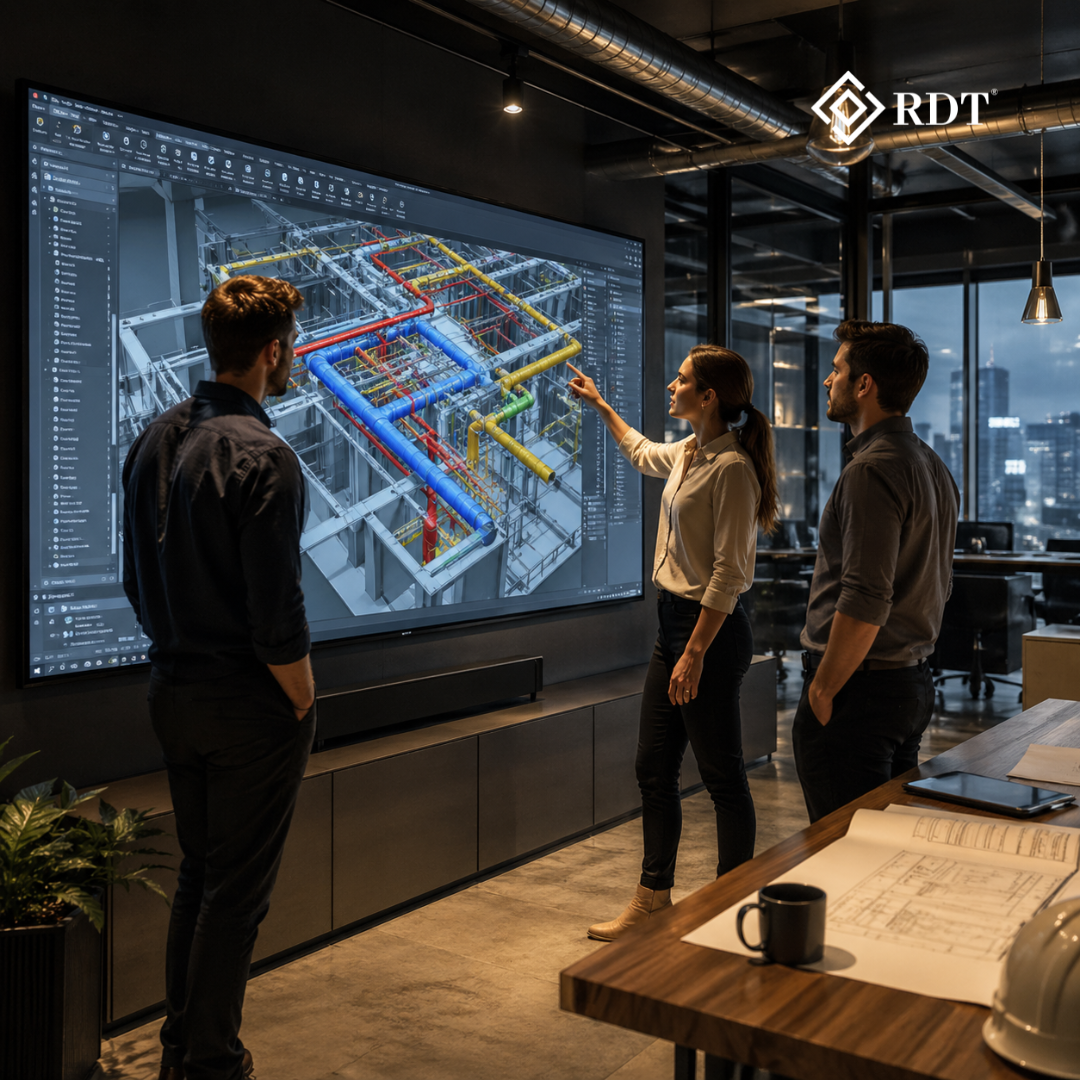
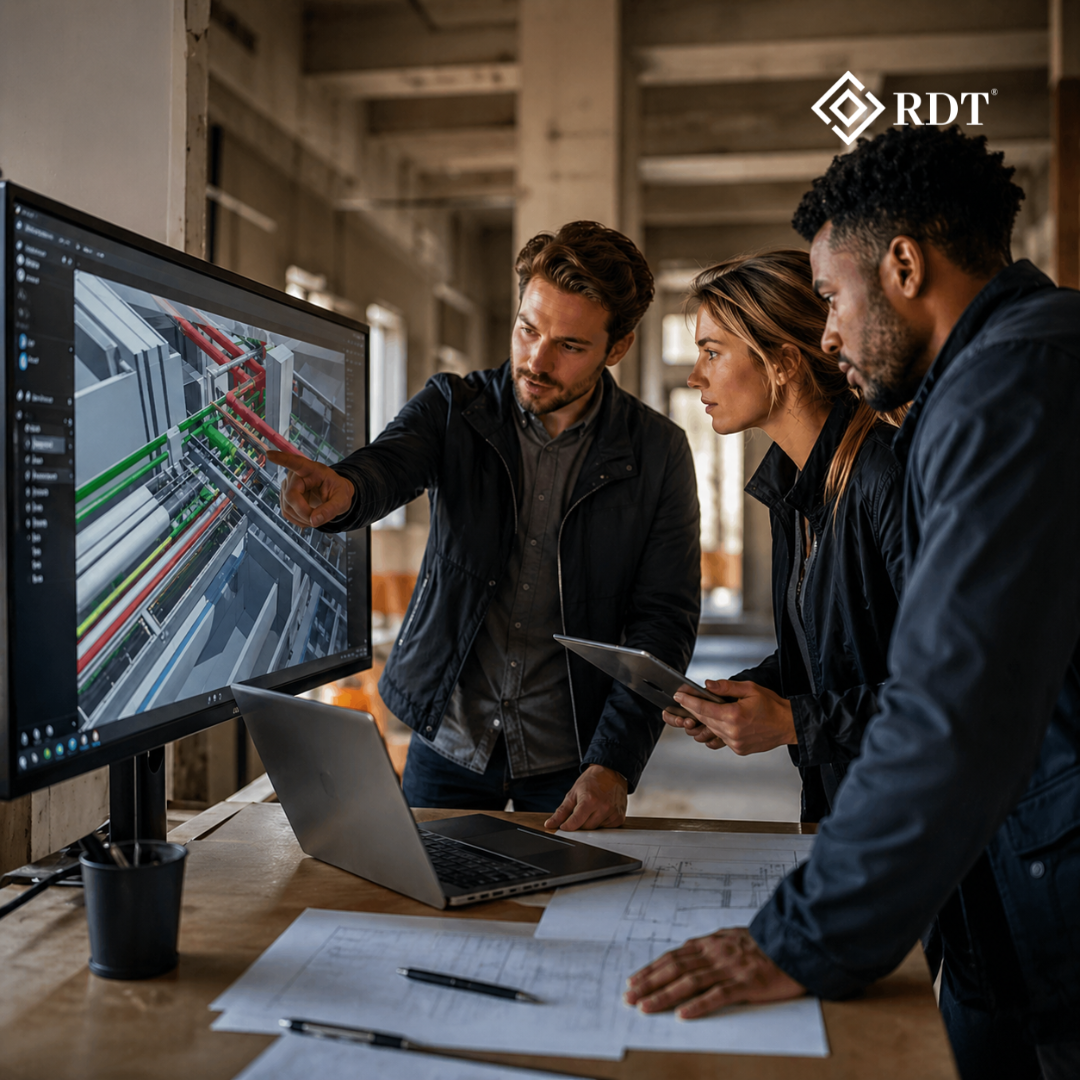
In construction, documentation is beyond text & drawings—it’s a coordination tool. Each document must communicate the accurate design intent to all investors: architects, MEP engineers, structural squads, gc’s, fabricators, & experts.
RDT’s coordinated documentation eliminates the guesswork.
What makes our documentation coordination-ready:
- All drawings are generated from clash-free, coordinated BIM models
- Every plan, elevation, and section is aligned across disciplines
- MEP services follow optimized routing for accessibility and future maintenance
- Structural penetrations and architectural constraints are integrated directly into the documentation
This ensures everyone sees the same update—not separate versions floating across emails, drives, and WhatsApp.
The result?
Zero surprises during construction. Maximum onsite clarity. Faster approvals.
4. Automating Submittals and Shop Drawings for Speed and Accuracy
Submittal packages and shop drawings are often the most painful part of documentation. They are monotonous, slow, & prone to mistakes when done manually.
RDT automated this procedure utilizing BIM-united approaches.
Our enhanced submittal documentation includes:
- Fully coordinated shop drawings
- Automatic tagging and scheduling
- Accurate dimensions and annotations linked to model geometry
- Material specifications pulled directly from object parameters
- Fabrication-ready detailing
- Revision tracking that logically flows from design to construction
This automation reduces both production time and review time. GCs, consultants, and clients receive documentation that is clear, structured, and ready for immediate approval.
5. Eliminating On-Site Errors Through Visual Documentation
Most construction errors happen because workers cannot “visualize” what the drawings mean. Even perfect drawings sometimes fail to communicate intent to on-site teams.
RDT bridges this gap with visual intelligence.
We enhance documentation using:
- Isometric diagrams
- 3D annotated views
- Exploded component illustrations
- Coordination snapshots
- QR-code-based sheet linking to digital 3D views
These visual elements drastically reduce:
- Misinterpretation
- Wrong installations
- Rework
- Material wastage
Contractors love this approach because it makes installation predictable and mistake-proof.
6. Tracking Revisions with Complete Transparency
One of the biggest challenges in documentation?
Revisions that come from 10 different directions and land in 20 different places.
RDT’s documentation workflow integrates revision tracking across:
- Drawings
- Schedules
- Sheet sets
- Coordination logs
- RFI responses
- Redline markups
Every revision is:
- Numbered
- Timestamped
- Linked to source updates in the model
- Highlighted with clouds and deltas
- Recorded in an evolving audit trail
This ensures all stakeholders always know:
- What changed
- Why it changed
- When it changed
- Who requested the change
This eliminates disputes and saves hours of rework.
7. Building Stronger Communication Between Teams
Documentation is communication. RDT enhances that communication by ensuring documents don’t just inform—they guide action.
Our documentation improves communication by:
- Making details extremely clear
- Eliminating technical ambiguity
- Providing simplified views for non-technical stakeholders
- Offering structured revision summaries
- Using digital integration for real-time updates
Owners understand progress better, engineers interpret details correctly, and contractors execute faster.
8. Delivering Accurate Handover Documentation for Facility Management
The handover stage is where most projects fail—simply because documentation is incomplete or unorganized.
After helping 3300+ people, RDT developed a handover documentation system that ensures facility teams get everything they need to operate the building effectively.
Our enhanced FM-ready documentation includes:
- As-built drawings linked to the final coordinated model
- Asset tagging linked to QR codes
- Model-based O&M manuals
- Room data sheets
- System-level histories
- Updated equipment specifications
- Maintenance-ready digital twins
Instead of handing over piles of binders, RDT provides structured, intelligent documentation that supports long-term building performance.
9. Guaranteeing Compliance & Permission-Ready Documentation
Local administration, clientele, consultants, & contractors all expect documentation that harmonizes with compliance standards. RDT guarantees that each deliverable meets consent criteria the first time.
This includes:
- Local authority drawing standards
- Fire safety compliance documentation
- MEP service clearance documentation
- Structural integrity documentation
- Code-compliant signage and annotation systems
This decreases back-&-forth sanctions and speeds up project progress.
10. Scaling Documentation with Automation & Proficiency
Most importantly, RDT has perfected a documentation workflow that scales across:
- High-rise residential
- Commercial complexes
- Healthcare facilities
- Industrial premises
- Interior spaces
- Infrastructure projects
Our combination of automation + human expertise guarantees each document is precise, coordinated, and delivered quicker than traditional approaches.
Sum Up
After helping 3300+ professionals, we’ve learned that impactful documentation is not created—it is engineered. And when documentation is structured, intelligent, coordinated, and visual, every project moves faster, smoother, and with greater confidence.
That’s how RDT Technology enhances documentation across every project—transforming the way AEC teams design, coordinate, construct, and manage buildings.