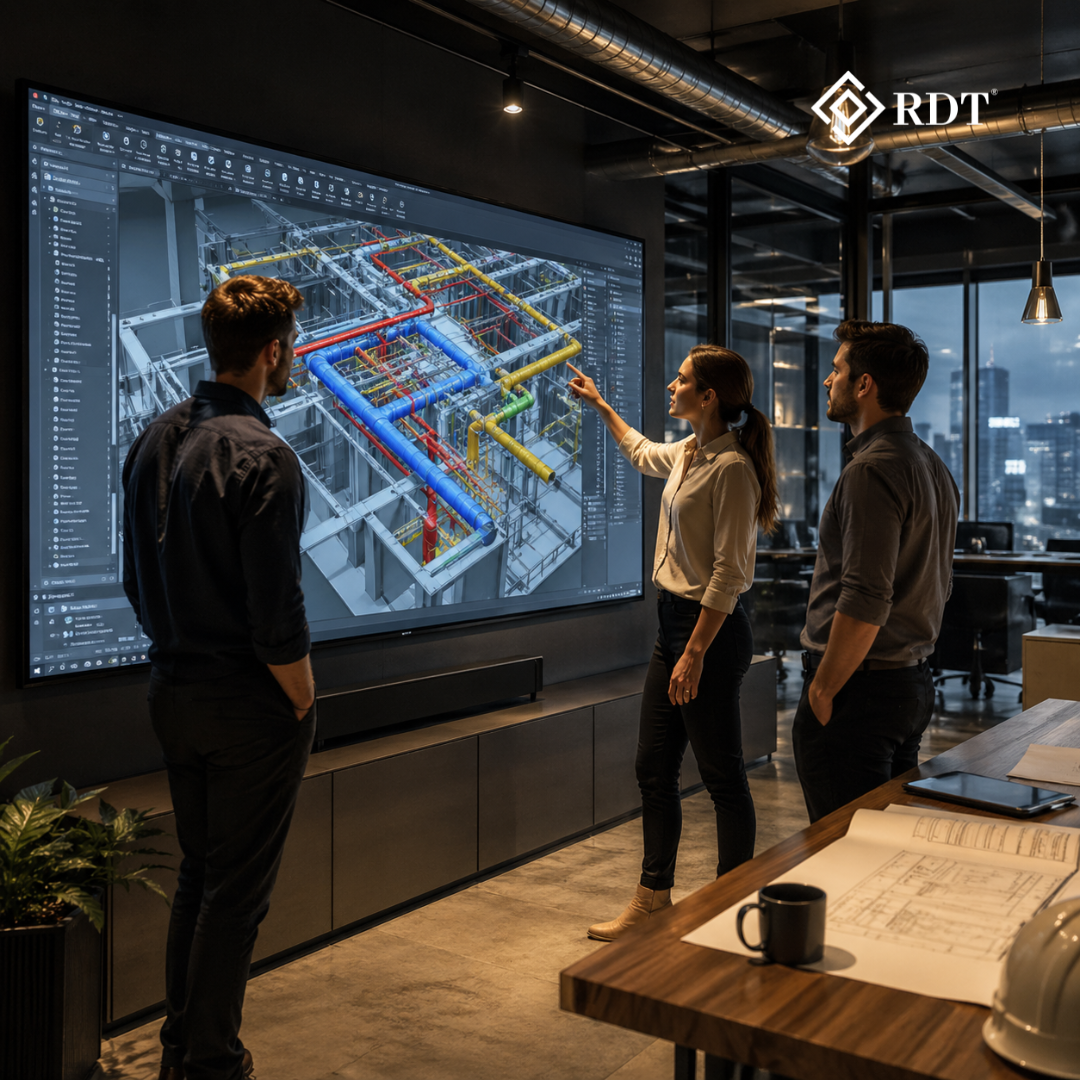
The Architecture Engineering and Construction industry operates at the intersection of design ambition, technical precision and real world execution. Each project is a coordination exercise including heaps of investors, thousands of decisions and a ruthless margin for mistake. Yet in spite of the scale & responsibility involved numerous firms still depend on procedures that were planned for a very distinct era.
Buildings today are keener, solid & more controlled than ever before. Clientele expects confidence long before construction starts. Contractors demand coordinated information they can trust. Owners expect assets that perform well long after handover. Against this backdrop outdated workflows are no longer just inefficient. They are actively dangerous.
The greatest risk facing the AEC industry is not material shortages, labor constraints or even market volatility. It is the continued dependence on processes that no longer match the complexity of the work being delivered.
The Illusion of Control
Outdated processes often create the impression that things are under control. Drawings are issued, meetings are held and approvals are recorded. On the surface the project appears to be progressing normally. In reality critical gaps are forming beneath that surface.
When teams rely heavily on static documents and fragmented coordination real understanding is often assumed rather than confirmed. Stakeholders sign off based on partial information trusting that unresolved details will be addressed later. This creates a fragile form of progress where momentum is built on assumptions instead of clarity.
The illusion persists until construction begins. At that point reality asserts itself quickly. Systems clash tolerances are questioned and intent is reinterpreted in the field. What appeared coordinated on paper unravels under physical constraints.
By the time these issues are visible the cost of correction is already high.
Why Old Workflows Refuse to Disappear
If outdated processes create so many problems why do they remain so widespread? The answer lies in habit and risk aversion.
Many firms have built their operations around workflows that are deeply ingrained. Staff are trained in them, leaders are comfortable managing them and entire business models are structured around their limitations. Changing these processes feels risky especially when projects are already complex and deadlines tight.
There is also a misunderstanding that new procedures are naturally troublesome. Firms concern that accepting new approaches will slow projects down or uncover knowledge gaps among teams. As a result they continue using familiar systems even when those systems are clearly underperforming.
The irony is that the real disruption comes later when outdated processes fail under pressure.
Information Without Context
One of the most damaging aspects of legacy workflows is how they treat information. Data is produced in large volumes but rarely in a way that provides context or insight.
Drawings describe geometry but not experience. Schedules outline sequences but not spatial constraints. Specifications define requirements but not coordination outcomes. Each document serves a purpose yet none provide a complete picture.
This forces stakeholders to mentally assemble the project in their own way. Architects imagine design intent engineers focus on system performance and contractors think in terms of buildability. Without a shared reference point these interpretations diverge.
Misalignment is not caused by incompetence. It is caused by processes that fragment understanding.
The Compounding Effect of Small Errors
Outdated processes rarely result in one catastrophic failure. Instead they generate a steady stream of small issues that compound over time.
A minor coordination oversight leads to a site query. The response triggers a design adjustment. That adjustment affects another discipline. Every step swallows time and presents the latest menaces. None of these problems are important on their own but together they undermine schedules, budgets & faith.
Because these challenges appear slowly they are frequently normalized. Teams accept them as part of the job. Contingencies are increased expectations lowered and inefficiency becomes embedded in the project culture.
The true cost is not just financial. It is the loss of confidence in the process itself.
When Decisions Are Made Too Late
Another critical weakness of outdated workflows is the timing of decisions. Many key choices are effectively deferred until construction because the information available earlier is not clear enough to support confident decisions.
Clients approve layouts without fully understanding spatial relationships. Engineers finalize systems without seeing how they interact physically. Contractors commit to sequences before constructability issues are visible.
Late decisions are inherently risky. They compress timelines and reduce flexibility. Options that would have been simple to explore earlier become expensive or impossible to implement later.
Modern projects demand earlier certainty. Old processes deliver it far too late.
Technology Solely Is Not the Answer
The industry has invested vigorously in advanced tools over the current decades. Yet numerous projects still undergo from the similar problems they encountered years ago. This is because tools without process change simply replicate old problems in a digital format.
Using advanced software while maintaining fragmented workflows does not improve outcomes. It often creates new layers of complexity. Files are generated but not integrated. Models exist but are not trusted. Data is available but not aligned.
Real improvement requires rethinking how information is created, shared, reviewed and validated. Technology should support better decision making, not just faster document production.
Risk Has Expanded Beyond the Jobsite
Traditionally risk in construction was associated with safety incidents delays and cost overruns. While these remain critical the consequences of outdated processes now extend much further.
Clients are increasingly sensitive to uncertainty. Projects plagued by revisions and coordination issues damage long term relationships. Owners remember which teams delivered clarity and which delivered confusion.
Operational risk is also growing. Buildings are anticipated to execute effectively for decades. Inadequately unified documentation makes future maintenance improvements and refurbishments more hard and expensive.
There is also a human cost. Experts functioning within broken procedures spend much of their time responding instead of creating. This leads to annoyance, exhaustion and loss of skill at a time when the industry can least afford it.
The Shift Toward Intentional Delivery
Reducing risk in the AEC industry requires a shift from reactive delivery to intentional delivery. This means designing not just the building but the process used to deliver it.
Intentional processes prioritize shared understanding early. They focus on coordination before documentation and clarity before speed. Information is structured to support decision making, not just compliance.
This approach does not eliminate change but it ensures that change is informed and manageable. Teams understand the impact of decisions before they are made. Issues are identified when options still exist.
Most importantly intentional delivery restores trust in the process.
The Expense of Standing Still
Firms that continue depending on obsolete workflows encounter a growing complicated future. Projects are becoming more complicated, margins are shrinking and client hopes are increasing. There is less toleration for inadequacy and far less tolerance for frequent errors.
Competitors who invest in superior procedures will provide more expected results. They will win trust and secure repeat work. Others will find themselves trapped in cycles of rework disputes and declining profitability.
Standing still is not a neutral choice. In today’s AEC environment it is a strategic risk.
Building a Safer Path Forward
The AEC industry does not need radical reinvention. It needs thoughtful evolution. The knowledge and expertise already exist. What must change is how that expertise is coordinated and communicated.
Better processes create transparency, alignment and accountability. They allow teams to focus on solving meaningful problems instead of correcting preventable ones. They reduce risk not by adding bureaucracy but by removing ambiguity.
Outdated processes may feel familiar but familiarity is no longer a measure of safety. In an industry built on precision collaboration and trust the greatest threat is continuing to work as though complexity can be managed with tools and methods designed for a simpler time.
The firms that recognize this will not only reduce risk. They will define the future of how projects are delivered.
Strengthen clarity, reduce risk, and drive smarter collaboration across your projects with RDT Technology as your trusted AEC process and delivery partner.