The commercial real estate industry has become more competitive than ever. Developers are constantly searching for better ways to present their projects, attract investors, and convince potential buyers or tenants. Traditional marketing materials such as floor plans, technical drawings, and written descriptions are no longer enough to communicate the full vision of a commercial project. Modern buyers expect to see exactly what they are investing in before construction is completed.
This is where architectural rendering plays a significant role. Rendering allows commercial developers to present realistic visual representations of buildings and spaces long before the physical structure exists. These visuals help people understand the design, scale, materials, and environment of a project with clarity and confidence. As a result, rendering has become one of the most powerful marketing tools available to commercial developers today.
This article explores how rendering improves marketing strategies for commercial developments and why it has become essential for successful real estate promotion.
Helping Developers Present a Clear Vision
Commercial projects often involve large scale investments and complex designs. When developers rely only on technical drawings or basic illustrations, it can be difficult for investors or clients to fully understand the concept. Many people are not trained to interpret architectural drawings, which can lead to confusion or hesitation.
Rendering solves this problem by converting technical designs into realistic visuals that anyone can understand. A well crafted rendering shows the building exterior, materials, lighting, landscaping, and surrounding environment in a lifelike manner. It allows viewers to imagine how the finished project will look and feel.
For commercial developers, this clarity is extremely valuable. Investors and decision makers are more confident when they can clearly visualize the final outcome of a project. This visual clarity often accelerates approvals and investment decisions.
Creating Strong First Impressions
In commercial real estate marketing, the first impression can determine whether a project attracts attention or gets ignored. Potential investors, tenants, and buyers are exposed to numerous projects every day, especially through digital platforms and property listings.
High quality renderings immediately capture attention. A realistic image of a modern office tower, shopping complex, or mixed use building creates a sense of professionalism and credibility. It communicates that the developer has invested time and resources into planning a high quality project.
Strong visuals also increase engagement across marketing platforms such as websites, brochures, social media campaigns, and digital advertisements. Projects presented with compelling renderings often receive more inquiries and generate greater interest compared to those relying only on simple drawings.
Supporting Pre Construction Marketing
One of the biggest challenges for commercial developers is marketing projects before construction begins. At this stage, the property physically does not exist, yet developers still need to attract investors, tenants, and partners.
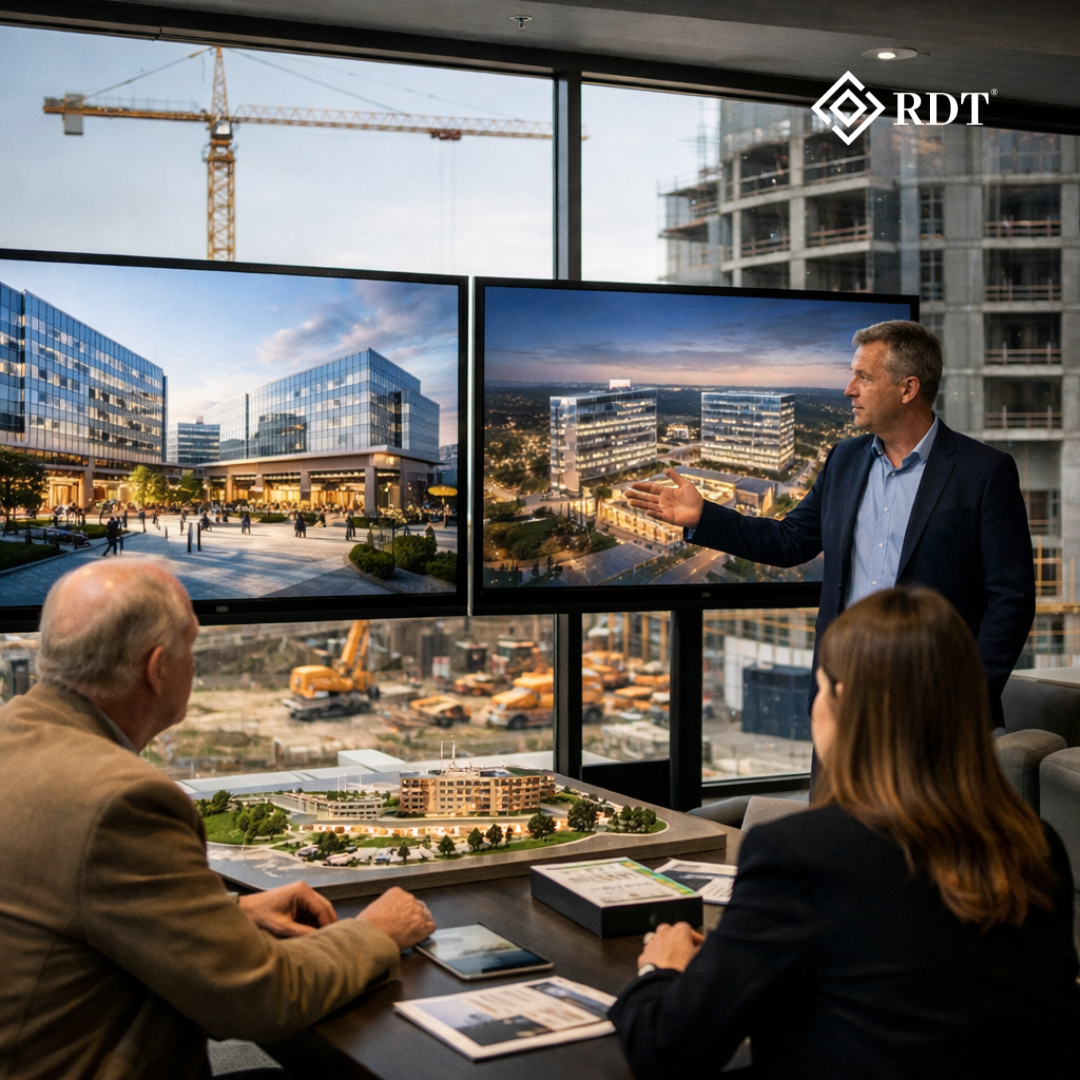
Rendering allows developers to market their projects effectively during this early phase. Instead of presenting an empty plot of land, they can show realistic visualizations of the future building and surrounding spaces. These visuals help stakeholders understand the scale, layout, and potential value of the project.
Pre construction marketing supported by rendering can lead to early commitments from investors and tenants. In many cases, office spaces or retail units are reserved even before construction starts. This early interest reduces financial risk and strengthens the overall feasibility of the project.
Enhancing Property Listings and Marketing Materials
Marketing a commercial development requires a variety of promotional materials. Developers often create project brochures, digital presentations, property listings, and investor proposals. The effectiveness of these materials depends largely on the quality of visual content.
Architectural renderings enhance every type of marketing asset. A well designed brochure with realistic visuals immediately communicates the identity and atmosphere of the project. Websites and online listings become more engaging when visitors can see lifelike representations of the property.
In addition, renderings can be used to showcase different perspectives of a project. Developers can present exterior views, interior spaces, entrance areas, parking facilities, and surrounding landscapes. This comprehensive visual presentation allows potential clients to explore the project more thoroughly.
Helping Investors Understand Project Potential
Commercial developments often require significant financial investment. Investors want to understand how a project will look, function, and perform before committing funds. Technical drawings alone may not provide enough information for confident decision making.
Rendering bridges this communication gap. Realistic visuals help investors understand the architectural quality, building scale, and design details. They can see how the project fits within its environment and how the overall space will function once completed.
This visual clarity strengthens investor confidence. When investors can clearly visualize the completed project, they are more likely to believe in its commercial potential and long term value.
Improving Communication Between Stakeholders
Large commercial projects involve multiple stakeholders including architects, developers, contractors, investors, and marketing teams. Effective communication between these parties is essential for successful project development.
Renderings serve as a shared visual reference that helps everyone understand the design intent. Instead of relying on complex technical discussions, teams can review visual representations of the building and discuss ideas more easily.
Marketing teams also benefit from these visuals because they can align their promotional strategies with the architectural concept. This alignment ensures that the marketing message accurately reflects the design and identity of the project.
Strengthening Branding and Project Identity
Every commercial development has a unique identity that reflects its purpose and target market. A luxury office building, a retail shopping center, and a mixed use complex all require different branding approaches.
Architectural rendering helps developers express this identity visually. Lighting, materials, landscaping, and surrounding elements can be presented in a way that reflects the character of the development. For example, a premium commercial tower may be shown with elegant lighting and sophisticated architectural details, while a retail complex may emphasize vibrant public spaces and pedestrian areas.
By using consistent visuals across marketing materials, developers can build a strong and recognizable brand for their projects. This visual branding strengthens the overall marketing strategy and helps projects stand out in a crowded marketplace.
Enabling Digital and Social Media Marketing
Modern real estate marketing relies heavily on digital platforms. Developers promote their projects through websites, social media channels, online advertisements, and email campaigns. Visual content plays a crucial role in the success of these platforms.
Renderings provide high quality images that perform exceptionally well in digital marketing campaigns. Eye catching visuals encourage users to stop scrolling and engage with the content. This engagement increases the chances that potential investors or tenants will explore the project further.
Social media platforms especially benefit from strong visual content. Renderings can be used for promotional posts, project announcements, and marketing campaigns that reach a broader audience. As a result, developers can build awareness and generate interest even before construction begins.
Showcasing Interior and Exterior Experiences
Commercial developments include more than just building structures. They involve interior spaces, common areas, entrances, parking facilities, and surrounding landscapes. Potential tenants and investors want to understand how these spaces will function and feel.
Rendering allows developers to showcase both exterior architecture and interior experiences. Realistic interior visuals can demonstrate office layouts, lobby designs, retail spaces, and meeting areas. Exterior visuals can highlight building entrances, public plazas, and landscaping elements.
This comprehensive presentation helps potential clients imagine how they will interact with the space in real life. Such immersive visuals make the project more appealing and easier to understand.
Reducing Uncertainty in Early Stages
Real estate investments involve risk, especially during the early stages of development. When stakeholders cannot clearly visualize the outcome of a project, uncertainty increases.
Rendering reduces this uncertainty by providing a realistic preview of the finished development. Stakeholders can see how design elements come together and how the building integrates with its surroundings. This transparency builds trust and encourages stronger collaboration between developers and investors.
For commercial developers, reducing uncertainty is an important step toward securing financial backing and long term partnerships.
Supporting Long Term Marketing Strategies
The marketing journey of a commercial development does not end once construction begins. Developers continue to promote the project throughout the construction process and even after completion.
Renderings remain valuable during all these stages. Early in the project, they help attract investors and partners. During construction, they support marketing campaigns and property listings. After completion, they can still be used in promotional materials to highlight the design vision that shaped the final structure.
This long term marketing value makes rendering a worthwhile investment for commercial developers who want to maintain consistent branding and visual communication throughout the lifecycle of a project.
Conclusion
Architectural rendering has transformed the way commercial developers market their projects. By turning technical designs into realistic visuals, rendering helps developers communicate their vision clearly and effectively. It enhances marketing materials, strengthens investor confidence, and supports pre construction promotion.
In a competitive commercial real estate market, visual storytelling plays a crucial role in attracting attention and building trust. Developers who integrate high quality renderings into their marketing strategies gain a strong advantage when presenting their projects to investors, tenants, and the broader market.
Rendering not only improves the appearance of marketing materials but also enhances communication, reduces uncertainty, and supports better decision making. For commercial developers aiming to present ambitious projects with clarity and impact, architectural rendering has become an essential part of modern real estate marketing.
If you want to present your commercial developments with powerful visuals that attract investors and buyers, partner with RDT Technology. Our expert rendering and visualization services help transform architectural concepts into realistic imagery that strengthens marketing campaigns and showcases the true potential of your projects. Let RDT Technology help you market your commercial developments with confidence and clarity. 🚀