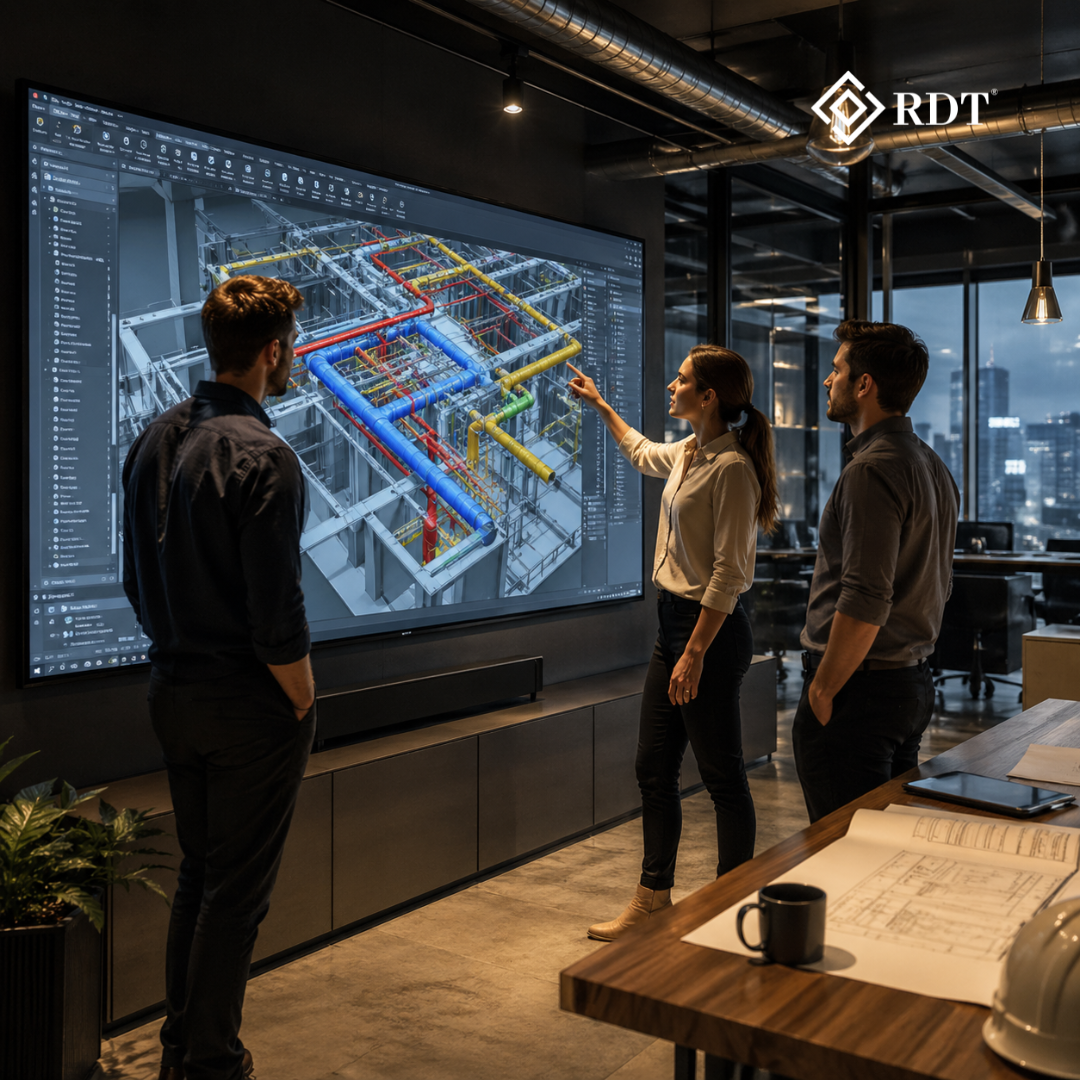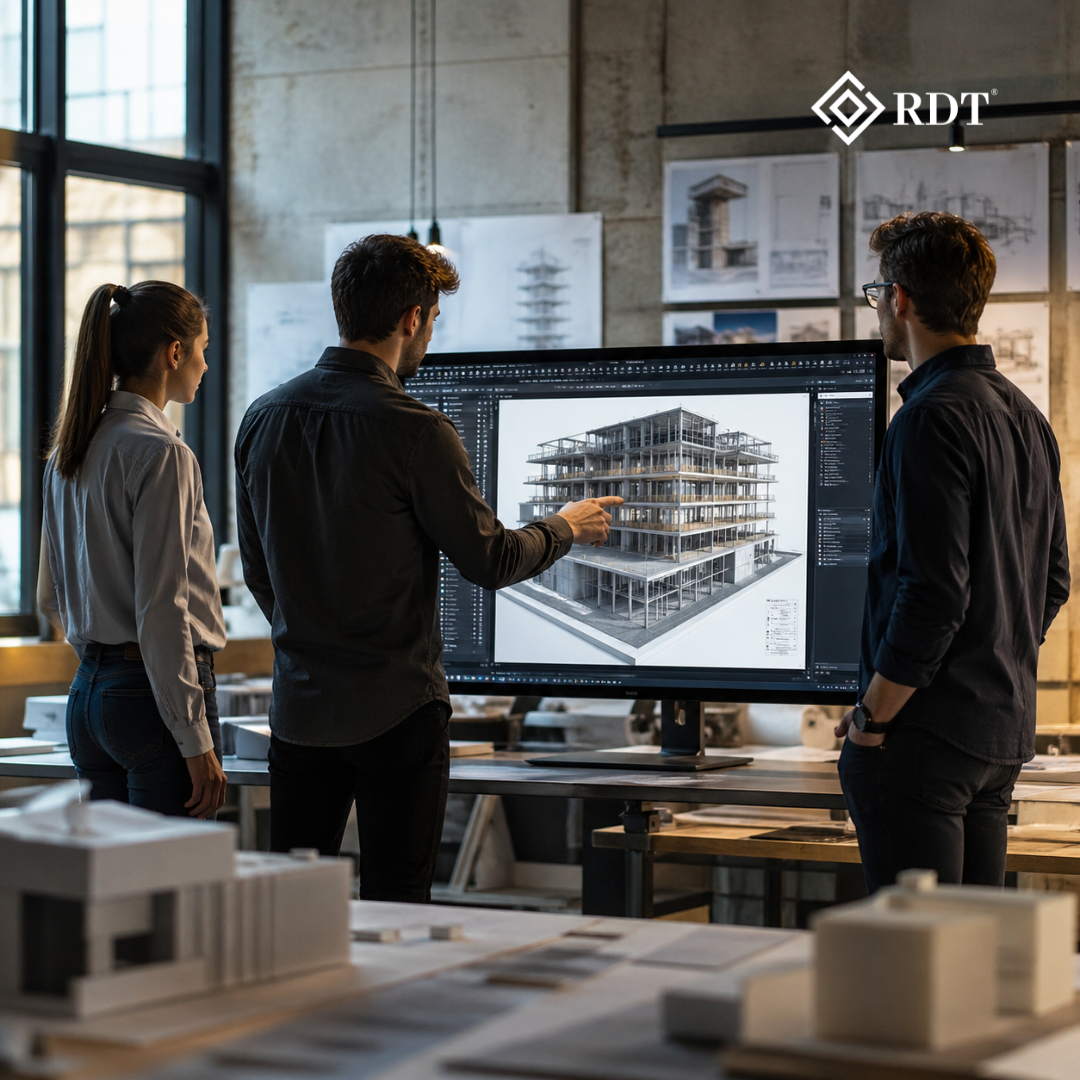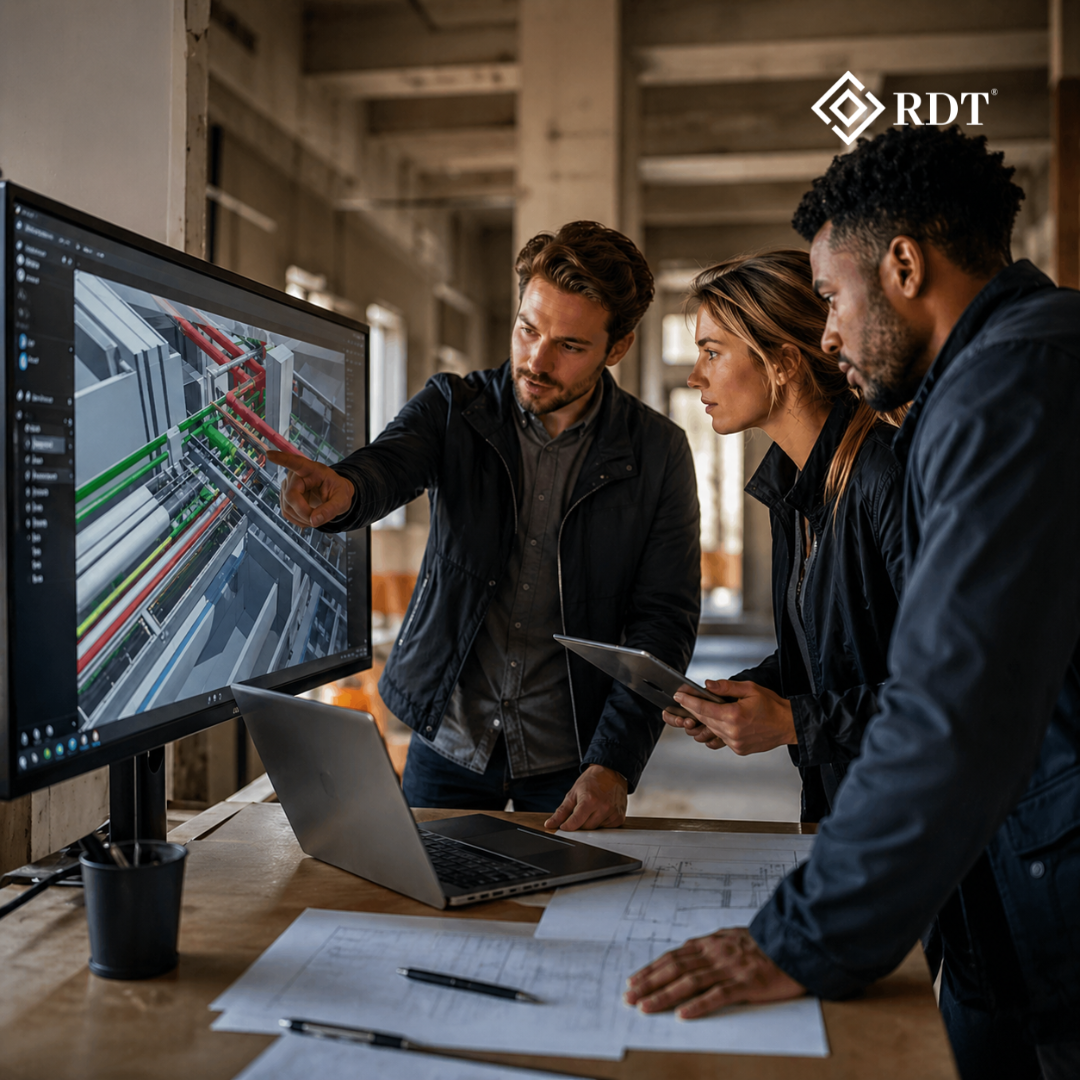
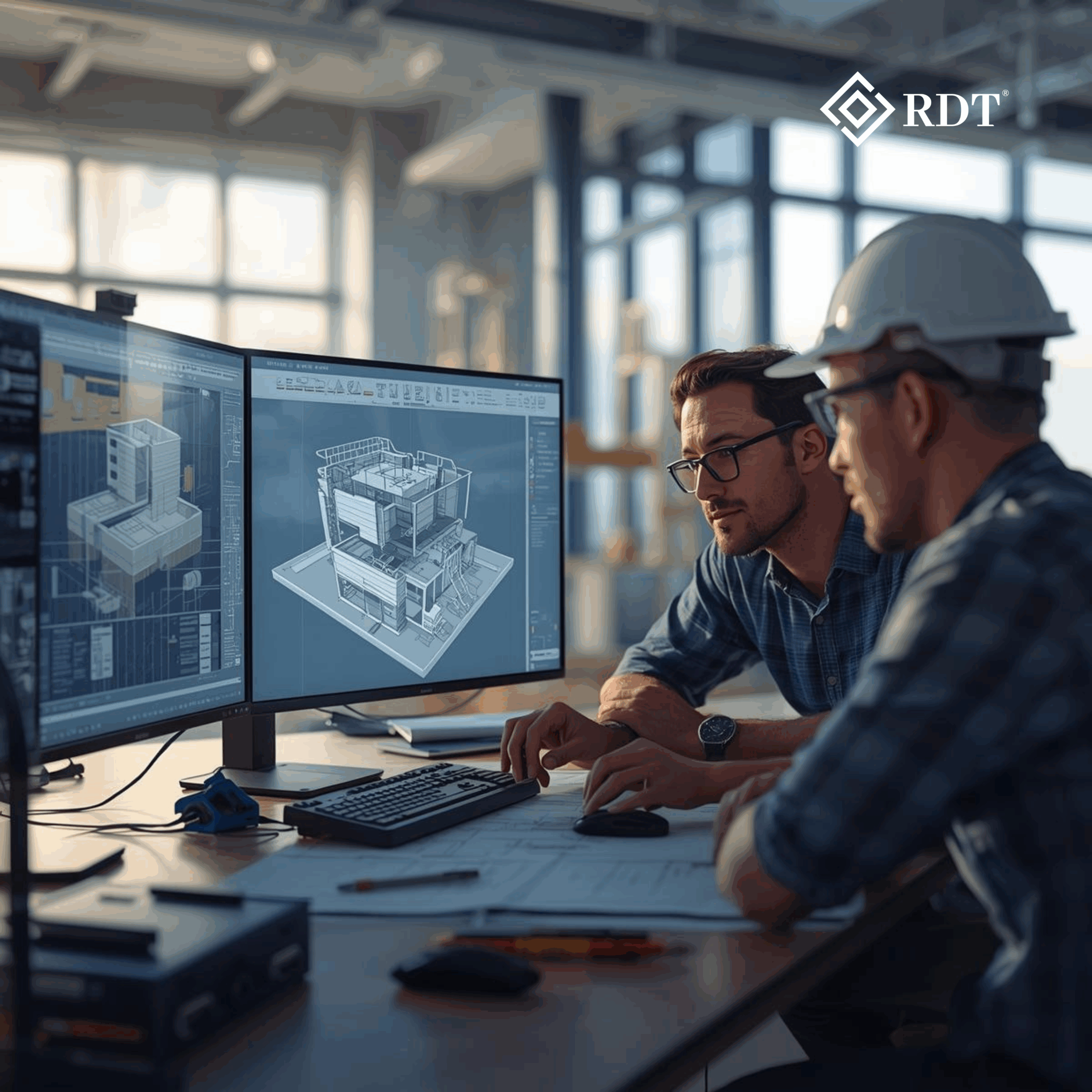
Engineering has always been about solving problems at scale. From high rise towers to transportation networks and industrial plants, modern projects involve thousands of interconnected components. Each system must work in harmony with the others. Structural frameworks support mechanical services. Electrical systems power operations. Plumbing networks ensure functionality. A single misinterpretation in drawings can lead to delays, rework, and financial losses.
In this environment, clarity is not a luxury. It is a necessity. This is where 3D visualization transforms the way engineering is understood, communicated, and executed.
The Challenge of Understanding Complex Engineering
Traditional engineering communication relies heavily on two dimensional drawings. Plans, sections, and elevations provide technical accuracy, but they often require deep expertise to interpret correctly. While engineers and architects are trained to read these drawings, stakeholders such as project owners, investors, contractors, and facility managers may struggle to visualize how everything fits together.
Even experienced professionals can face challenges when dealing with highly complex systems. Overlapping services, tight spatial constraints, and multi disciplinary coordination make it difficult to anticipate conflicts by looking at flat drawings alone. When clarity is limited, errors become more likely.
3D visualization addresses this gap by converting abstract lines into realistic spatial representations. Instead of imagining how components interact, teams can see them in context.
Bringing Designs to Life
One of the most powerful advantages of 3D visualization is its ability to transform technical data into visual clarity. Engineers can develop detailed digital models that accurately represent geometry, materials, and spatial relationships.
When a structural beam intersects with ductwork, the issue becomes immediately visible. When ceiling heights conflict with lighting layouts, the clash is clear. Instead of relying on assumptions, teams can review the model and make informed decisions early in the process.
This visual transparency builds confidence among all participants. Clients can better understand the scope of work. Contractors can plan installations more efficiently. Engineers can validate performance and compliance before construction begins.
Enhancing Communication Across Teams
Engineering projects involve collaboration among multiple disciplines. Structural engineers, mechanical consultants, electrical designers, architects, and project managers must work in coordination. Communication breakdowns often occur when each discipline interprets information differently.
3D visualization acts as a common language. Instead of lengthy explanations or complex markups, stakeholders can review a shared model that illustrates every detail. Discussions become clearer and faster. Decisions are made with greater certainty.
For example, when reviewing a plant room layout, teams can rotate the model, isolate systems, and evaluate accessibility. Questions that might have required multiple meetings can be resolved in a single session. This collaborative clarity reduces misunderstandings and strengthens project alignment.
Improving Decision Making
Every engineering project involves critical decisions. Material selection, structural systems, routing strategies, and construction sequencing all impact cost and performance. Poor visualization can lead to choices based on incomplete understanding.
With 3D visualization, decision makers can evaluate options more effectively. Alternative layouts can be modeled and compared. Performance simulations can be integrated. Visual walkthroughs can highlight potential operational challenges.
When stakeholders can see the consequences of a design choice, they are more likely to make informed decisions. This reduces risk and improves overall project outcomes.
Reducing Errors and Rework
Rework is one of the most expensive challenges in construction and engineering. Errors discovered on site often require demolition, redesign, and additional labor. Many of these issues stem from misinterpretation of drawings or uncoordinated systems.
3D visualization helps detect clashes and inconsistencies before construction begins. When all systems are modeled in a coordinated environment, conflicts can be identified and resolved during the design stage.
This proactive approach not only saves time and money but also protects project schedules. Contractors can proceed with confidence, knowing that the design has been thoroughly reviewed and validated.
Supporting Client Engagement
Clients and investors may not have technical backgrounds, yet they are responsible for approving designs and funding projects. Presenting them with traditional technical drawings can create confusion and hesitation.
3D visualization bridges this gap by presenting complex engineering in an intuitive format. Photorealistic renderings and immersive walkthroughs allow clients to experience the project before it is built. They can visualize spatial layouts, equipment placements, and functional zones.
When clients fully understand the design, approvals happen more smoothly. Feedback becomes more constructive. The entire approval process becomes more efficient.
Enabling Better Construction Planning
Construction is a dynamic process that requires careful sequencing and coordination. Delays often occur when teams encounter unexpected site conditions or logistical conflicts.
Through 3D visualization, construction teams can simulate installation processes and review spatial constraints in advance. Equipment placement, crane operations, and material storage can be analyzed within the model.
This foresight improves site planning and enhances safety. Workers have a clearer understanding of how components fit together, reducing confusion during installation.
Strengthening Facility Management
The value of 3D visualization does not end at project completion. Digital models can serve as valuable resources for facility management. Maintenance teams can reference the model to locate systems, access equipment data, and plan upgrades.
Understanding the relationship between systems is essential for efficient operations. A well developed 3D model provides that clarity. It becomes a long term asset that supports the lifecycle of the facility.
Increasing Efficiency Through Integration
Modern engineering projects often incorporate digital workflows such as Building Information Modeling. When 3D visualization is integrated within these workflows, the benefits multiply.
Models can include not only geometry but also data about materials, performance, and specifications. This information can be shared across platforms, enabling seamless coordination.
Integrated visualization improves productivity and reduces duplication of effort. Instead of recreating information in multiple formats, teams work from a unified source of truth.
Building Trust and Transparency
Trust is fundamental in engineering projects. Clients must trust consultants. Contractors must trust design documentation. Investors must trust project feasibility.
3D visualization enhances transparency by providing a clear and accurate representation of the design. Stakeholders can verify assumptions and confirm that requirements are met.
When transparency increases, disputes decrease. Projects move forward with greater confidence and collaboration.
Encouraging Innovation
Complex engineering challenges require innovative thinking. However, innovation is difficult when concepts remain abstract. Visualization enables teams to explore creative solutions in a tangible way.
Engineers can test unconventional layouts, evaluate alternative materials, and assess performance visually. Seeing the impact of new ideas within a realistic model encourages experimentation and refinement.
This environment of visual exploration fosters continuous improvement and higher quality outcomes.
The Future of Engineering Clarity
As projects grow in scale and complexity, the need for clarity becomes even more critical. Urban development, infrastructure expansion, and sustainable design demand precise coordination.
3D visualization is not simply a presentation tool. It is a strategic asset that enhances understanding at every stage of the project lifecycle. From initial concept to final operation, it transforms complex engineering into clear and actionable insight.
Organizations that embrace visualization gain a competitive advantage. They reduce risk, improve communication, and deliver higher quality projects. In an industry where precision matters, clarity drives success.
Conclusion
Complex engineering does not have to be overwhelming. With the right visualization tools and expertise, intricate systems become understandable and manageable. Stakeholders can collaborate effectively. Decisions can be made confidently. Projects can move forward with reduced uncertainty.
3D visualization has redefined how engineering is communicated and executed. It turns technical complexity into visual clarity, ensuring that every participant shares the same understanding.
If you are looking to transform complex engineering designs into clear, coordinated, and construction ready solutions, partner with RDT Technology. Our expertise in advanced 3D visualization and BIM services ensures precision, transparency, and seamless project delivery. Contact RDT Technology today and experience engineering clarity at its best.