
The AEC industry has always been a cornerstone of global development. From residential buildings and commercial towers to infrastructure and industrial facilities, architecture, engineering, and construction shape the way societies live and function. For decades, the industry relied heavily on drawings, physical documentation, and fragmented communication methods to bring projects to life. While these traditional systems built cities and landmarks across the world, they often involved inefficiencies, miscommunication, and costly project delays.
Today, Building Information Modeling has emerged as a transformative force. BIM is not simply a software upgrade or a digital drafting tool. It represents a complete shift in how projects are conceptualized, coordinated, executed, and managed throughout their lifecycle. By integrating data, design, collaboration, and analysis into one intelligent environment, BIM is moving the AEC industry beyond static blueprints into a future defined by precision and connectivity.
The Evolution from Drawings to Intelligent Models
Traditional workflows in the AEC industry revolved around two dimensional drawings. Plans, sections, elevations, and details were created separately, often by different teams. Any change required manual updates across multiple sheets. Even with careful review, inconsistencies frequently occurred. Small discrepancies could escalate into expensive rework during construction.
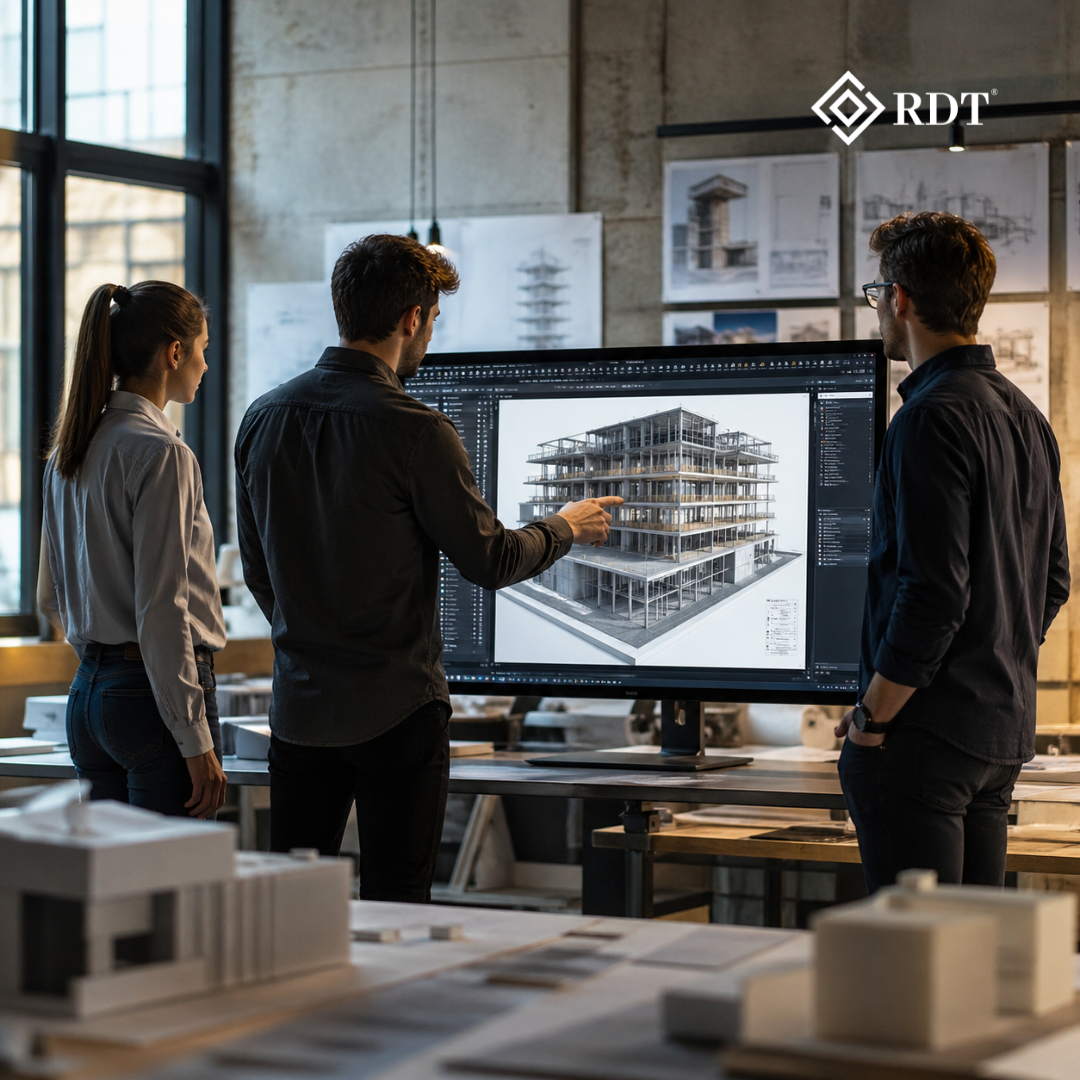
BIM replaces disconnected drawings with a centralized digital model. Instead of representing a building as lines and annotations, BIM creates a three dimensional model embedded with data. Every element contains information about materials, dimensions, specifications, and performance characteristics. When a modification is made to one component, related views and schedules update automatically.
Platforms such as Autodesk Revit allow architects and engineers to design within an intelligent environment where geometry and data coexist. Project teams can analyze structural systems, coordinate mechanical layouts, and refine architectural elements within the same shared model. This integrated approach minimizes inconsistencies and strengthens overall accuracy.
The shift from drawings to data rich models has changed the way professionals interact with their projects. Instead of interpreting flat representations, stakeholders experience a realistic digital building long before construction begins.
Redefining Collaboration in the AEC Industry
One of the most significant impacts of BIM is its ability to foster collaboration. The AEC industry involves multiple disciplines working toward a shared objective. Architects, structural engineers, MEP consultants, contractors, and clients all contribute expertise. In traditional processes, these disciplines often worked independently and exchanged information through static files or printed drawings.
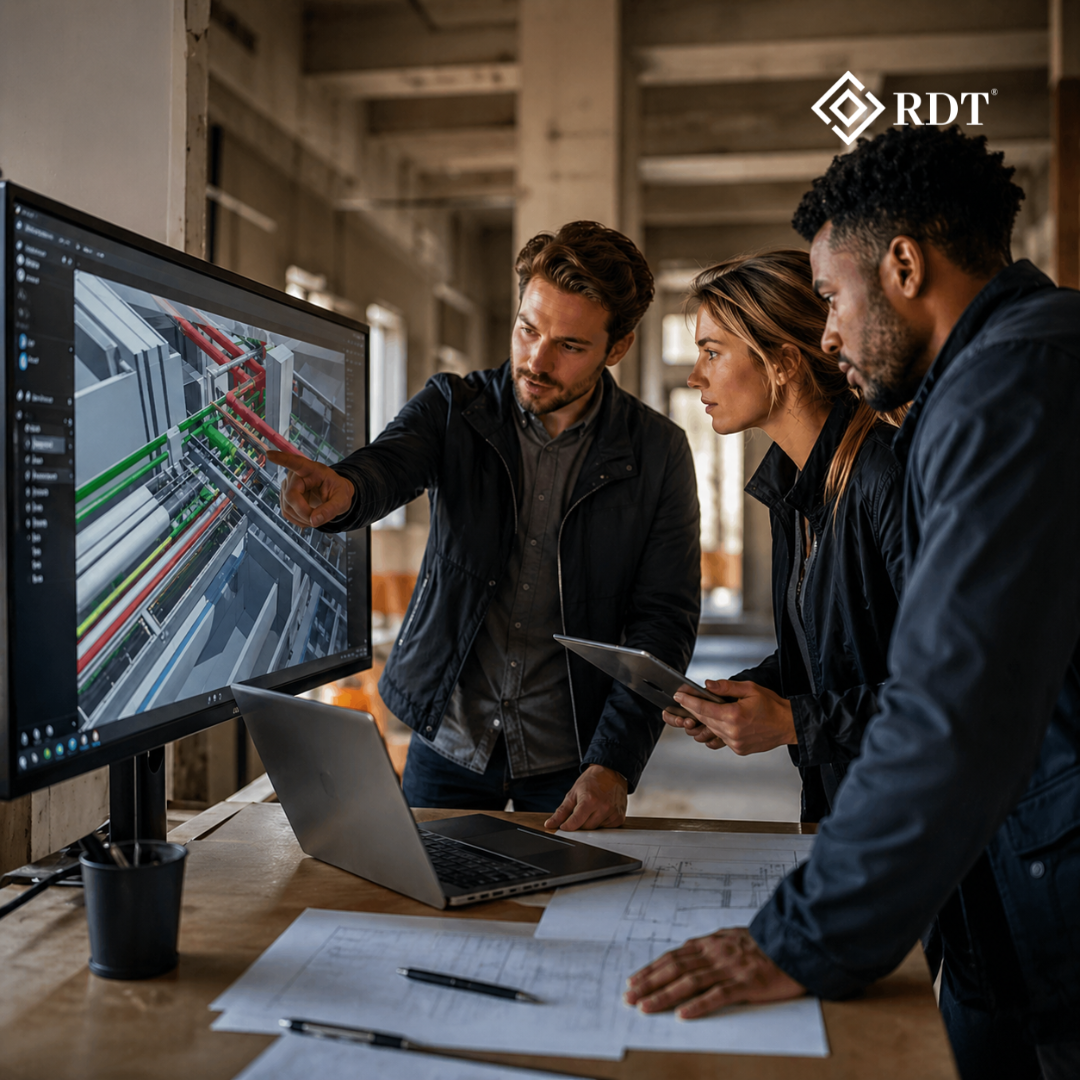
BIM creates a shared digital workspace. Teams can access updated models in real time and coordinate their work within a unified environment. Cloud based solutions such as Autodesk Construction Cloud provide centralized access to models, documentation, and communication tools. This transparency enhances coordination and reduces misunderstandings.
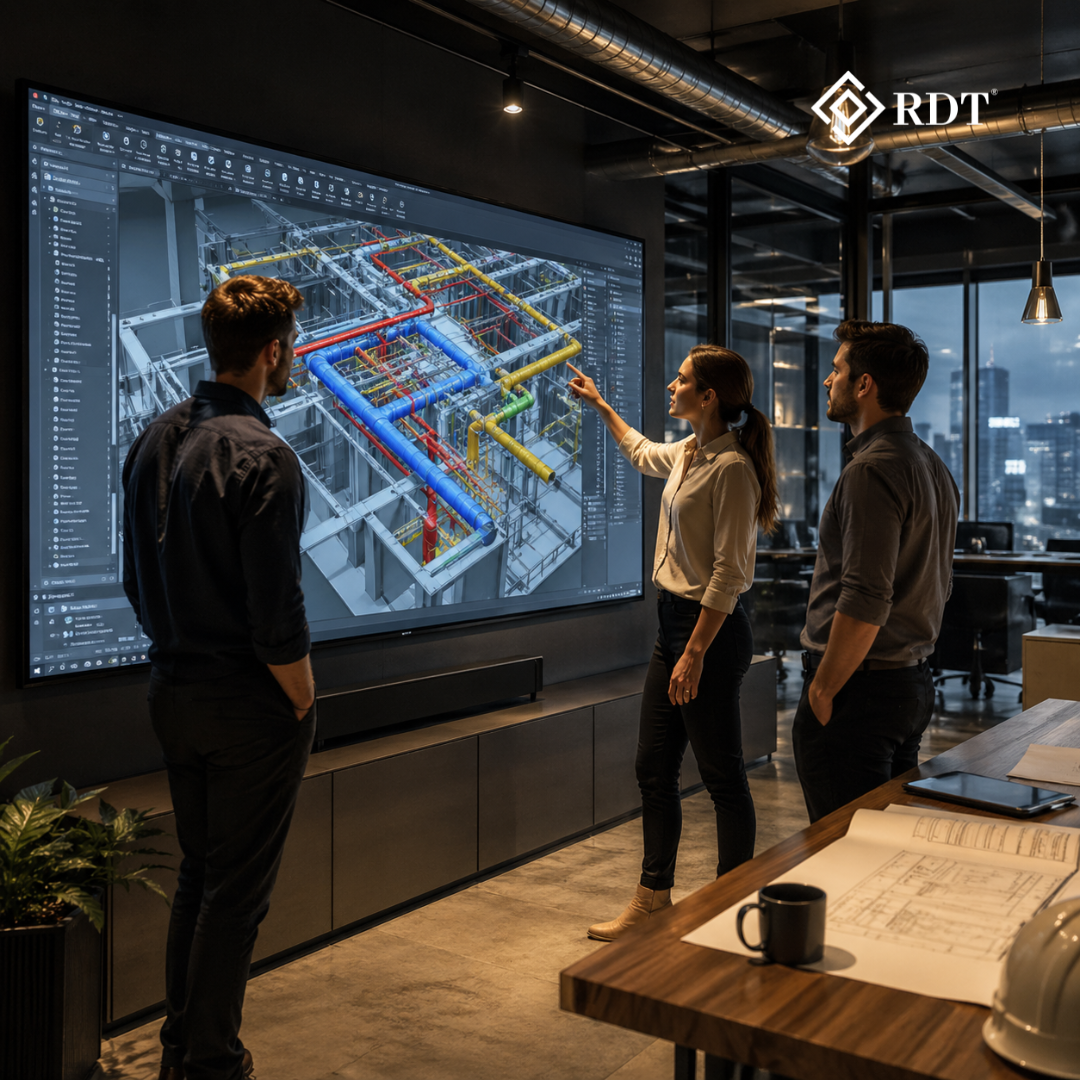
Clash detection is one of the most valuable collaborative benefits of BIM. Software such as Navisworks allows teams to identify spatial conflicts between systems before construction begins. For example, if a duct interferes with a structural beam, the issue can be resolved digitally rather than on site. Early problem solving protects schedules and budgets.
Improved collaboration leads to better outcomes. When teams share information openly and work from a coordinated model, the entire project benefits from improved efficiency and reduced risk.
Improving Accuracy and Reducing Risk
Risk management is a constant challenge in the AEC industry. Construction projects involve complex coordination, strict timelines, and substantial financial investment. Errors discovered during construction can result in delays and increased costs.
BIM significantly reduces these risks by enabling early detection of design conflicts. Detailed modeling helps identify constructability challenges, access limitations, and system overlaps before work begins in the field. This proactive approach limits unexpected issues and supports smoother project execution.
Quantity takeoffs derived directly from BIM models also improve accuracy. Instead of manually measuring drawings, estimators can extract quantities directly from the digital model. This reduces human error and enhances cost reliability.
With better information available at earlier stages, project teams can make informed decisions and maintain stronger control over outcomes.
Integrating Time and Cost for Smarter Planning
The influence of BIM extends beyond three dimensional modeling. In the AEC industry, additional dimensions provide even greater value.
Four dimensional BIM integrates construction scheduling into the model. Each building component can be linked to a timeline, allowing project managers to visualize construction sequences. By simulating progress over time, teams can identify potential conflicts in scheduling and optimize resource allocation.
Five dimensional BIM connects cost information with model elements. As designs evolve, cost data updates automatically based on real quantities. This dynamic integration enhances budget transparency and supports financial forecasting.
When time and cost are integrated with design, project delivery becomes more predictable. Owners gain confidence in budget control, and contractors can manage resources with greater precision.
Enhancing Client Engagement and Visualization
Communication with clients is a critical aspect of the AEC industry. Traditional drawings can be difficult for non technical stakeholders to interpret. Misunderstandings may lead to design revisions late in the project cycle.
BIM improves client engagement through realistic visualization. Three dimensional walkthroughs and renderings allow clients to explore spaces virtually. They can better understand scale, layout, and design intent. This clarity supports informed decision making and reduces last minute changes.
Enhanced visualization also benefits marketing and stakeholder presentations. Developers and investors can experience the project digitally before it is built, strengthening confidence and facilitating approvals.
Supporting Sustainable Development
Sustainability has become a priority across the AEC industry. Environmental responsibility, energy efficiency, and resource optimization are central to modern design strategies.
BIM supports sustainable development by enabling performance analysis during early design stages. Energy modeling, daylight analysis, and material assessments can be conducted within the digital environment. Design teams can compare alternatives and select solutions that reduce environmental impact.
By identifying energy efficient systems and optimizing building performance, BIM contributes to long term operational savings and environmental stewardship. The ability to simulate outcomes before construction allows for smarter and more responsible decisions.
Enabling Prefabrication and Modern Construction Methods
Modern construction methods increasingly rely on prefabrication and modular assembly. These approaches require precise coordination and accurate detailing.
BIM provides the level of detail necessary for off site manufacturing. Fabricators can rely on digital models to produce components with confidence. Accurate geometry and embedded data ensure that prefabricated elements align properly during installation.
This precision accelerates construction timelines and enhances safety. Reduced on site labor lowers exposure to risk and improves overall project efficiency.
Extending Value Beyond Construction
The impact of BIM does not end when construction is completed. In the AEC industry, lifecycle management is gaining importance. Facility managers require accurate information to maintain buildings efficiently.
BIM models can serve as digital records of the built environment. Equipment specifications, maintenance schedules, and asset data remain accessible within the model. Facility teams can use this information to plan maintenance activities and monitor performance.
This lifecycle perspective transforms BIM into a long term asset rather than a temporary design tool. Owners benefit from improved operational efficiency and reduced maintenance costs over time.
Driving Cultural Change in the AEC Industry
Technology alone does not transform an industry. Cultural adaptation is equally important. BIM encourages transparency, accountability, and shared responsibility among project stakeholders.
Successful implementation requires training, leadership support, and standardized workflows. Organizations that embrace collaborative principles unlock the full potential of BIM. Those that resist change may struggle to remain competitive in a rapidly evolving market.
As governments and private clients increasingly require BIM for project delivery, its adoption is becoming standard practice rather than optional innovation.
The Future of the AEC Industry
The future of the AEC industry is closely linked to digital transformation. BIM serves as the foundation for emerging technologies such as virtual reality, augmented reality, and digital twins. These innovations build upon data rich models to enhance visualization and real time performance monitoring.
Digital twins extend BIM into operational phases by integrating live data from sensors and building systems. This creates dynamic models that reflect real world conditions. Predictive maintenance and performance optimization become achievable goals.
As cities grow and infrastructure demands increase, efficiency and precision will define successful project delivery. BIM provides the structure for managing complexity and delivering value.
Conclusion
Beyond blueprints lies a new era for the AEC industry. Building Information Modeling has reshaped project delivery by integrating design, collaboration, analysis, and lifecycle management into a unified digital framework. It reduces risk, enhances accuracy, improves visualization, and strengthens collaboration across disciplines.
The transformation is not merely technological. It represents a shift in mindset toward connected workflows and data driven decision making. As the industry continues to evolve, BIM will remain central to innovation and progress.
The future belongs to organizations that embrace intelligent modeling and collaborative processes. By moving beyond traditional methods and adopting advanced digital practices, the AEC industry can achieve higher standards of efficiency, sustainability, and performance.
Take advantage of our world class BIM Modeling services engineered for seamless delivery of large, complex developments. Partner with RDT Technology today and lead your projects into the future with precision, clarity, and confidence.