
Introduction
Digital transformation has reshaped nearly every major industry, and architecture, engineering, and construction are no exceptions. As projects grow larger, timelines become tighter, and budgets face greater scrutiny, the need for clarity, coordination, and data driven decision making has never been more critical. Traditional workflows that rely on isolated drawings, disconnected teams, and reactive problem solving can no longer keep pace with modern demands.
Building Information Modeling, commonly known as BIM, has emerged as the backbone of digital project delivery across the AEC industry. It is more than a software platform or a 3D modeling tool. It is a structured methodology that integrates people, processes, and technology into a unified digital environment. BIM transforms how projects are planned, designed, constructed, and managed throughout their lifecycle.
By creating a centralized digital representation of physical and functional characteristics, BIM empowers stakeholders to collaborate in real time, reduce risk, optimize performance, and deliver projects with greater certainty.
Understanding Digital Project Delivery
Digital project delivery refers to the use of connected technologies and collaborative workflows to manage a construction project from concept through completion. Instead of relying solely on 2D drawings and manual documentation, digital delivery integrates 3D models, scheduling data, cost information, and performance analytics into a shared ecosystem.
In this environment, architects, engineers, contractors, consultants, and owners work from a common data source. Decisions are informed by accurate models rather than assumptions. Conflicts are resolved virtually before they become costly issues on site. The result is a more efficient, transparent, and predictable process.
At the center of this transformation is BIM.
BIM as the Foundation of Integrated Design
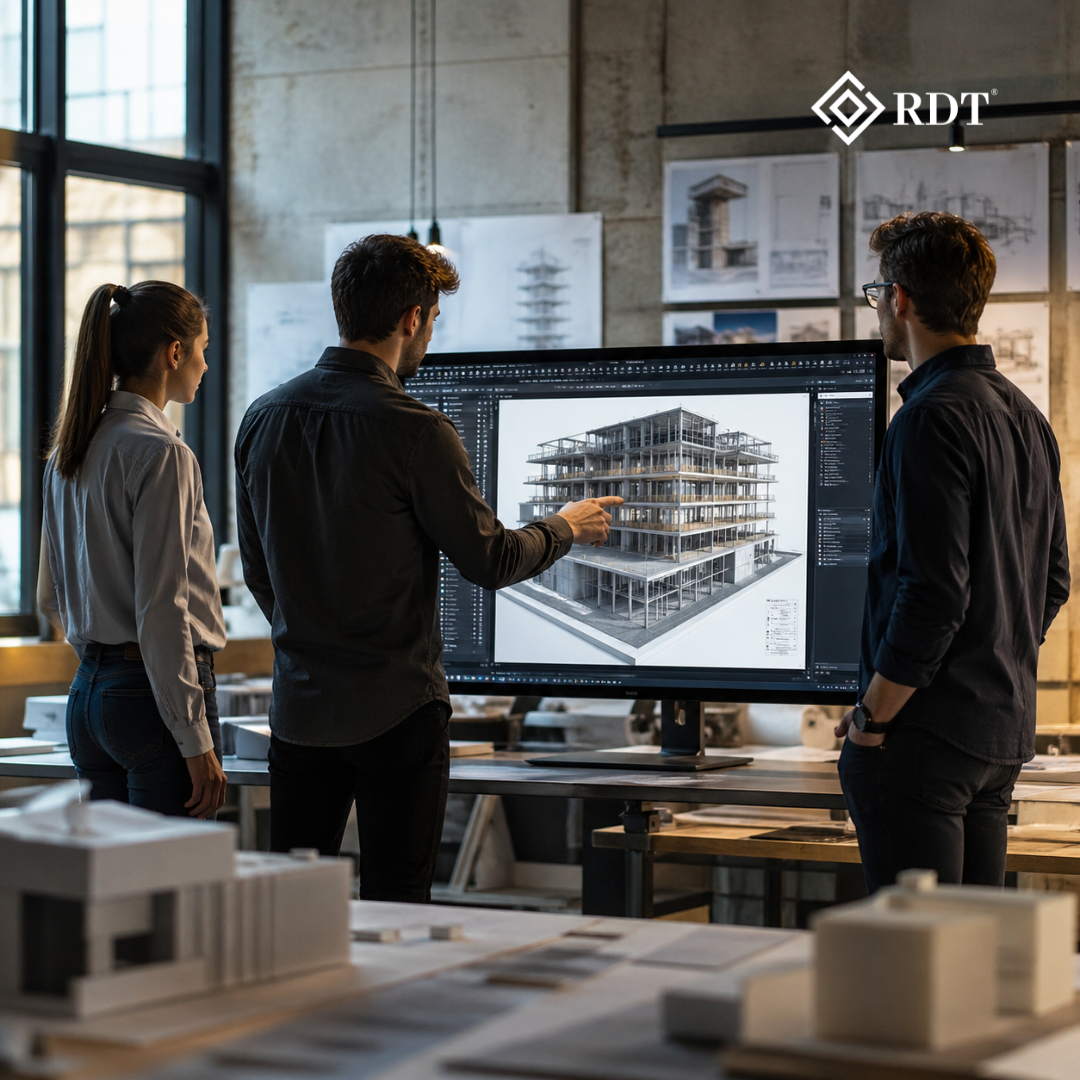
During the design phase, BIM enables teams to move beyond isolated drafting and into intelligent modeling. Architectural, structural, and MEP systems are developed within a coordinated digital model. Each element contains embedded information such as material properties, dimensions, specifications, and performance data.
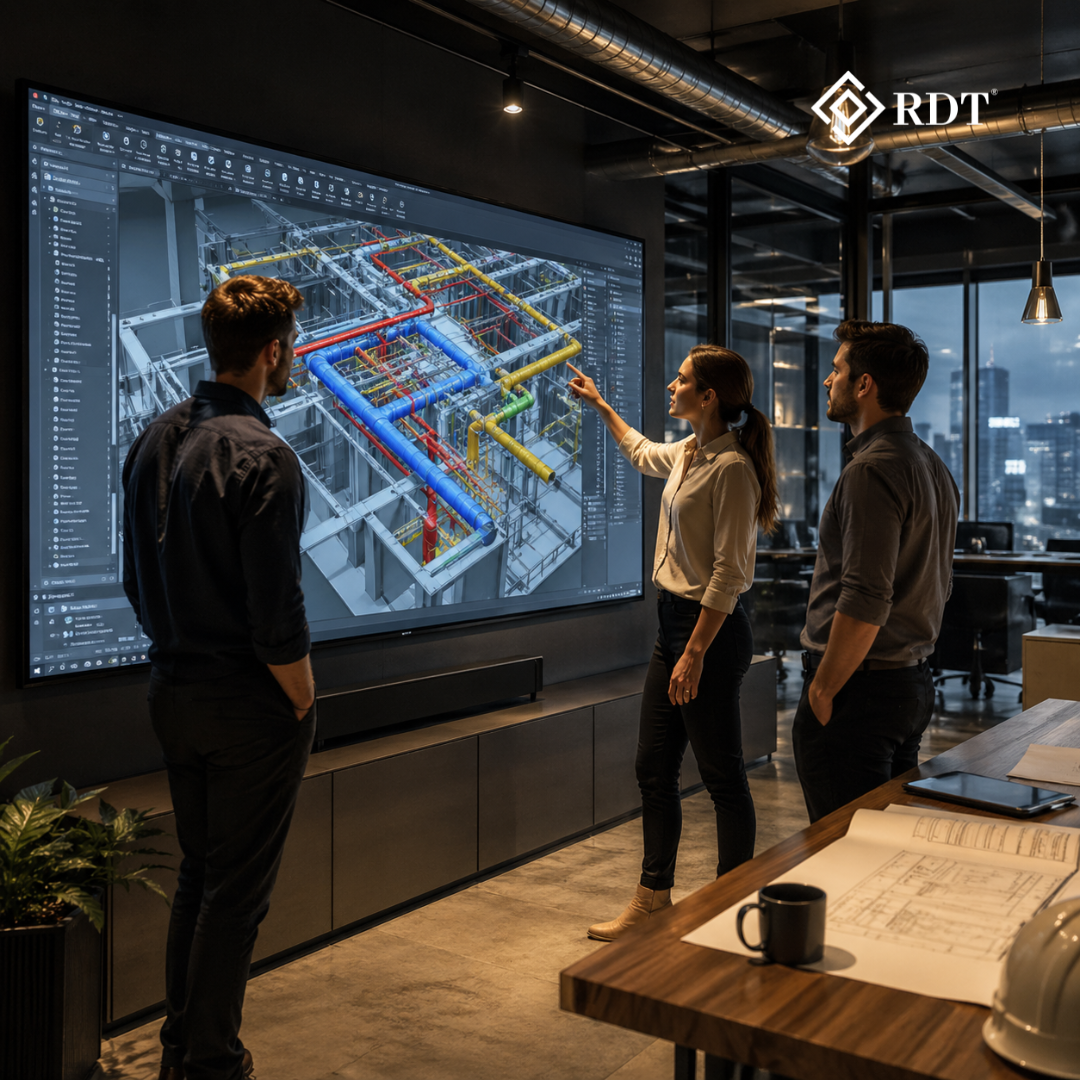
This integration allows designers to understand how systems interact in real time. Structural beams align with architectural layouts. Mechanical ducts avoid clashes with plumbing lines. Electrical pathways are planned with precision. Rather than detecting conflicts during construction, teams identify and resolve them during design.
Clash detection within a BIM environment significantly reduces rework. When potential issues are addressed early, projects avoid delays, cost overruns, and disputes. This proactive approach improves design quality and strengthens coordination across disciplines.
Enhancing Collaboration Across Stakeholders
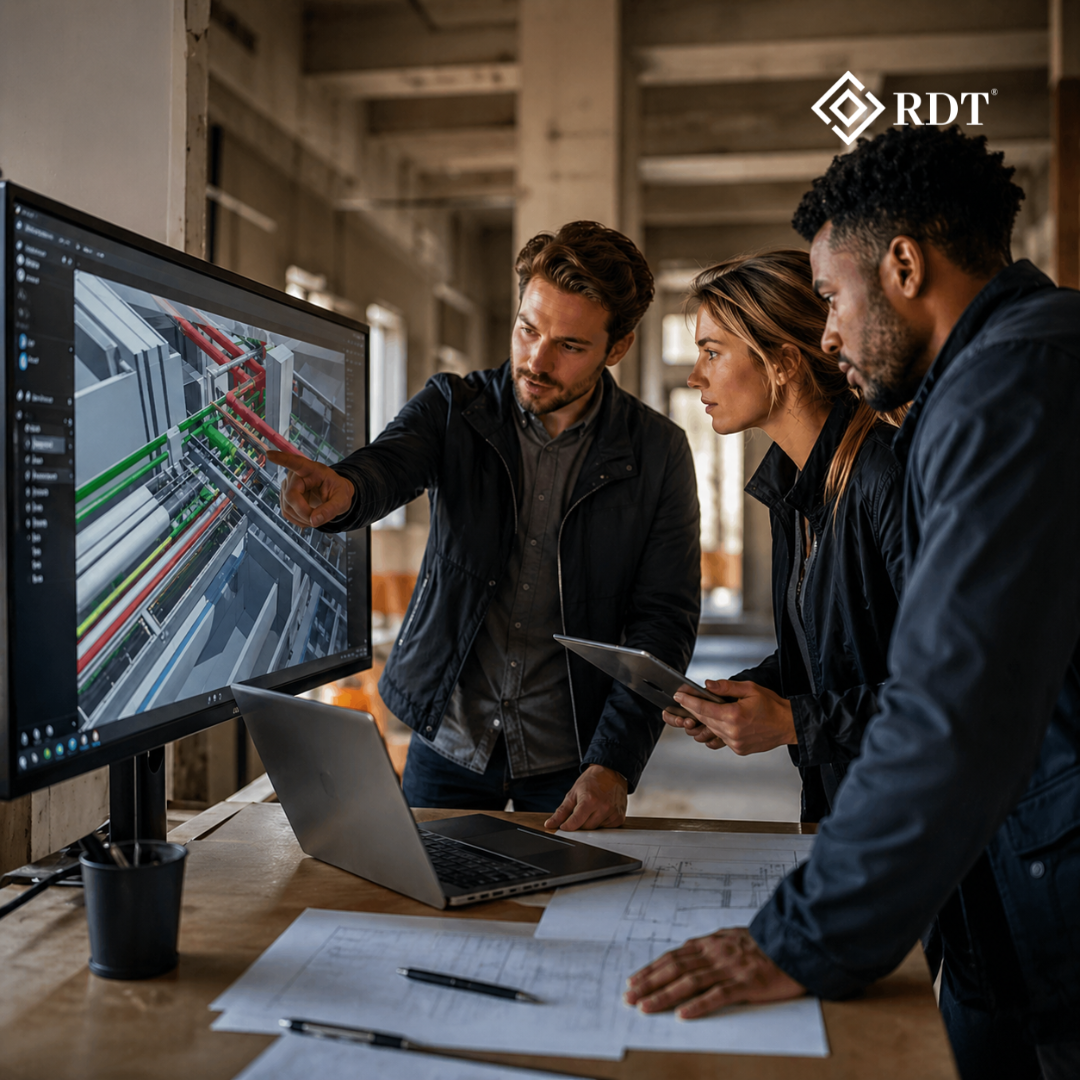
One of the greatest challenges in construction has always been fragmented communication. Separate teams working on different software platforms often struggle to share accurate and updated information. BIM addresses this challenge through a centralized model that acts as a single source of truth.
Cloud based collaboration platforms connected to BIM allow stakeholders to access the latest project data from anywhere. Updates are reflected instantly across teams. Version control is simplified. Transparency improves accountability.
This level of collaboration fosters trust among project participants. Architects can coordinate directly with engineers. Contractors can provide constructability feedback during design. Owners can review progress through realistic visualizations and data driven insights. The entire project team operates within a unified digital environment.
Improving Cost Control Through 5D BIM
Cost management is one of the most critical components of project success. BIM enhances financial control by linking the 3D model to cost data, often referred to as 5D BIM. Quantities are automatically extracted from the model, reducing the risk of manual errors in takeoffs.
As design changes occur, cost implications are updated in real time. Project managers gain immediate visibility into how modifications affect budgets. This dynamic approach enables better financial forecasting and informed decision making.
By connecting geometry with cost information, BIM reduces uncertainty and enhances transparency. Contractors can develop more accurate bids. Owners gain confidence in budget projections. Financial surprises become less common because the model provides continuous insight into project value.
Optimizing Scheduling with 4D BIM
Time is another critical dimension in digital project delivery. BIM integrates scheduling data with the 3D model, creating what is known as 4D BIM. This allows teams to visualize construction sequences over time.
Project managers can simulate different scenarios to identify potential bottlenecks. Construction phases are planned with precision. Resource allocation becomes more efficient. Stakeholders can see how the building will take shape week by week.
This visual approach to scheduling enhances communication and reduces misunderstandings. Teams gain a clearer understanding of site logistics, sequencing, and coordination. Delays are anticipated rather than reacted to, improving overall project performance.
Supporting Sustainable and Energy Efficient Design
Sustainability has become a priority across global markets. BIM plays a vital role in enabling environmentally responsible design. Energy analysis tools integrated with BIM models allow teams to evaluate building performance during early design stages.
Architects can test different façade systems, glazing options, and material selections to optimize energy efficiency. Engineers can simulate heating and cooling loads. Designers can assess daylighting and ventilation strategies before construction begins.
By providing measurable data, BIM supports informed sustainability decisions. Projects can achieve higher performance standards while balancing cost and functionality. This data driven approach contributes to reduced operational expenses and improved long term value.
Enhancing Construction Accuracy and Site Execution
During construction, BIM serves as a powerful coordination tool. Contractors use the model to guide installation, fabrication, and site planning. Prefabrication and modular construction processes benefit significantly from precise digital models.
When dimensions and specifications are verified in a virtual environment, field errors decrease. Trade coordination meetings rely on accurate visualizations rather than abstract drawings. Teams can plan crane locations, material storage areas, and access routes with greater clarity.
The use of BIM in construction improves productivity and reduces waste. Material quantities are accurate. Conflicts are minimized. Workflows become more predictable. The digital model bridges the gap between design intent and physical execution.
Streamlining Documentation and Compliance
Regulatory compliance and documentation management are integral to project delivery. BIM simplifies these processes by maintaining organized, structured data throughout the project lifecycle.
Permit drawings, shop drawings, and as built documentation can be generated directly from the model. Updates are reflected consistently across all documentation sets. This reduces discrepancies and ensures alignment between drawings and actual construction.
For facility managers and owners, the value of BIM extends beyond project completion. The model becomes a digital asset that supports operations and maintenance. Information about equipment, warranties, and performance metrics is readily accessible, enhancing long term asset management.
Reducing Risk and Increasing Predictability
Construction projects involve significant financial and operational risks. Delays, change orders, and disputes can have lasting impacts. BIM reduces these risks by improving visibility and coordination.
Early conflict detection minimizes costly rework. Real time cost tracking reduces financial uncertainty. Clear communication limits misunderstandings. Data driven simulations provide insight into potential challenges before they occur.
As predictability increases, stakeholders gain confidence. Investors see reduced exposure to unforeseen expenses. Contractors experience smoother workflows. Owners receive projects that align more closely with original expectations.
Driving Innovation in the AEC Industry
BIM is not just a tool for current workflows. It is a platform that supports future innovation. Integration with technologies such as digital twins, augmented reality, and advanced analytics continues to expand the possibilities of digital project delivery.
Digital twins create living models that mirror real world building performance. Augmented reality enables on site teams to overlay digital information onto physical spaces. Data analytics extracts insights that inform smarter design decisions.
These advancements are built upon the foundation of BIM. As the AEC industry evolves, BIM remains central to digital integration and technological progress.
Building a Competitive Advantage
Firms that embrace BIM driven digital project delivery gain a significant competitive edge. Clients increasingly expect transparency, efficiency, and measurable performance. BIM enables firms to demonstrate these capabilities with confidence.
Improved coordination leads to higher quality outcomes. Reduced rework enhances profitability. Enhanced visualization strengthens client engagement. Digital workflows position organizations as forward thinking leaders within the industry.
In a market where margins are tight and expectations are high, the ability to deliver projects with clarity and precision is invaluable.
Conclusion
Building Information Modeling has fundamentally transformed how architecture, engineering, and construction projects are delivered. By integrating design, cost, schedule, and performance data into a cohesive digital framework, BIM powers a new era of collaboration and efficiency.
From early concept development to long term facility management, BIM enhances transparency, reduces risk, and improves decision making. It aligns stakeholders within a shared digital environment, enabling projects to move forward with confidence and clarity.
Digital project delivery is no longer a future ambition. It is a present necessity. At its core stands BIM, driving innovation, accountability, and excellence across the AEC industry.
If you are ready to elevate your projects with intelligent modeling, seamless coordination, and data driven clarity, partner with RDT Technology and experience how BIM powered digital delivery can transform your next development.