
Cities are expanding at an unprecedented pace. Urban populations are rising, infrastructure demands are intensifying, and governments are under pressure to deliver efficient, sustainable, and future ready environments. Roads must handle heavier traffic. Utilities must support growing consumption. Buildings must consume less energy while offering higher comfort and performance. In this complex landscape, smart city development has moved from an ambitious concept to an urgent necessity.
Behind every successful smart city initiative lies a powerful digital foundation. Building Information Modeling, commonly known as BIM, has emerged as that foundation. It is not merely a 3D modeling tool used for design visualization. It is a comprehensive digital framework that connects data, people, and processes across the entire lifecycle of urban infrastructure. BIM serves as the digital backbone that allows smart cities to function efficiently, adapt intelligently, and grow sustainably.
Understanding Smart Cities in Practical Terms
A smart city is not defined only by sensors or automated streetlights. It is defined by how effectively data is collected, integrated, analyzed, and used to improve decision making. Smart transportation systems, energy efficient buildings, intelligent water networks, and responsive public services all depend on coordinated information.
For such coordination to happen, accurate and structured digital data must exist from the earliest planning stages. Without a reliable information framework, smart technologies become fragmented tools rather than integrated solutions. BIM provides that structured framework.
BIM as a Centralized Information Environment
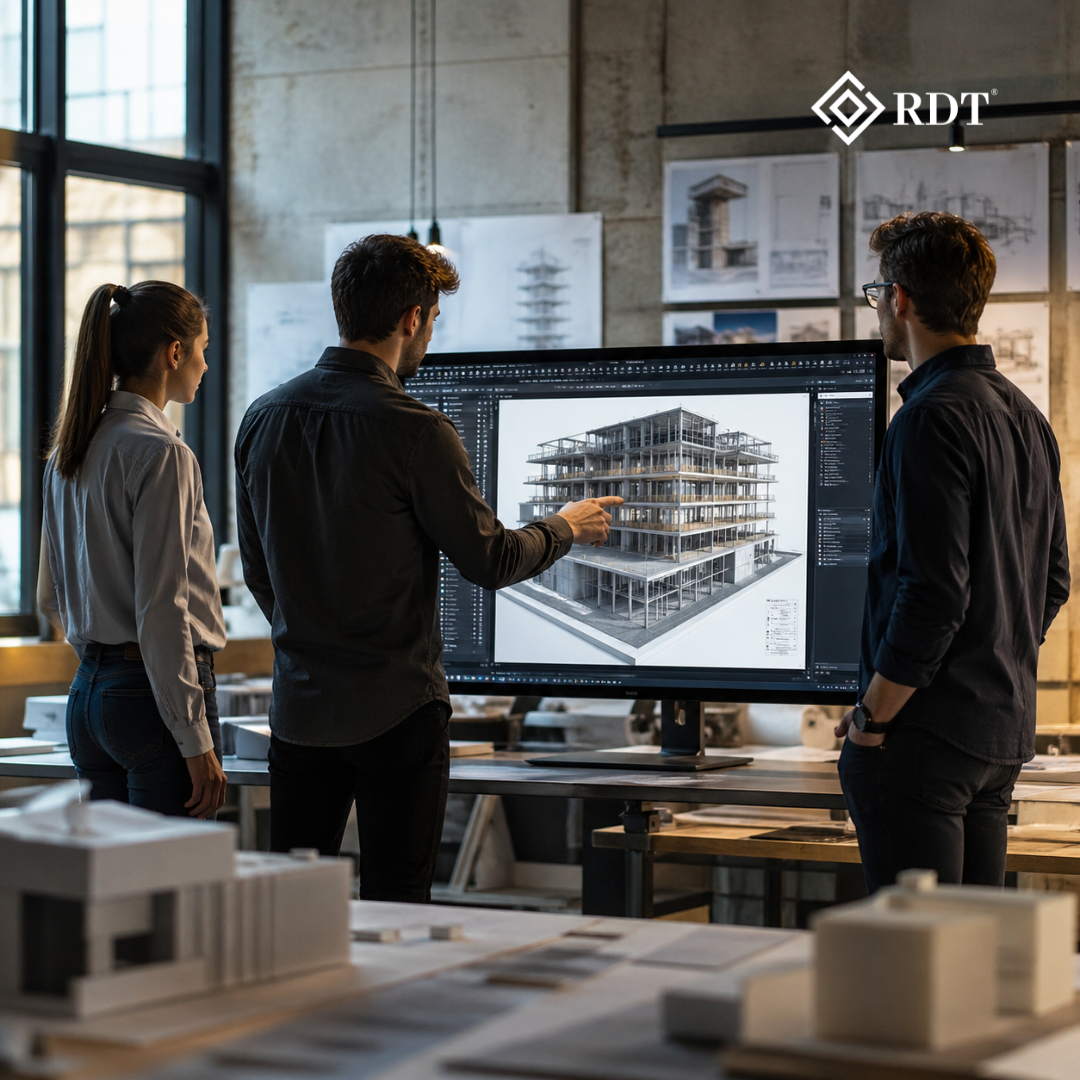
At its core, BIM creates a shared digital representation of physical assets. Buildings, bridges, metro stations, utility networks, and public facilities are modeled with detailed geometry and embedded data. This information is accessible to architects, engineers, contractors, facility managers, and city planners within a common environment.
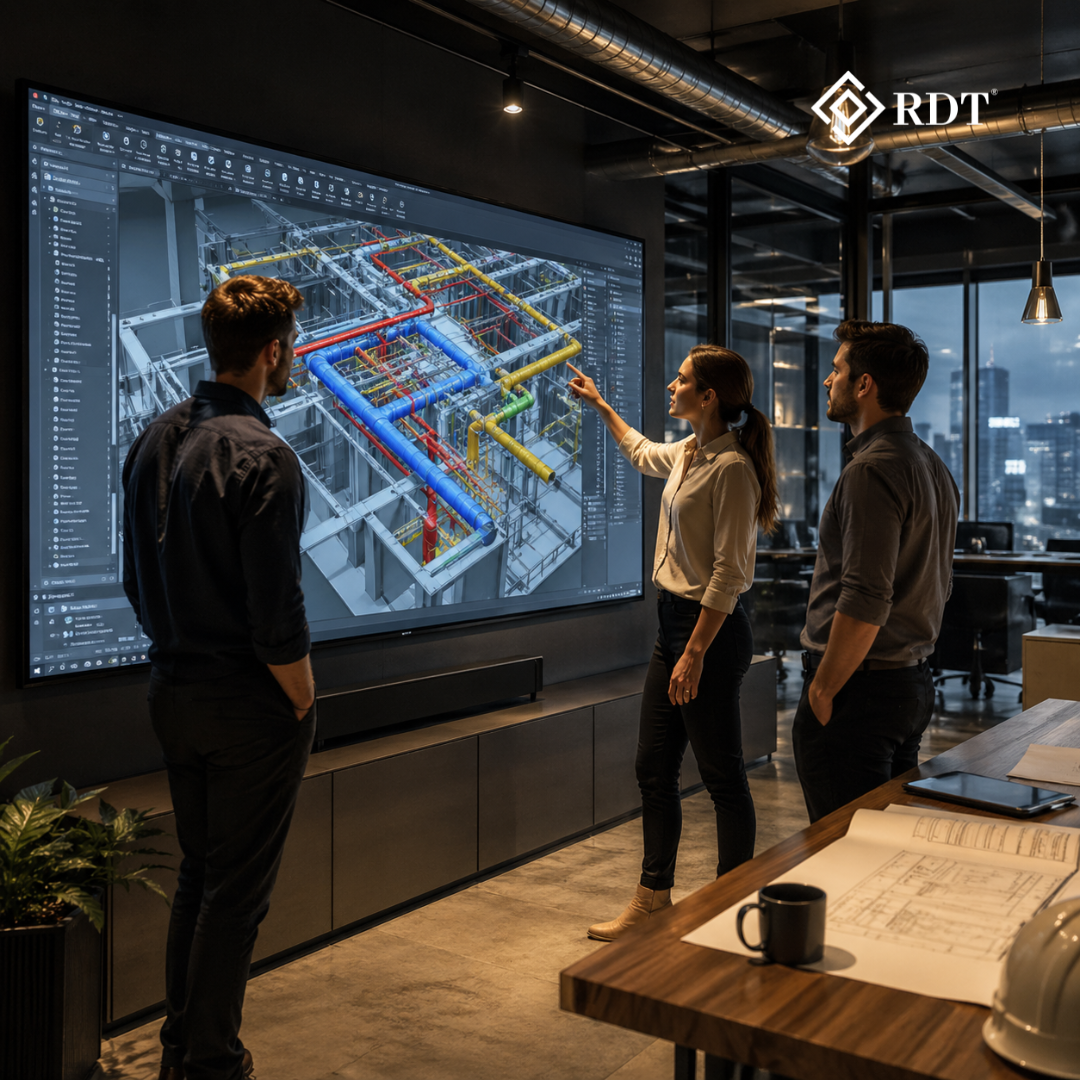
In smart city development, multiple infrastructure systems must interact seamlessly. Transportation networks intersect with drainage systems. Power grids connect to commercial complexes. Public spaces integrate with underground utilities. BIM enables all stakeholders to visualize these interactions before physical construction begins.
Clashes between systems can be detected early. Design inconsistencies can be resolved during planning rather than on site. Quantities, materials, and performance specifications can be extracted directly from the model. This level of coordination reduces delays, prevents costly rework, and enhances overall efficiency.
Supporting Integrated Urban Planning
Smart cities require holistic planning rather than isolated project execution. Urban planners must evaluate land use, traffic flow, environmental impact, and public services collectively. BIM allows planners to simulate these variables within a digital environment.
Through detailed modeling, authorities can assess how a new residential development will affect surrounding roads and utilities. They can analyze sunlight exposure in dense neighborhoods. They can evaluate drainage performance during heavy rainfall scenarios. By integrating geographic data with building models, city wide simulations become possible.
This predictive capability ensures that infrastructure decisions are based on measurable insights rather than assumptions. As a result, urban growth becomes more balanced and sustainable.
Enhancing Infrastructure Lifecycle Management
One of the defining characteristics of smart cities is continuous performance monitoring. Infrastructure must not only be built efficiently but also maintained intelligently over decades.
BIM extends beyond design and construction. It supports facility management by storing asset data that remains useful long after project completion. Information about equipment specifications, maintenance schedules, warranties, and operational requirements can be linked to each component within the model.
When integrated with sensors and monitoring systems, BIM models can evolve into digital twins that reflect real time conditions. Facility managers can track energy consumption, identify maintenance needs, and optimize performance based on accurate data. This proactive approach reduces operational costs and extends asset lifespan.
Driving Sustainable Development Goals
Sustainability is central to smart city initiatives. Energy efficiency, reduced carbon emissions, water conservation, and responsible material use are no longer optional priorities. They are regulatory and social expectations.
BIM supports sustainability by enabling performance analysis during early design stages. Energy modeling can estimate heating and cooling loads. Daylight studies can optimize natural illumination. Material data can evaluate environmental impact. Water systems can be simulated to ensure efficient distribution and drainage.
By analyzing these factors digitally, design teams can make informed adjustments before construction begins. This reduces waste, improves resource efficiency, and aligns projects with environmental standards.
In large scale urban developments, even small efficiency gains per building can translate into substantial environmental benefits across the city.
Improving Stakeholder Collaboration
Smart city projects involve diverse stakeholders, including government agencies, private developers, utility providers, consultants, and contractors. Effective collaboration is essential for success.
BIM provides a common platform where all parties can access updated information. Instead of relying on disconnected drawings and reports, stakeholders work within a shared digital environment. Changes are tracked transparently. Responsibilities are clearly defined. Communication becomes more structured.
This collaborative approach reduces misunderstandings and accelerates approvals. It also fosters accountability, as decisions are documented within the model. For public sector projects, this transparency builds trust with citizens and regulatory bodies.
Enabling Data Driven Governance
Smart cities rely on data to guide governance decisions. From traffic management to emergency response planning, data must be accurate and accessible.
BIM contributes by ensuring that infrastructure data is standardized and organized from the beginning. When city authorities need to analyze utility capacity or plan infrastructure upgrades, they can rely on detailed digital records instead of outdated paper archives.
This structured data environment supports long term strategic planning. It allows authorities to evaluate investment priorities, forecast maintenance budgets, and coordinate expansion plans with greater confidence.
Reducing Project Risks and Cost Overruns
Urban infrastructure projects are often associated with budget overruns and delays. Poor coordination, design errors, and unforeseen site conditions can disrupt progress significantly.
BIM minimizes these risks through detailed visualization and clash detection. Before construction begins, teams can identify potential conflicts between structural elements, mechanical systems, and utility networks. Sequencing simulations help anticipate logistical challenges.
Accurate quantity extraction improves cost estimation and procurement planning. Contractors can plan resource allocation more effectively. This level of foresight reduces uncertainty and enhances financial control.
For smart city initiatives that often involve public funding, responsible budget management is especially critical.
Facilitating Technological Integration
Smart cities incorporate technologies such as intelligent transportation systems, automated waste management, and energy monitoring networks. Integrating these technologies requires precise spatial coordination and data compatibility.
BIM models provide a digital reference for installing sensors, communication networks, and control systems. Engineers can determine optimal locations for equipment and ensure compatibility with existing infrastructure.
Because BIM organizes information in a structured format, it supports interoperability with other digital platforms. This makes it easier to connect building systems with city wide management software.
Building Resilience for the Future
Urban resilience is becoming increasingly important in the face of climate change and rapid population growth. Cities must be prepared for extreme weather events, infrastructure stress, and evolving technological demands.
BIM supports resilience by enabling scenario analysis. Planners can simulate flood risks, structural loads, and evacuation routes. Infrastructure designs can be tested under various conditions before implementation.
This predictive capability helps cities design systems that are not only efficient but also adaptable. When future modifications are required, digital models provide a clear understanding of existing conditions.
Encouraging Innovation in Construction
Smart city development encourages innovation across the construction industry. BIM plays a vital role in supporting advanced construction methods such as prefabrication and modular assembly.
Detailed digital models allow components to be fabricated off site with precision. This improves quality control and reduces on site waste. Construction schedules become more predictable, which is essential for large scale urban projects.
Innovation thrives when digital information is reliable and accessible. BIM creates the foundation for such reliability.
Conclusion
Smart cities represent the future of urban living. They aim to create environments that are efficient, sustainable, connected, and resilient. Achieving this vision requires more than isolated technologies. It requires a comprehensive digital framework that integrates planning, design, construction, and operation.
Building Information Modeling fulfills this role. It centralizes data, enhances collaboration, supports sustainability, and enables lifecycle management. It transforms complex urban projects into coordinated digital ecosystems.
As cities continue to grow and evolve, BIM will remain at the core of intelligent infrastructure development. It is not simply a design tool. It is the digital backbone that supports every layer of smart city progress.
Build Smarter Cities with RDT Technology
If your organization is planning large scale urban developments or infrastructure projects, partnering with the right digital experts is essential. RDT Technology delivers advanced BIM solutions that support coordinated design, efficient construction, and long term asset management. Empower your smart city vision with precision driven digital strategies. Connect with RDT Technology today and shape the cities of tomorrow with confidence.