
Mega construction projects define skylines, reshape cities, and influence economies for decades. Airports, metro systems, high rise towers, hospitals, industrial plants, and mixed use developments demand an extraordinary level of coordination. These projects involve thousands of drawings, multiple disciplines, global consultants, tight schedules, strict budgets, and high stakeholder expectations. Without a structured system to manage information, complexity quickly turns into chaos.
Building Information Modeling, widely known as BIM, has transformed the way large projects are planned and delivered. It is not simply a modeling tool. It is a comprehensive process that connects design, engineering, construction, and operations into one intelligent ecosystem. For complex mega projects, BIM is not an optional enhancement. It is the foundation that guarantees control, clarity, and long term success.
The Nature of Complexity in Mega Projects
Mega projects differ from conventional developments in scale and risk. They often involve multiple buildings, infrastructure networks, mechanical systems, transportation planning, and public interfaces. A delay in one system can affect dozens of others. A small design conflict can escalate into significant financial loss.
Traditional workflows rely on separate drawings and fragmented communication. Architects, structural engineers, MEP consultants, contractors, and project managers work in parallel but often without real time coordination. Information is exchanged in files and emails that quickly become outdated. When this happens in a mega project, the impact is amplified.
BIM changes this dynamic by creating a shared digital environment where every discipline works on coordinated models. Instead of disconnected drawings, teams operate within an integrated data system that updates consistently across stakeholders.
Integrated Design Coordination
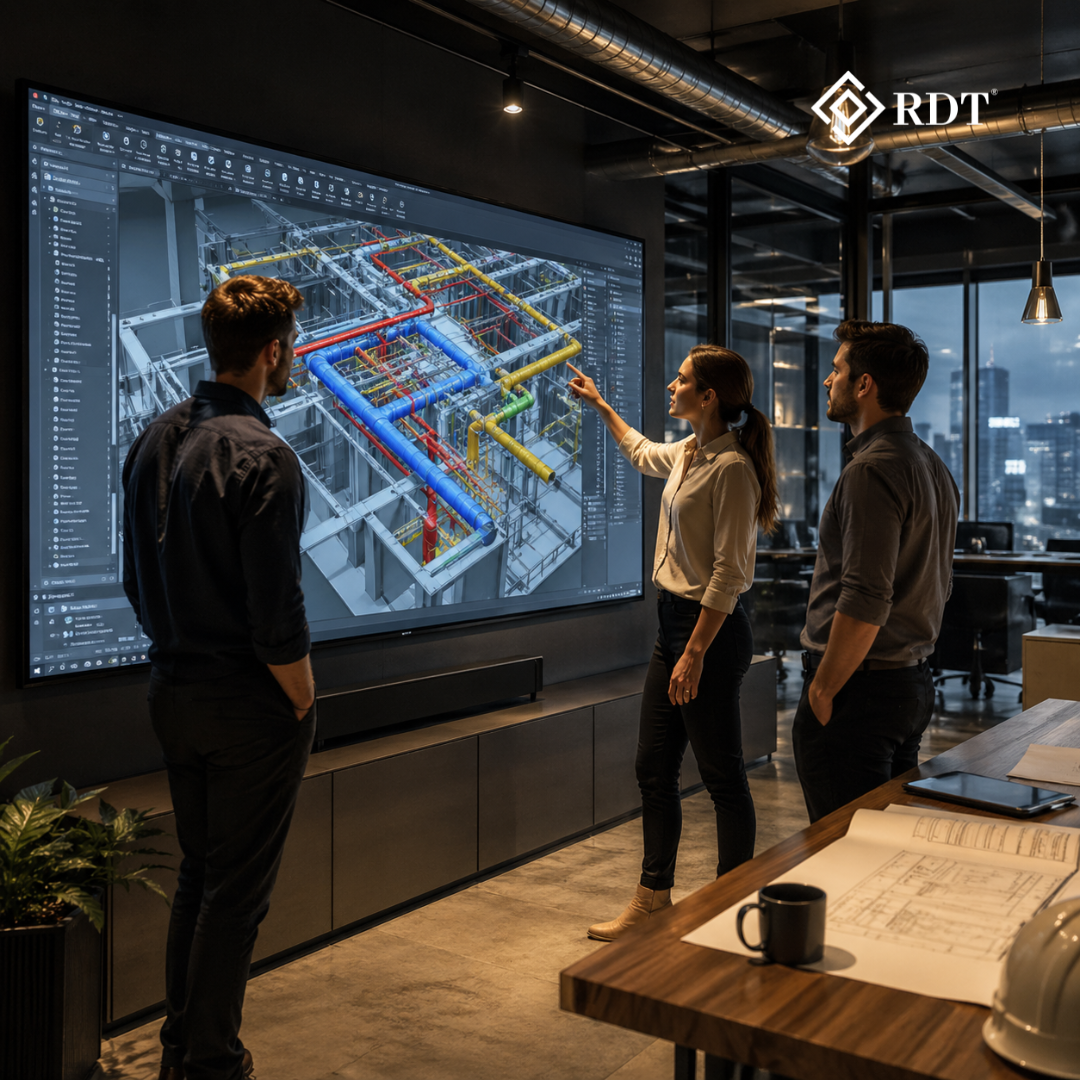
One of the strongest guarantees of success in complex projects is design coordination. In a large hospital or airport terminal, mechanical ducts, electrical conduits, structural beams, fire systems, and architectural elements must coexist within limited spaces. Even a minor clash can disrupt construction progress.
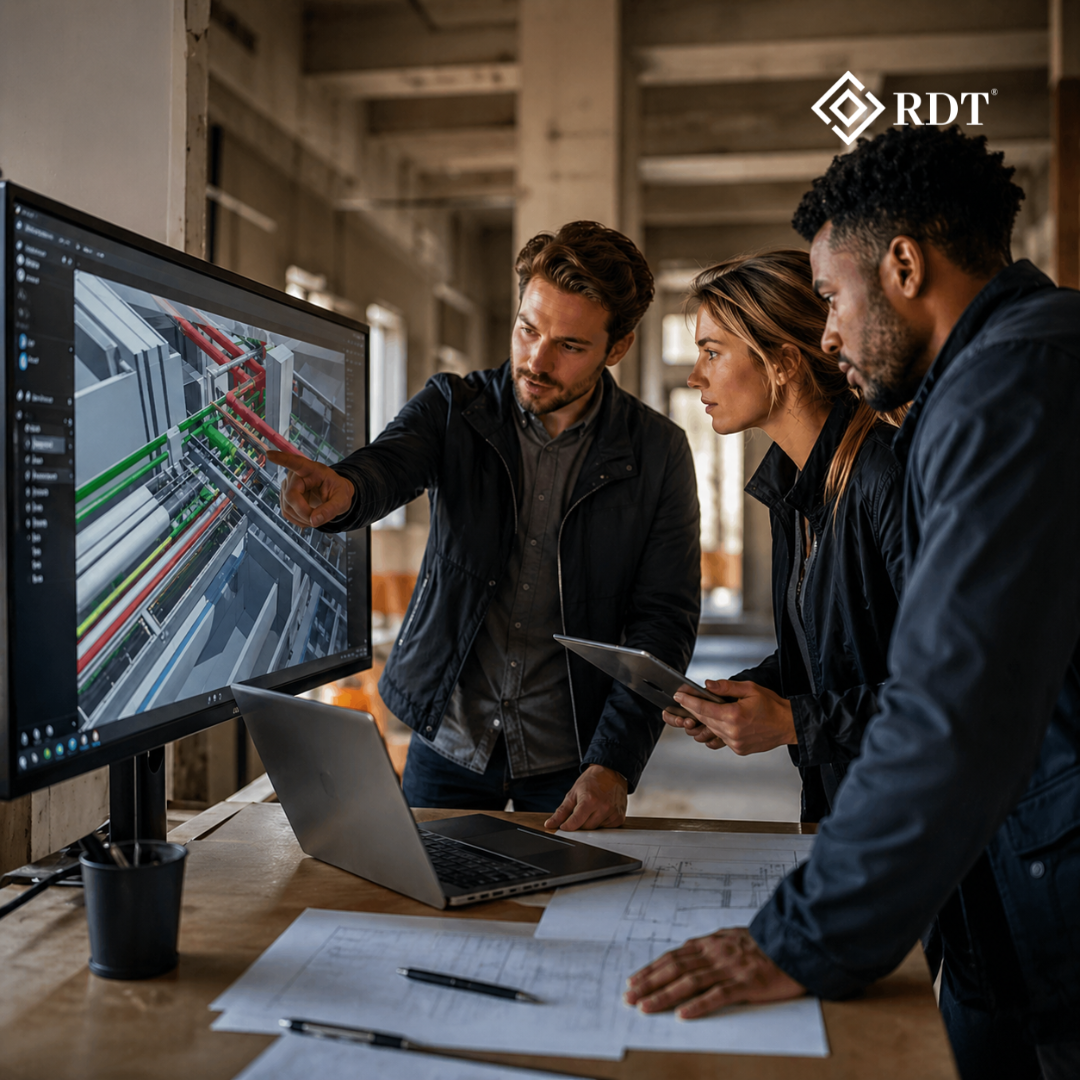
BIM enables clash detection at early stages. Structural and MEP systems are coordinated virtually before construction begins. Conflicts are identified and resolved in the digital model rather than on site. This prevents costly rework and delays.
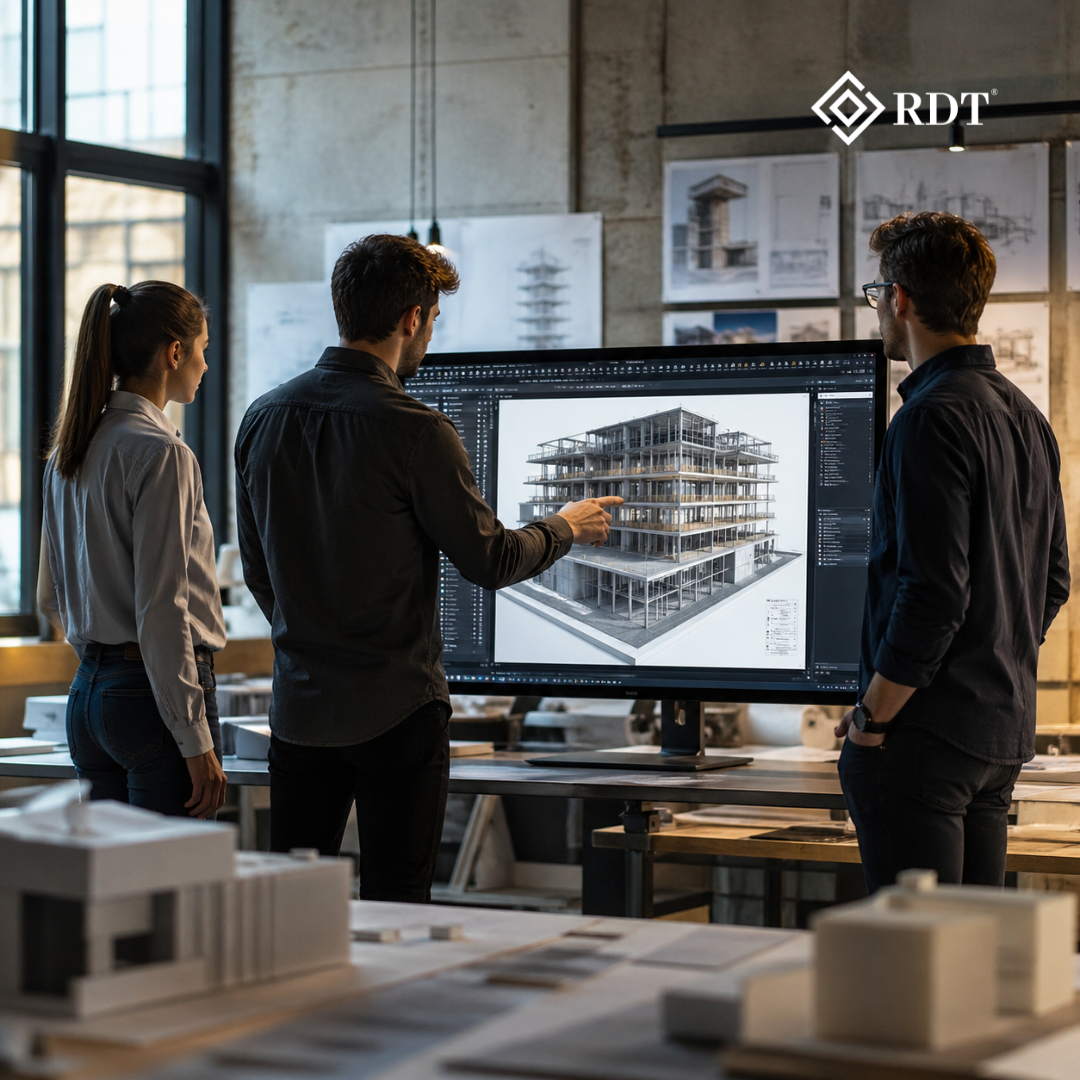
With centralized coordination, every team member works from the same source of truth. Architects can visualize how structural changes affect interior layouts. Engineers can verify equipment clearance and maintenance access. Contractors can plan installation sequences with confidence. This collaborative clarity significantly reduces uncertainty.
Accurate Quantity and Cost Control
Budget overruns are common in mega projects. Inaccurate quantity takeoffs, design revisions, and scope changes contribute to escalating costs. BIM integrates geometry with data, which allows precise quantity extraction directly from the model.
When materials, dimensions, and specifications are embedded in the model, cost estimation becomes more reliable. Changes in design automatically update quantities. Project managers can forecast financial impacts in real time rather than relying on manual recalculations.
This level of transparency strengthens financial planning. Investors and stakeholders gain confidence because cost projections are backed by measurable data. Risk exposure decreases, and contingency funds can be managed more strategically.
Time Management Through 4D Planning
Delays in mega projects often result from poor sequencing and coordination between trades. BIM extends beyond three dimensional modeling by integrating time as the fourth dimension. This process, known as 4D planning, connects construction schedules with model elements.
With 4D simulations, project teams can visualize construction phases before physical work begins. They can identify bottlenecks, evaluate crane placements, assess material logistics, and optimize workflows. Instead of reacting to delays, teams proactively prevent them.
Construction sequencing becomes a visual process rather than a theoretical schedule on paper. Stakeholders can clearly understand how the project will evolve over months or years. This improves decision making and strengthens schedule reliability.
Risk Mitigation and Safety Enhancement
Mega projects carry substantial safety risks due to their scale and workforce size. BIM enhances safety planning by enabling virtual rehearsals of complex activities. High risk areas can be identified in advance, and mitigation strategies can be developed before site operations begin.
Temporary structures, scaffolding, and heavy equipment placements can be simulated digitally. Hazardous zones can be analyzed to prevent accidents. Safety managers can communicate procedures more effectively using visual models rather than textual descriptions alone.
By identifying potential risks early, BIM contributes to a safer working environment. Reduced accidents lead to fewer delays, lower insurance costs, and improved project reputation.
Enhanced Communication with Stakeholders
Large projects often involve government authorities, investors, facility operators, and community representatives. Communicating complex design concepts through technical drawings can be challenging for non technical stakeholders.
BIM models provide visual clarity. High quality visualizations and walkthroughs allow stakeholders to understand spatial relationships, design intent, and functional layouts. This transparency accelerates approvals and reduces misunderstandings.
When clients can see and experience the project digitally, confidence increases. Decisions are made faster because ambiguity is minimized. Clear communication strengthens collaboration and builds trust among all parties involved.
Lifecycle Value Beyond Construction
The success of a mega project is not defined only by construction completion. Long term operational efficiency is equally important. BIM supports facility management by delivering data rich models that remain valuable after handover.
Asset information, maintenance schedules, equipment specifications, and system layouts are embedded within the model. Facility managers can access accurate data for repairs, renovations, and upgrades. Instead of searching through archived drawings, they rely on a structured digital database.
This continuity ensures that the investment continues to deliver value for decades. Reduced maintenance errors and efficient asset management translate into long term financial savings.
Sustainability and Performance Optimization
Environmental performance is a major consideration in modern mega developments. Energy efficiency, carbon reduction, and sustainable design strategies require detailed analysis.
BIM enables energy simulations, daylight analysis, and material performance assessments during the design stage. Engineers can evaluate alternative systems and optimize performance before construction begins. This proactive approach reduces operational energy consumption and supports green building certifications.
Sustainability decisions made early in the project lifecycle prevent expensive retrofits later. BIM provides the analytical framework needed to align environmental goals with practical construction realities.
Standardization and Process Efficiency
Mega projects often involve international consultants and contractors. Different teams may follow varying standards and software workflows. BIM establishes standardized processes and data protocols that unify collaboration.
Common data environments ensure that documents, models, and revisions are controlled systematically. Version management reduces confusion and prevents outdated information from circulating. Clear documentation pathways improve accountability.
Standardization strengthens quality control. When every stakeholder follows consistent modeling and coordination practices, project delivery becomes more predictable.
Real World Impact of BIM in Mega Developments
Many landmark developments worldwide have demonstrated the transformative impact of BIM. Large scale infrastructure and high rise towers rely on digital coordination to manage complexity. Integrated modeling has helped teams deliver ambitious projects within demanding timelines.
The core lesson from these experiences is clear. Mega projects require a digital backbone. Without BIM, managing thousands of interconnected elements becomes nearly impossible. With BIM, complexity becomes structured and controllable.
Cultural Shift Toward Collaboration
Adopting BIM is not solely a technological upgrade. It represents a cultural shift toward collaboration and transparency. Teams move away from isolated workflows and embrace shared responsibility.
Designers and contractors engage earlier in the process. Issues are resolved collectively rather than assigned blame later. This collaborative mindset reduces adversarial relationships and fosters innovation.
When teams work within a shared digital framework, they align toward common project goals. This unity is essential for delivering complex developments successfully.
The Future of Mega Project Delivery
The construction industry continues to evolve. Urbanization, technological advancement, and sustainability demands are increasing project complexity. As projects grow larger and more sophisticated, the need for integrated digital management becomes stronger.
BIM is no longer an emerging concept. It is a proven methodology that supports accuracy, efficiency, and long term value. Governments and private developers worldwide are recognizing its importance and making it a requirement for major developments.
Organizations that embrace BIM gain a competitive advantage. They reduce risks, enhance productivity, and build stronger client relationships. In contrast, projects that ignore digital integration face higher uncertainty and potential failure.
Conclusion
Complex mega projects demand precision, coordination, and foresight. Traditional fragmented workflows cannot sustain the level of integration required for such developments. Building Information Modeling provides the structured environment necessary to manage design coordination, cost control, scheduling, safety, sustainability, and lifecycle performance.
By connecting data, teams, and processes into one intelligent ecosystem, BIM transforms complexity into clarity. It enables proactive decision making, minimizes risk, and strengthens collaboration. For mega projects that define cities and industries, BIM is the guarantee of success.
If you are planning or managing a large-scale development and want complete control over cost, time, coordination, and performance, partner with experts who understand the power of intelligent modeling. RDT Technology delivers advanced BIM solutions tailored for complex mega projects, ensuring precision, transparency, and measurable results from concept to completion. Connect with RDT Technology today and build your next landmark project with confidence.