
Spend some time on a construction project and you will notice a strange pattern. Work gets completed, then undone, then done again. A newly installed pipe is removed. A ceiling panel is cut open. A wall is rebuilt. Everyone knows it is costly, but everyone acts like it is normal.
Rework has become so common that many teams no longer question it. They budget for it. They plan for it. They complain about it. But they rarely challenge the systems that cause it.
What makes this even more frustrating is that most of this waste is preventable. The industry already has tools that can catch mistakes before they reach the site. One of the most powerful of those tools is Building Information Modeling, or BIM.
Yet many teams still treat BIM as optional, complicated, or unnecessary.
So why does this happen, and what is really being lost?
The Everyday Reality of Rework
Rework is not always dramatic. Sometimes it is a small correction that barely makes it into a meeting report. Other times it is a major redesign that delays a project by weeks. Both types cost money.
A foreman might notice that a duct cannot fit in the planned space. An electrician might discover that the cable tray blocks maintenance access. A contractor might find that a piece of equipment cannot be installed because the door opening is too small.
These issues often seem minor in isolation. But across a large project, they multiply. Each fix triggers other changes. Crews wait. Managers negotiate. Clients ask questions.
Rework is rarely a single event. It is a chain reaction.
Why Rework Is So Expensive
The obvious cost of rework is labor and material. But that is only the surface.
When a team has to redo work, productivity drops. Crews lose momentum. Subcontractors reschedule tasks. Equipment rentals extend. Site logistics become chaotic. Documentation must be updated. Meetings multiply.
There is also an emotional cost. Teams blame each other. Designers feel pressured. Contractors feel frustrated. Clients lose trust. Safety risks increase when demolition and reinstallation happen in confined spaces.
In many cases, rework quietly erodes profit margins. Companies may complete a project on time and on paper look successful, but internally the profit is far less than expected.
How Traditional Methods Keep Creating the Same Problems
Construction still relies heavily on drawings, spreadsheets, and emails. Coordination often happens through meetings where participants compare documents and mark up changes manually.
This method worked when projects were simpler. Today, buildings are dense with systems. Mechanical, electrical, plumbing, structural, architectural, and digital infrastructure all compete for space. Even small conflicts can trigger large consequences.
Two dimensional drawings cannot easily show spatial conflicts. Designers may think a system fits, but the reality is different when all trades are installed together. Coordination errors often stay hidden until installation begins.
By the time a problem is discovered on site, it is already expensive.
What BIM Actually Brings to the Table
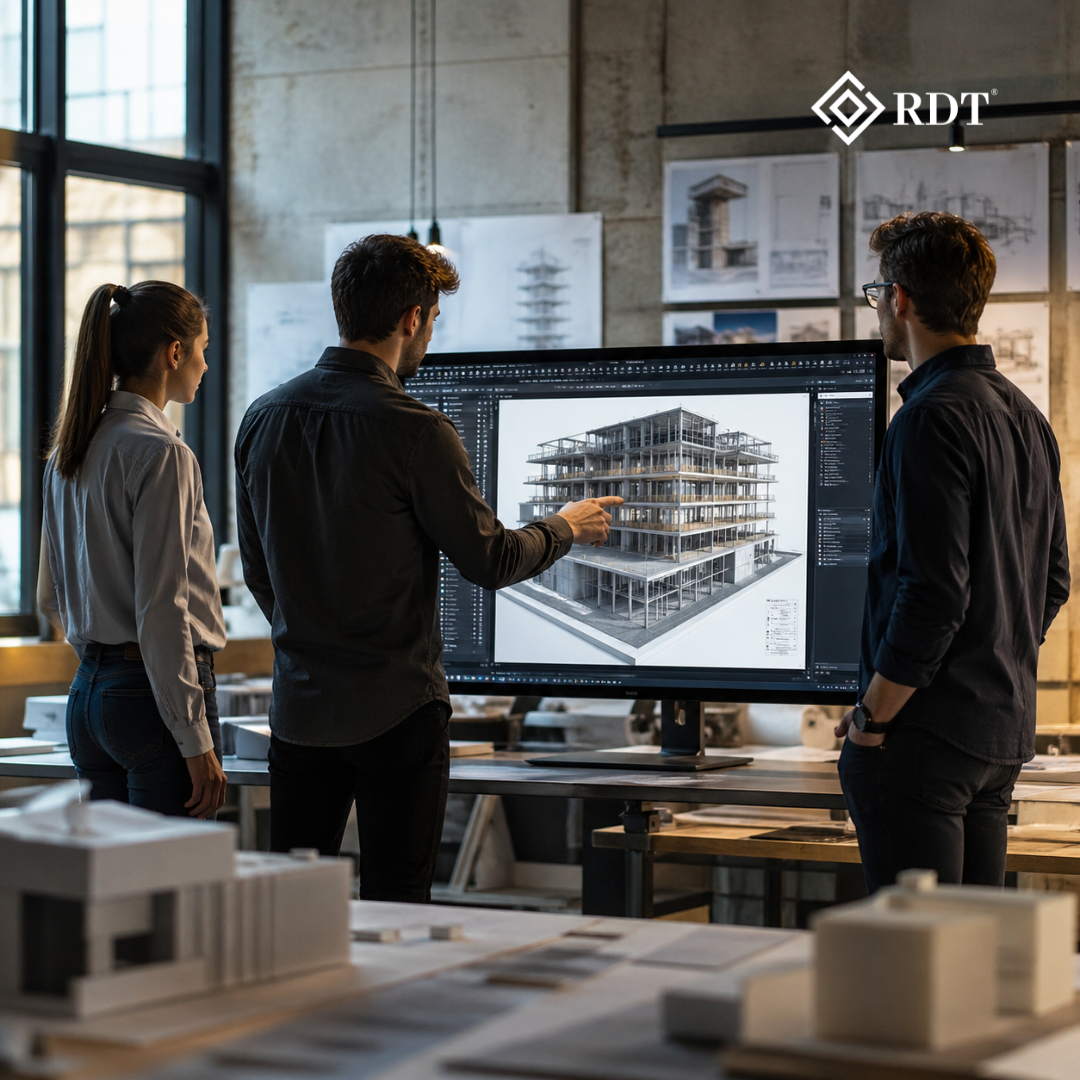
BIM is often misunderstood as just a 3D model used for presentations. In practice, it is a way of managing information.
In a BIM environment, every element is intelligent. A wall knows what it is made of. A beam knows its size and position. A pipe knows its diameter and slope. A piece of equipment knows its specifications.
The model becomes a shared digital environment where architects, engineers, contractors, and owners can view the same information. Changes are tracked. Quantities are generated automatically. Schedules and costs can be connected to model elements.
Instead of guessing how systems interact, teams can see it.
How BIM Reduces Rework Before It Happens
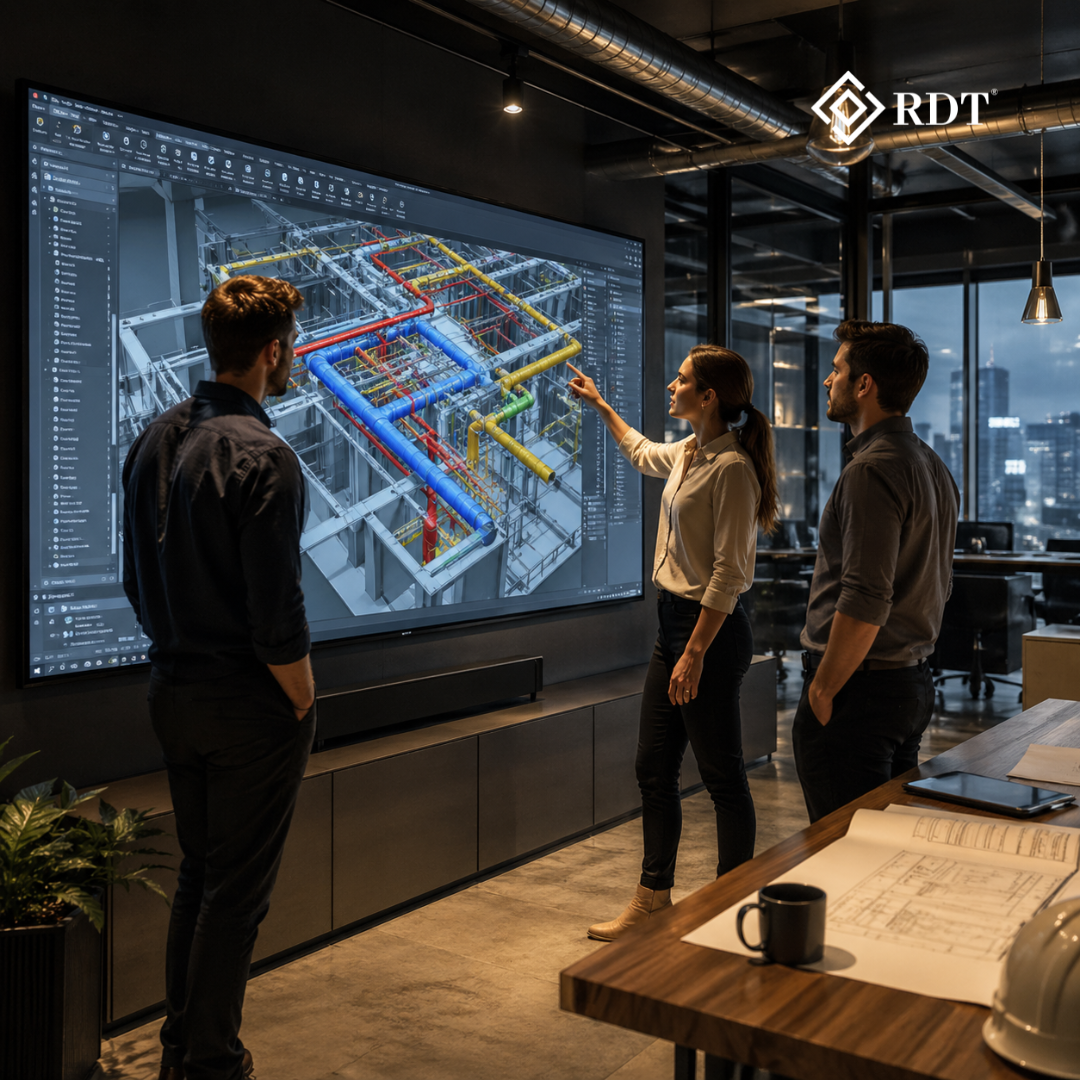
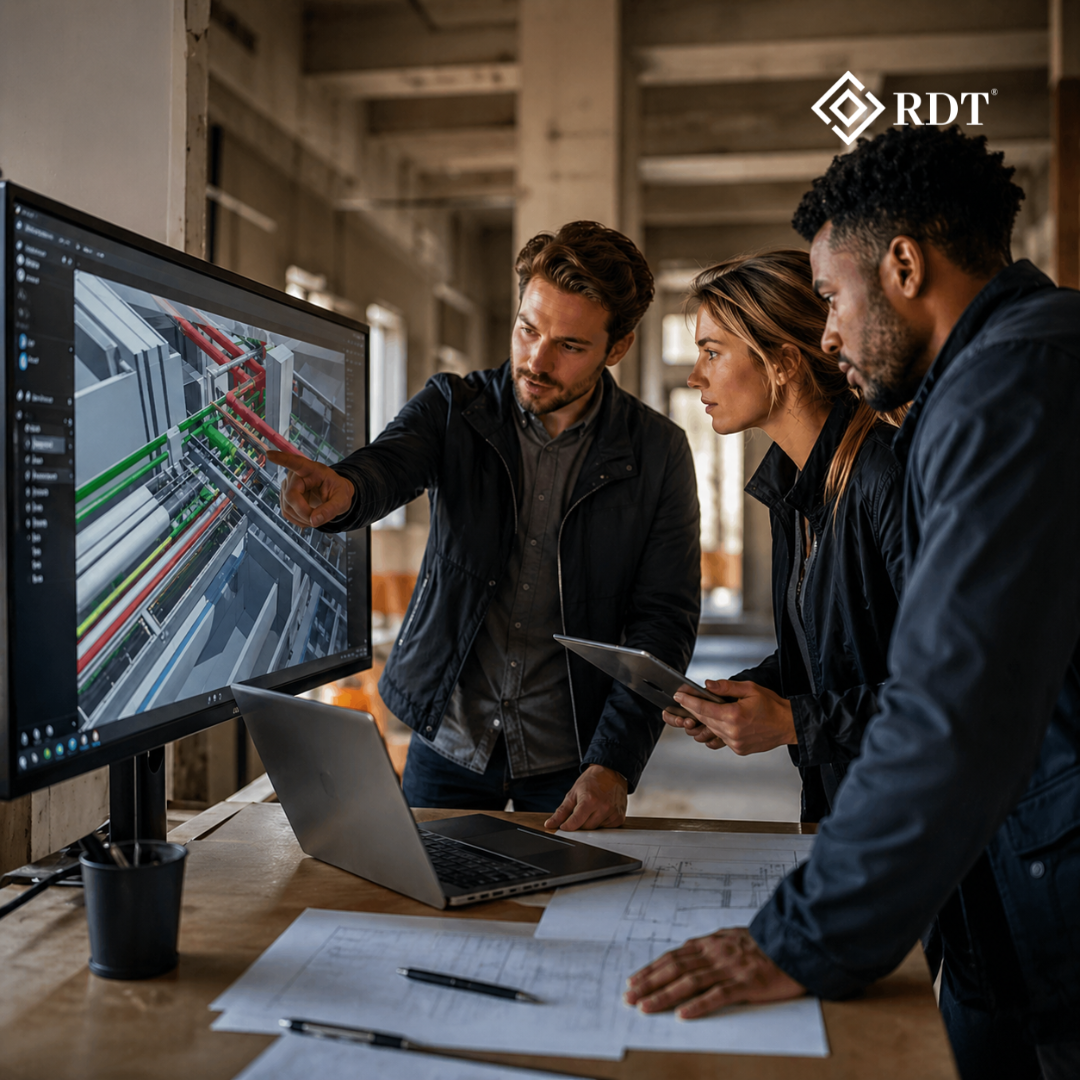
One of the most valuable features of BIM is coordination. When all disciplines model their systems, conflicts become visible. Software can detect clashes between ducts and beams, pipes and walls, equipment and ceilings.
Instead of discovering these conflicts on site, teams resolve them during design. The cost difference between fixing a digital clash and fixing a physical clash is enormous.
BIM also improves quantity accuracy. Traditional takeoffs require manual measurement and interpretation. BIM generates quantities directly from the model. When the design changes, the quantities update. This reduces waste, shortages, and procurement errors.
Another benefit is clarity for clients. Many clients struggle to understand technical drawings. When they see a model, they understand the space. They can make decisions earlier. This reduces late changes that trigger rework.
BIM also supports planning. Teams can simulate construction sequences and identify logistical issues. They can test whether equipment can be installed after certain phases. They can plan access and staging areas. This reduces surprises on site.
Why So Many Teams Still Resist BIM
With all these benefits, resistance to BIM can seem irrational. But the reasons are very human.
Many professionals are comfortable with traditional workflows. They have built their careers around them. Learning new tools feels uncomfortable. Some fear losing control or relevance.
There is also a belief that BIM is expensive. Software licenses, training, and hardware upgrades cost money. Some companies focus on the initial investment and ignore the long term savings from reduced rework.
Talent is another barrier. Skilled BIM professionals are not always easy to find. Without proper training, BIM adoption can fail, which reinforces skepticism.
Contract structures also matter. In many projects, designers and contractors are separated. Designers use BIM, but contractors receive drawings. The model is not used during construction, so its value is lost.
Finally, some organizations use BIM only for marketing. They create attractive visuals but do not integrate BIM into coordination, costing, or scheduling. When they do not see major benefits, they conclude BIM is overrated.
The Business Impact Beyond Rework
Avoiding rework is only one part of the story. BIM changes how projects are managed.
Teams collaborate more effectively because they share information. Decisions are based on data rather than assumptions. Risks are identified earlier. Clients receive clearer insights into their projects.
BIM also supports sustainability. Designers can analyze energy use, daylighting, and material efficiency. Owners can use BIM data for maintenance and renovations.
In many markets, BIM capability is becoming a competitive advantage. Clients increasingly expect digital deliverables. Companies without digital workflows risk being seen as outdated.
Real Lessons from the Field
Across the world, large projects have shown what happens when BIM is used properly. Hospitals, airports, and data centers have resolved thousands of clashes digitally before construction. The savings have been measured in millions.
Developers use BIM to standardize designs across portfolios. Contractors use BIM to support prefabrication and modular construction. Even mid size projects benefit from better coordination.
The technology is not limited to mega projects. The principles apply to any project with multiple trades and tight coordination needs.
How Organizations Can Make BIM Work
BIM adoption is not about installing software and hoping for the best. It requires leadership and planning.
Management must define clear objectives. Teams must be trained in both tools and processes. Information must be managed in a shared environment. Designers and contractors must collaborate early.
Companies should track performance metrics such as reduced clashes, fewer change orders, and improved schedules. When results are visible, adoption accelerates.
The Direction of the Industry
Construction is slowly moving toward digital twins, automation, and data driven management. BIM is the foundation for these developments.
Companies that ignore BIM today will struggle to adopt future technologies tomorrow. Digital transformation is not optional anymore. It is becoming a baseline requirement.
Rework will never disappear entirely. Unexpected site conditions and human decisions will always play a role. But most avoidable mistakes can be caught digitally.
Final Thoughts
Rework is not destiny. It is often the result of outdated workflows, fragmented communication, and resistance to change. BIM provides a way to see problems before they become expensive mistakes.
The tools are mature. The benefits are proven. The biggest barrier is mindset.
Organizations that treat BIM as a core operational process will deliver projects with greater confidence, better margins, and fewer surprises. Those who continue to ignore it will keep paying for mistakes that could have been prevented.
Construction is changing. The real question is not whether BIM works. The question is who is ready to embrace it fully.
“Partner with RDT Technology to harness the full power of BIM, enabling seamless collaboration, reducing rework, and delivering construction projects with precision and confidence.”