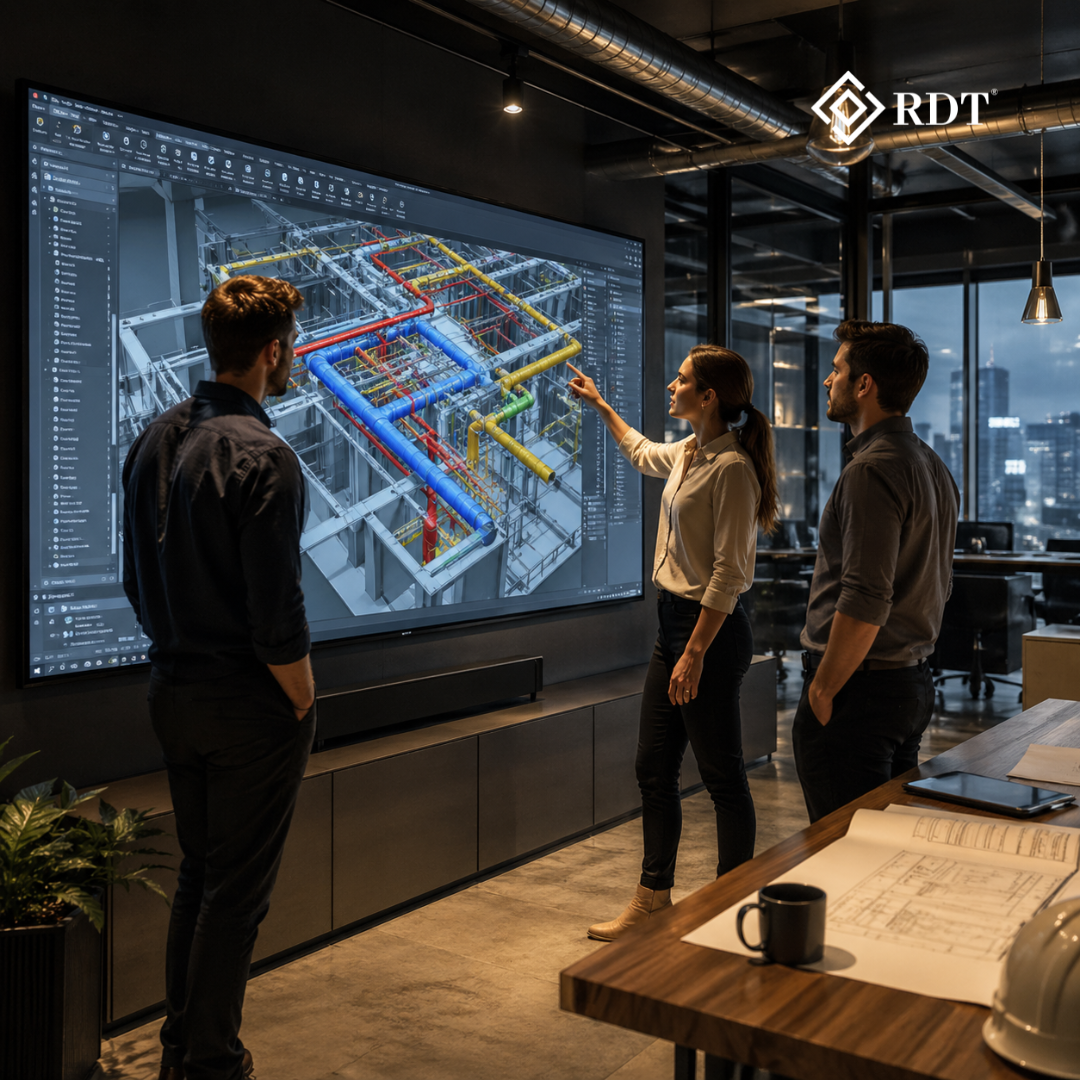

Very several construction challenges appear out of nowhere. Most of them can be traced back to a moment when something was mistaken, neglected, or presumed. That moment usually does not happen on site. It takes place much before, when a project still continues only as drawings, discussions, & photos on a screen.
In the course of early reviews & sanctions, decisions are made rapidly and usually assuredly. Materials are accepted. Spaces are approved. Budgets are aligned. At that stage, nobody is reacting to steel or concrete. They are reacting to what they believe the building will become. More often than not, that belief is shaped by rendering.
Rendering becomes the stand-in for reality. It fills the gap between technical intent and human understanding. When it does that job well, teams move forward with shared clarity. When it does not, confusion is quietly built into the project long before construction begins.
Why Rendering Still Gets Undervalued
In many workflows, rendering is treated as a final output. Something created to help a proposal look convincing or to support a presentation once the design is already “finished.” This mindset assumes that drawings carry the real information and visuals simply dress it up.
That assumption no longer holds. Advanced projects depend on collaboration throughout several disciplines, numerous of which do not communicate essentially withdrawings. Clientele, stakeholders, planners, and even some advisors rely severely on graphics to know intention. When rendering is inaccurate or oversimplified, it does not just fail aesthetically. It fails functionally.
An image that looks good but explains little is more dangerous than no image at all. It creates confidence without understanding, which is where most future problems begin.
Decisions Are Made Long Before Anyone Notices
By the time a project reaches site, a surprising number of choices are already locked in. Ceiling heights feel settled. Finishes are assumed. Spatial comfort is taken for granted. These assumptions rarely come from reading dimensions or schedules. They come from looking at images and forming expectations.
When renderings stretch proportions, soften edges, or smooth over construction realities, they quietly reshape those expectations. Nobody questions them at the time because the image feels complete. It answers questions before they are even asked.
Later, when drawings advance or site conditions impose limits, those early assumptions collide with reality. At that point, the conversation shifts from design to damage control.
When Everyone Sees Something Different
One of the biggest risks with weak rendering is that it rarely triggers immediate disagreement. The image appears clear enough for everyone to nod along. Meetings end without friction. Approvals move forward.
The problem is that clarity is assumed, not verified.
A client might focus on mood and atmosphere. A contractor might read the image as confirmation of buildability. A consultant might barely register the visual intent at all. Each person leaves with a different interpretation, all based on the same image.
This difference only becomes visible later, when someone asks why the built outcome does not match what was expected. By then, the image has already done its damage.
Design Intent Is Easy to Lose
Good design often relies on restraint. It is about emphasis, relationships, and sequencing. These qualities are hard to describe in words and easy to lose in generic visuals.
When a rendering lacks depth, everything carries the same visual weight. Important junctions disappear. Material transitions feel arbitrary. Light behaves unrealistically. The image may still look attractive, but it no longer explains what matters most.
As a result, downstream teams make decisions without understanding priorities. Services push into sensitive areas. Details are simplified where they should be protected. None of this happens because people are careless. It happens because the visual language guiding them was incomplete.
The final space may technically meet the drawings, yet feel disconnected from the original idea. That disconnect is rarely traced back to rendering, even though that is where it began.
Clients Do Not Separate Image From Outcome
For clients, a rendering is not an interpretation. It is a preview. It represents what they believe they are approving.
Most clients are not trained to question visual shortcuts. They trust that what they see reflects what will be delivered. When light looks abundant, they expect brightness. When finishes look seamless, they expect refinement. When spaces feel generous, they expect comfort.
When construction reveals limitations that were never visible in the rendering, frustration follows. Even clear technical explanations struggle to undo that reaction. The comparison is always between reality and the image, not between reality and drawings.
Once disappointment enters the conversation, trust becomes fragile. Decisions slow down. Requests increase. The project carries emotional weight it did not need to have.
How Poor Rendering Slows Approvals
Approvals rely on confidence more than speed. Reviewers need to feel that they understand what is being proposed. When renderings lack accuracy or context, they introduce hesitation.
That hesitation rarely comes with a clear explanation. Reviewers may ask for more views, additional studies, or repeated revisions without pinpointing the issue. Meetings extend. Feedback becomes vague. The procedure feels ineffective, even though everybody is trying to move ahead.
Frequently, the fundamental issue is straightforward: the graphics do not completely explain how the design will reside in the actual world. Until that gap is sealed, sanctions remain doubtful.
Site-Level Confusion Has Early Roots
Once construction begins, renderings often resurface as reference points. Site teams look at them to understand spatial intent, finishes, and emphasis, especially in complex areas.
When those images conflict with drawings or specifications, uncertainty follows. Workers make assumptions based on what they see. Corrections arrive later. Rework becomes necessary.
Each correction may seem minor on its own, but collectively they disrupt schedules and budgets. These issues are rarely traced back to visualization, even though clearer rendering could have prevented them.
Rendering Should Help People Think
The most effective renderings are not designed to impress. They are designed to explain.
They acknowledge constraints instead of hiding them. They respect scale instead of exaggerating it. They show how materials behave under real lighting conditions. They help people understand what decisions actually mean.
When rendering is treated as part of the thinking process rather than the presentation phase, conversations change. Questions become more specific. Coordination improves. Decisions are made with greater awareness.
The Impact Lasts Beyond One Project
Projects influenced by unclear visuals tend to carry unresolved assumptions from start to finish. Those assumptions surface as compromises, delays, or disputes.
Projects guided by accurate visualization tend to move with more certainty. Fewer surprises appear on site. Expectations remain aligned. Outcomes feel deliberate rather than negotiated.
Rendering may occupy a small portion of the schedule, but its influence reaches across the entire project lifecycle.
Seeing What You Are Actually Building
Construction is the act of making ideas real. Rendering is meant to help people understand those ideas before they become permanent.
When that understanding is incomplete, everyone involved takes on risk without realizing it. When it is clear, decisions become stronger and collaboration becomes easier.
Poor rendering creates misunderstandings long before construction starts. Accurate, honest rendering prevents those misunderstandings from forming at all.
Call to Action
At RDT Technology, we treat rendering as a responsibility, not a cosmetic step. Our visualization and BIM-driven workflows are built to communicate real design intent, support confident approvals, and align teams before construction begins. If clarity, accuracy, and trust matter to your projects, work with RDT Technology.
Visit www.rdttech.co to see how we turn visual understanding into dependable construction outcomes.