For years, AI sat on the sidelines of the construction sector—promising change but rarely delivering at scale. Pilot projects came and went. Proofs of concept impressed in presentations but struggled in real-world environments defined by risk, complexity, and tight margins.
Then came 2025.
This was the year AI crossed a critical threshold in construction. It stopped being experimental and started becoming operational. AI moved out of innovation labs and into live projects, influencing real decisions with real financial consequences.
As the industry looks toward 2026, the conversation has shifted again. The question is no longer “Can AI work in construction?”
The question now is “How fast can it scale?”
Why Construction Was Slow to Trust AI
Construction is not resistant to technology—it is resistant to uncertainty.
Each decision impacts security, price, schedule, & accountability. Unlike software or marketing, failure in construction is clear, costly, and sometimes unchangeable. This reality made the industry careful about embracing systems that could not obviously explain their philosophy.
Before 2025, AI faced several barriers:
- Fragmented project data
- Inconsistent digital standards
- Lack of trust in black-box algorithms
- Fear of replacing human judgment
AI tools existed, but they were isolated and underutilized.
2025: When AI Proved Its Value
What changed in 2025 was not just technology—it was integration.
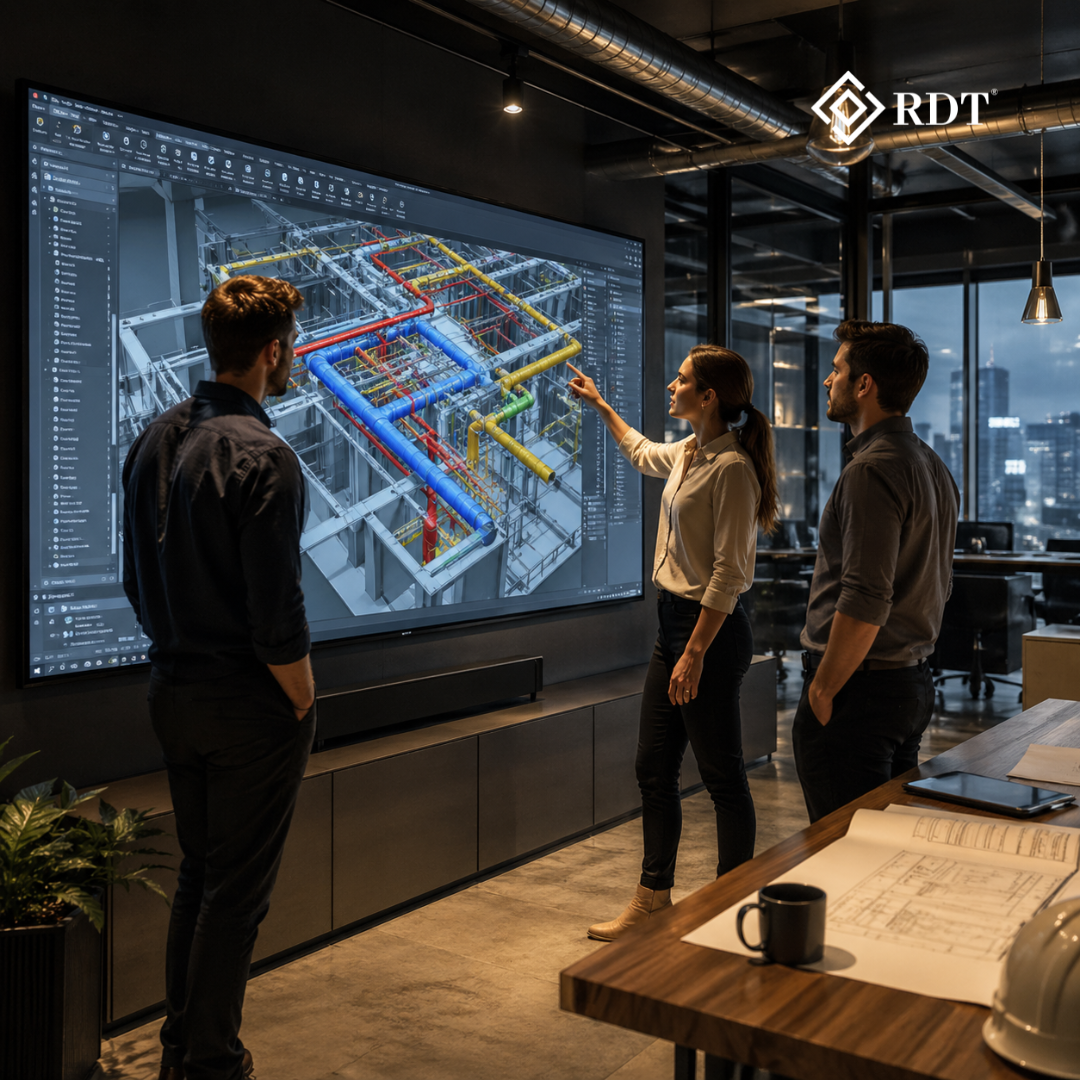
AI stopped operating in isolation and began working alongside BIM, Common Data Environments, scheduling platforms, and site data. With access to structured information, AI could finally deliver consistent value.
AI in Design Intelligence
Generative AI systems began supporting early design by analyzing thousands of design options based on:
- Site constraints
- Regulatory rules
- Cost parameters
- Energy performance goals
Design teams shifted from exploring possibilities manually to evaluating optimized options generated by AI.
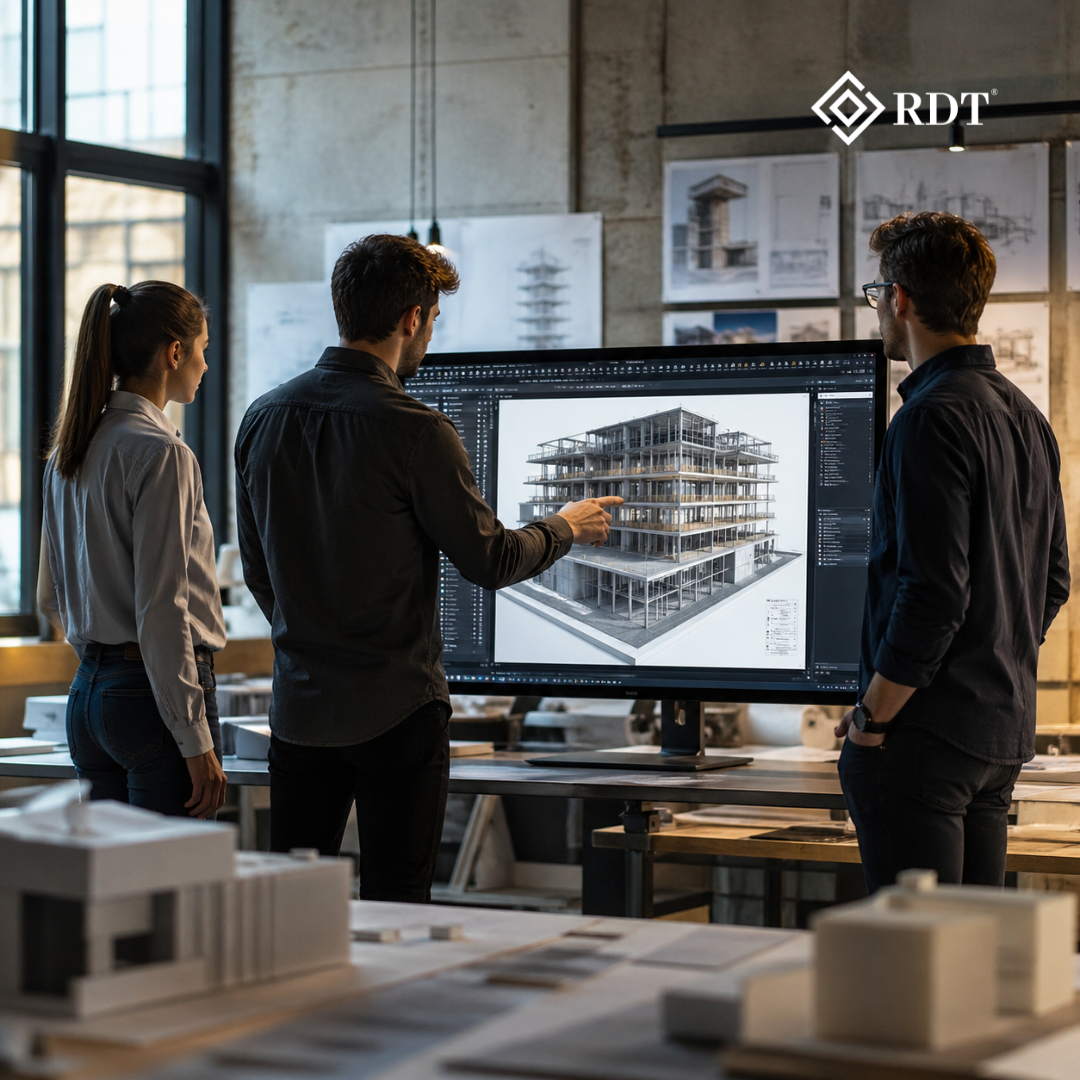
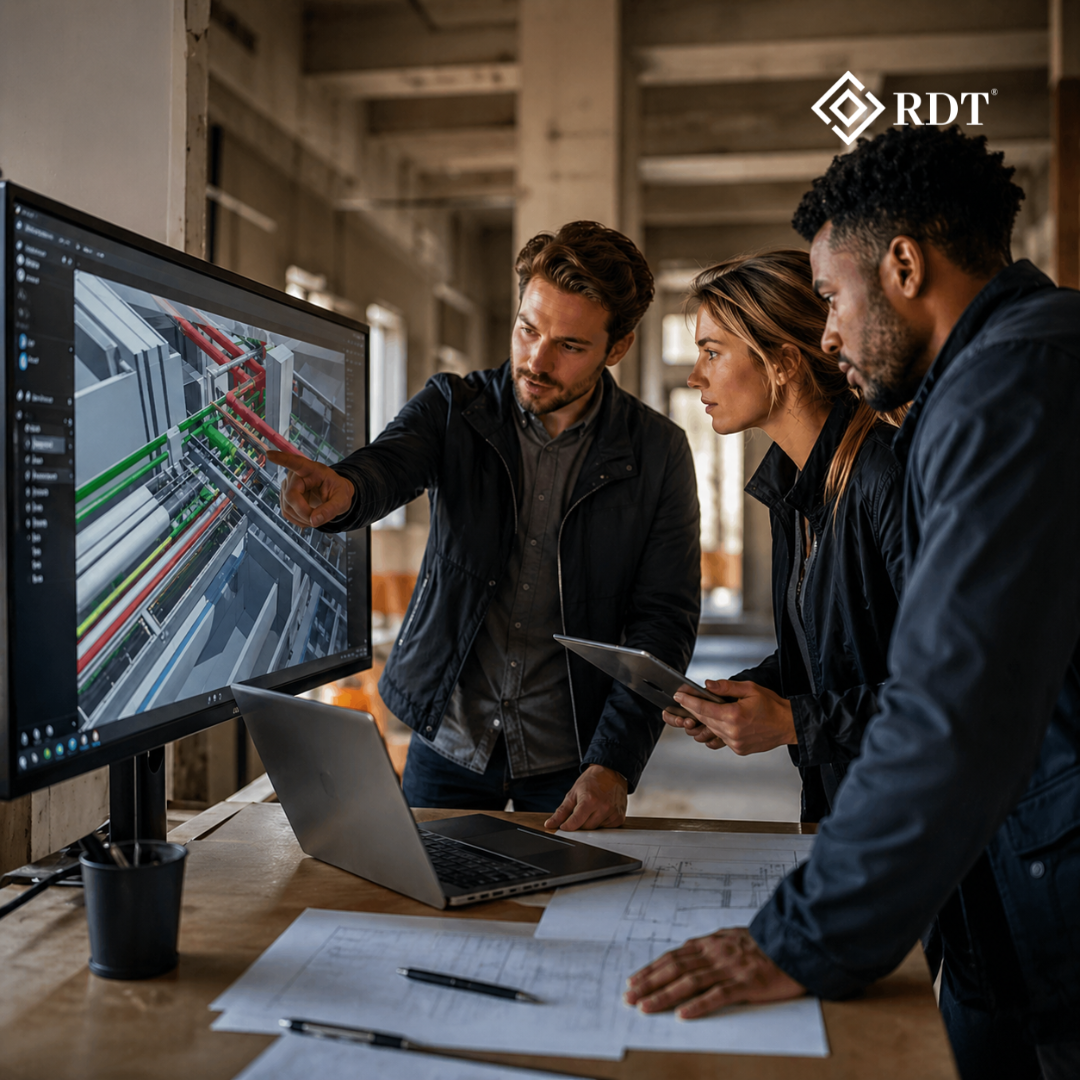
AI in BIM Coordination
Clash detection evolved into clash intelligence.
AI analyzed historical coordination issues and flagged:
- High-risk zones
- Repetitive conflict patterns
- Design decisions likely to trigger rework
Instead of reviewing hundreds of clashes, teams focused on the few that truly mattered.
AI in Project Scheduling
AI-driven planning tools analyzed productivity trends, weather data, and resource availability to:
- Forecast delays
- Recommend schedule adjustments
- Identify critical risk windows
Schedules became dynamic systems—not static documents updated after problems occurred.
From Automation to Augmentation
One of the most important lessons of 2025 was this: AI works best when it augments human expertise, not replaces it.
AI handled:
- Data-heavy analysis
- Pattern recognition
- Risk prioritization
Humans retained control over:
- Strategic decisions
- Design intent
- Ethical and safety considerations
This balance built trust. Teams began seeing AI not as a threat—but as a decision partner.
AI at the Jobsite: Quiet but Powerful
AI’s impact in 2025 was not always visible—but it was everywhere.
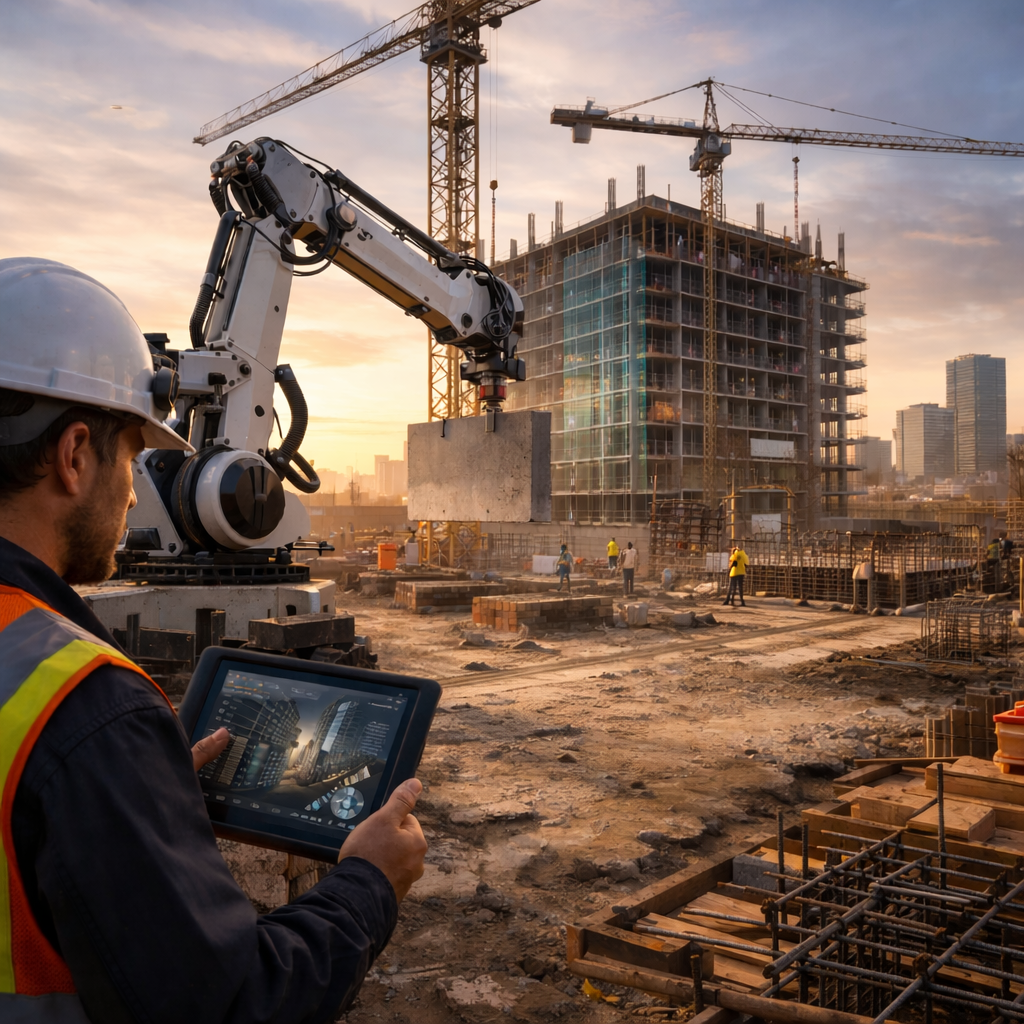
On sites, AI helped:
- Analyze progress through image recognition
- Detect safety risks early
- Validate work against BIM models
- Flag deviations before they escalated
The jobsite evolved from a place of constant correction to a source of real-time intelligence.
Data Quality Became the Real Competitive Advantage
AI did not succeed in 2025 because of better algorithms alone. It succeeded because construction finally began producing better data.
BIM standards improved. Documentation became structured. CDEs enforced data consistency.
Firms discovered a hard truth:
AI is only as intelligent as the data it learns from.
Those with disciplined digital workflows gained a clear advantage. Those without remained stuck in experimentation.
Digital Twins and Predictive Intelligence
AI found its most powerful expression in digital twins.
By combining BIM models with live data from sensors, schedules, and operations, AI could:
- Predict equipment failure
- Optimize energy usage
- Simulate operational scenarios
Construction projects didn’t just get built—they got monitored, learned from, and optimized.
What 2026 Will Scale
If 2025 proved AI works, 2026 will prove it can scale.
1. Enterprise-Wide AI Adoption
AI will move beyond individual projects into organization-wide systems:
- Portfolio planning
- Risk benchmarking
- Knowledge reuse
Lessons learned will no longer disappear at project closeout.
2. AI-Driven Early Decision Making
AI will increasingly influence:
- Feasibility studies
- Budget forecasting
- Design strategy selection
Decisions made before design begins will become smarter—and safer.
3. Standardized AI Workflows
Custom AI experiments will give way to repeatable, scalable workflows embedded in everyday tools.
AI won’t feel innovative—it will feel normal.
4. Clients Will Demand AI-Enabled Transparency
Owners will expect:
- Predictive reporting
- Risk visibility
- Performance forecasting
AI will become part of the contract conversation.
The Human Role in an AI-Driven Industry
As AI scales, the human role becomes more—not less—important.
Construction professionals will be valued for:
- Judgment over output
- Strategy over execution
- Insight over information
AI will handle complexity. Humans will provide direction.
Why Waiting Is Now the Biggest Risk
The biggest risk in 2026 will not be AI failure—it will be inaction.
Firms that delay adoption will face:
- Slower decision-making
- Higher risk exposure
- Lower competitiveness
Those that act will build systems that compound intelligence over time.
Final Thought: AI Is No Longer Optional
Construction has crossed a line.
AI is no longer experimental.
It is operational.
And in 2026, it will be scalable.
The firms that treat AI as a core capability—not a side project—will define the next era of construction.
CTA: Scale Intelligence With RDT Technology
At RDT Technology, we help construction organizations move beyond AI experimentation into scalable, production-ready digital workflows. By combining Artificial Intelligence with BIM, documentation, coordination, & delivery systems, we change info into intelligence that drives real project results.
👉 Partner with RDT Technology to scale AI assuredly in 2026 and lead construction’s brilliant future.