
Architectural Design with BIM is redefining how modern buildings are imagined, planned, and delivered, transforming static concepts into intelligent, data-driven structures. Building Information Modeling (BIM) has reshaped the field of architecture by replacing fragmented workflows with integrated digital environments that support design, coordination, and decision-making from concept to completion. At RDT Technology, BIM is not treated as a supporting tool but as the foundation of architectural innovation, enabling teams to translate creative ideas into high-performance, buildable, and future-ready structures with confidence and precision.
Why BIM matters in modern architecture
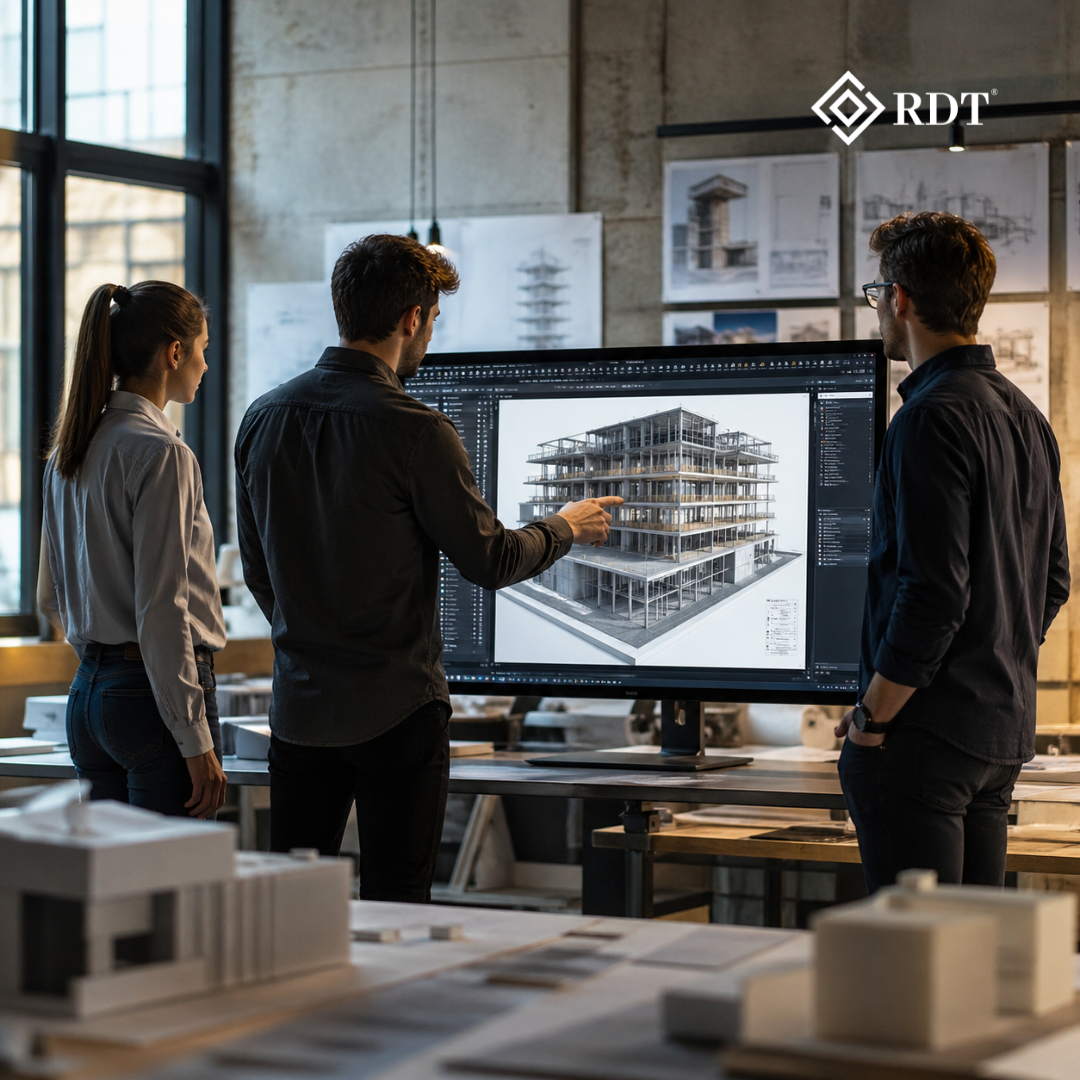
Traditional design workflows separate geometry, schedules, and specifications into isolated silos. This fragmentation leads to miscommunication, change orders, and costly rework on site. BIM collapses those silos by creating a single, coordinated model that carries not only three-dimensional geometry but also material data, performance parameters, cost information, and scheduling logic. For RDT Technology, BIM delivers accuracy and transparency: stakeholders can visualize design intent, quantify material needs, and test scenarios before any physical work begins.
RDT’s BIM-driven design philosophy
RDT Technology approaches projects with a BIM-first mindset. From the initial client briefing, the team considers not just form and function but also data interoperability, constructability, and long-term maintenance. Early-stage models at RDT are intentionally lightweight—focused on massing, daylight access, and circulation—but are structured so additional layers of information can be added as the project matures. This phased enrichment keeps design decisions reversible while enabling rigorous analysis, helping the team balance aesthetics with performance targets.
Seamless collaboration across disciplines
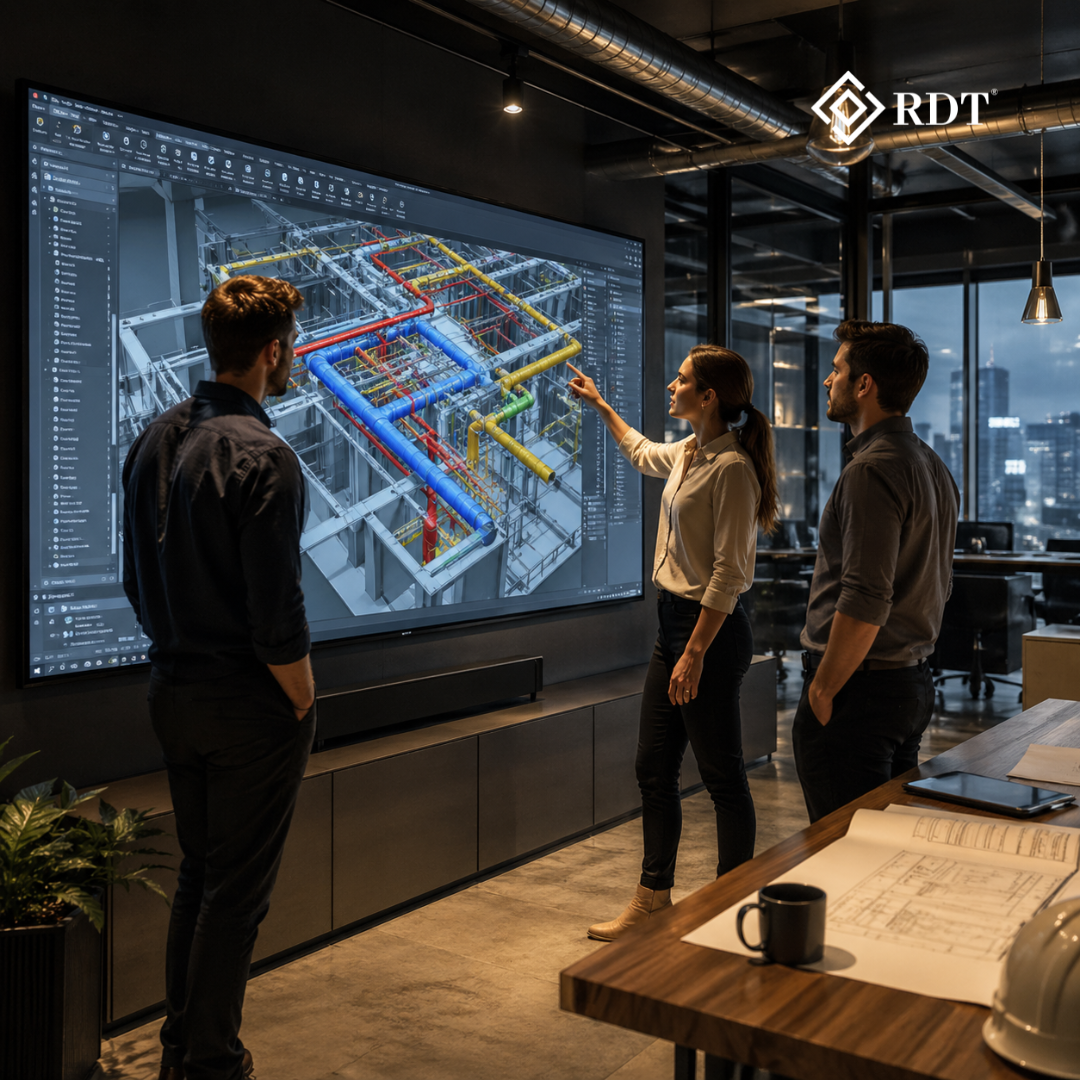
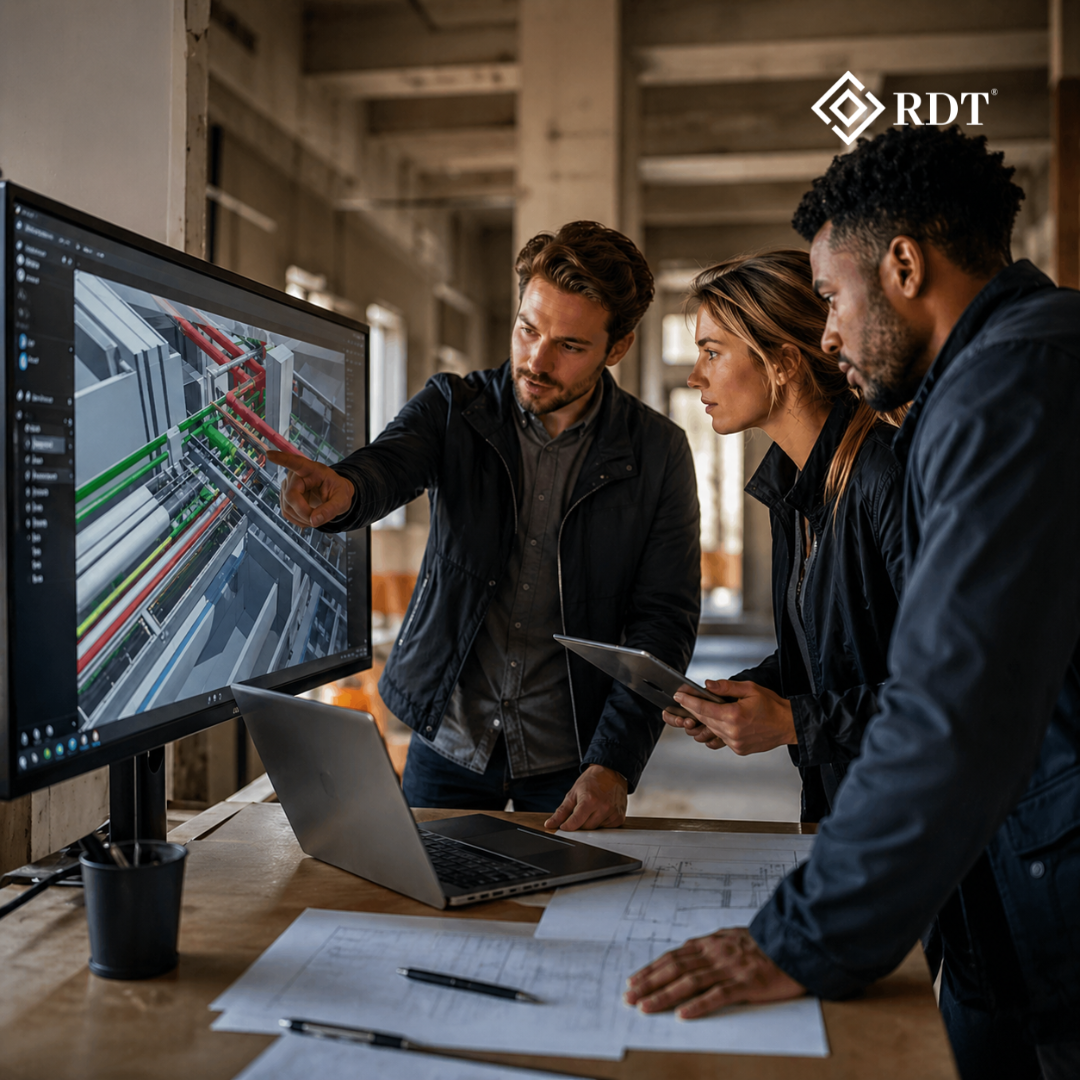
One of BIM’s most powerful attributes is its ability to coordinate across disciplines. RDT uses a federated model approach where architecture, structure, MEP (mechanical, electrical, plumbing), and specialist consultants contribute to a shared dataset. This collaboration is mediated through clash detection and resolution workflows that identify spatial conflicts long before construction. Regular interdisciplinary reviews help teams negotiate design trade-offs early, reducing schedule impacts and improving constructability when the project reaches the site.
Design validation through simulation and analysis
RDT leverages BIM for rigorous simulation work that validates design intent against real-world constraints. Energy simulation tools linked to the model evaluate building envelope performance, HVAC strategies, and daylighting, while structural plugins test load paths and optimize material use. Advanced workflows enable life-cycle assessments and whole-building carbon calculations, which are increasingly important for clients aiming to meet sustainability targets. Because these analyses use up-to-date model data, recommendations are reliable and actionable.
Improving constructability and reducing costs
A BIM-driven approach unlocks efficiencies in construction planning. Detailed models produce accurate quantities and assemblies, enabling precise cost estimation and reducing contingencies. RDT integrates 4D scheduling with the BIM model to visualize construction sequencing and identify logistical bottlenecks. This foresight helps contractors plan deliveries, site access, and temporary works, minimizing delays and occupational hazards. Prefabrication becomes a viable strategy because components can be modeled, checked for fit, and produced with tight tolerances.
Enhancing client engagement and decision-making
Clients gain unprecedented clarity when engaged with BIM-enabled workflows. Interactive model walkthroughs, phased visualizations, and performance dashboards help non-technical stakeholders grasp the implications of design choices. RDT uses these visual tools to facilitate informed decisions on aesthetics, materials, and systems. Because the model also maintains cost and schedule information, clients can weigh trade-offs transparently—opting for a higher-performing façade or reallocating budget to long-term operational savings rather than short-term finishes.
Facility management and the building lifecycle
RDT’s commitment to BIM extends beyond handover. A fully populated BIM model becomes the single source of truth for operations and maintenance. Equipment schedules, warranty data, and maintenance protocols are embedded in the model and exported to facilities management systems. This digital continuity simplifies asset tracking and reduces lifecycle costs by enabling preventative maintenance and data-driven refurbishments. For owners, the BIM model is not merely a design artifact but a strategic tool for improving longevity and reducing total cost of ownership.
Adoption challenges and RDT’s strategies to overcome them
While BIM delivers clear benefits, adoption requires organizational change. RDT addresses common barriers—such as workforce upskilling, process redefinition, and interoperability hurdles—through a comprehensive strategy. The company invests in training programs, establishes BIM execution plans that set standards for modeling and data exchange, and uses open formats alongside vendor-specific tools to preserve interoperability. Leadership at RDT champions BIM as a cultural shift, ensuring that teams understand both the technical and collaborative expectations of model-based delivery.
Case examples: small wins to transformational projects
RDT has applied its BIM-driven methodology across a range of project scales, from complex residential blocks to institutional campuses. In smaller projects, BIM reduced construction queries by streamlining documentation and enabling precast coordination. In larger campus-scale schemes, federated models coordinated multiple contracts and phasing strategies, enabling simultaneous construction activities with minimized clashes. Across the board, clients reported improved predictability, fewer change orders, and clearer procurement pathways, demonstrating how model-centric workflows produce measurable benefits.
Looking ahead: digital twins and smart buildings
The future of architecture is digital and connected. RDT is extending BIM into digital twin workflows—continuous, sensor-fed models that reflect building performance in real time. These twins enable predictive maintenance, adaptive control strategies, and occupant-centric optimizations that reduce energy use and improve comfort. As cities become smarter, RDT envisions interoperable models that link buildings to urban-scale datasets, informing infrastructure decisions and creating resilient, responsive environments.
Measurable outcomes and return on investment
RDT measures BIM success through concrete metrics: reductions in RFIs (requests for information), percentage decreases in on-site rework, faster permitting approvals due to clearer submissions, and improvements in energy performance compared to baseline designs. These KPIs translate directly into cost savings and schedule certainty. By tracking outcomes, RDT continuously refines its templates and workflows, creating a feedback loop that elevates future projects.
Partnerships and ecosystem integration
RDT collaborates with software vendors, fabrication partners, and academic institutions to stay at the cutting edge of BIM innovation. These partnerships foster pilot programs in automated fabrication, parametric design, and project delivery methods. For clients, this ecosystem means access to tested innovations and a partner capable of delivering complex, interdisciplinary solutions.
If your organization seeks to transform ideas into intelligent buildings, engaging with a BIM-first practice like RDT Technology can accelerate outcomes. Through Architectural Design with BIM, RDT enables a tailored strategy aligned with project goals and operational needs, creating measurable value throughout a building’s entire lifecycle.