The Architecture, Engineering, and Construction (AEC) industry has always walked a tightrope—balancing design intent, engineering precision, construction feasibility, budgets, timelines, and client expectations. But as projects become more complex and the pressure to deliver faster, cheaper, and with fewer errors grows, traditional workflows simply don’t keep up. This is exactly where Virtual Design emerges—not as a trend or luxury, but as an indispensable foundation for modern project delivery.
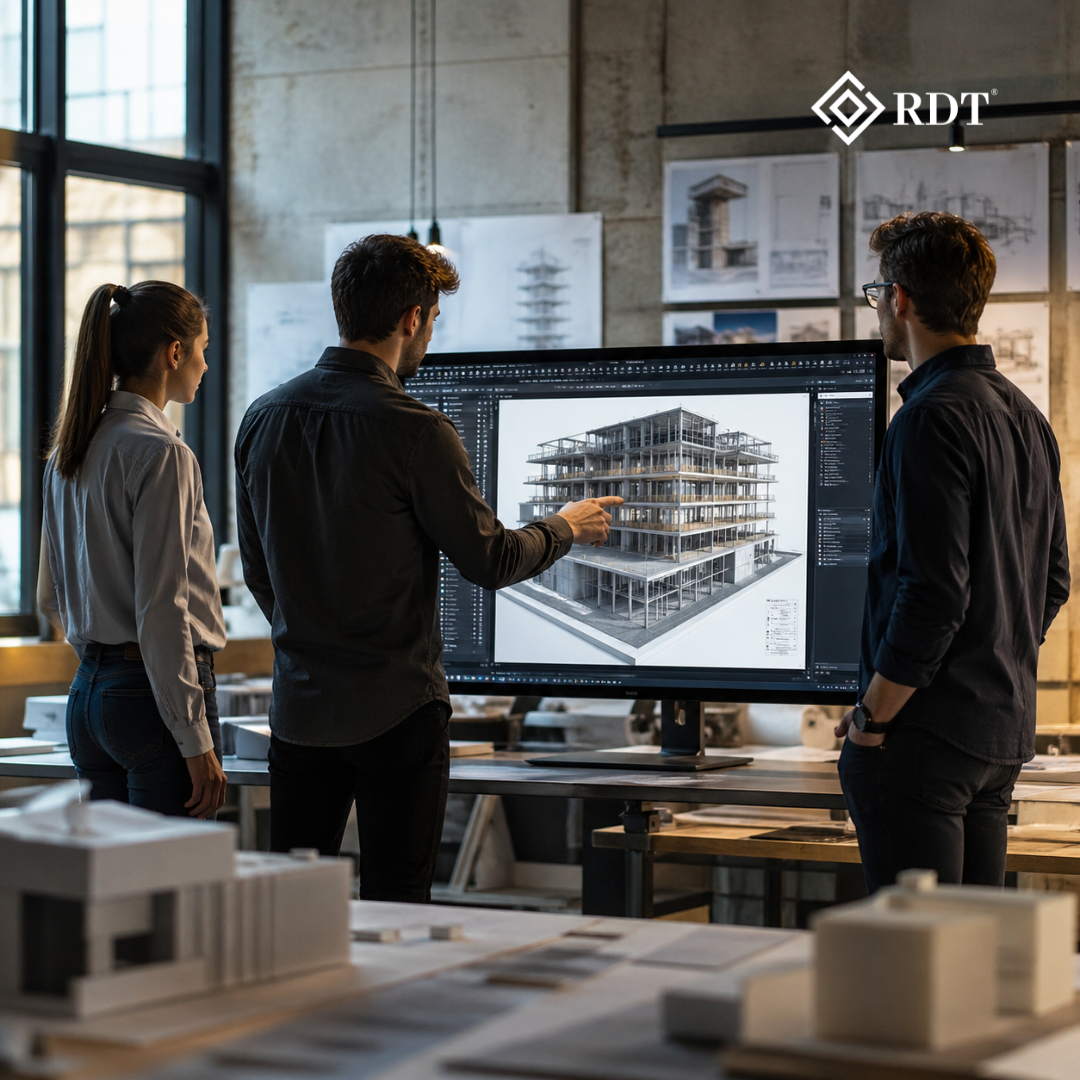
Virtual Design is not just about creating visually appealing 3D models. It is a process-driven, data-supported approach that integrates design intelligence, stakeholder coordination, simulation, and project foresight. Whether firms are designing hospitals, airports, commercial towers, or infrastructure networks, virtual design gives AEC teams a digital environment where every decision can be tested, refined, and validated before it hits the construction site.
In an industry where every mistake is expensive and every delay is painful, Virtual Design becomes the shield, the compass, and the accelerator.
1. Complexity Has Outgrown Traditional Methods
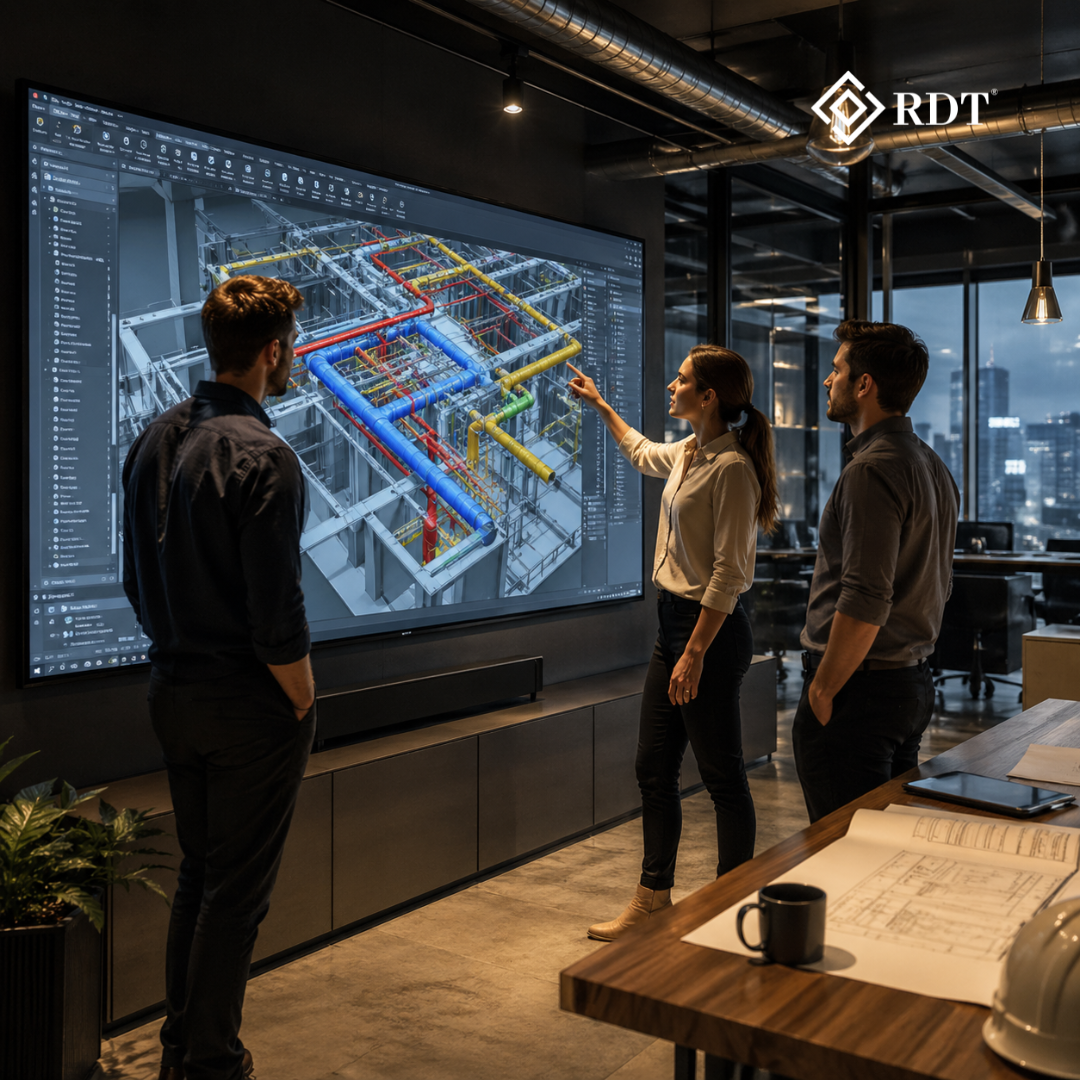
AEC projects are no longer linear or simple. With sustainability regulations, dense urban planning, advanced building systems, and integrated MEP networks, even small buildings require careful coordination. Traditional 2D drawings—or even siloed 3D work—fail to provide the clarity needed to foresee issues.
Virtual Design solves this by creating an intelligent, multi-dimensional environment where:
- Architecture, structure, and MEP systems interact visually and logically
- Design assumptions can be validated early
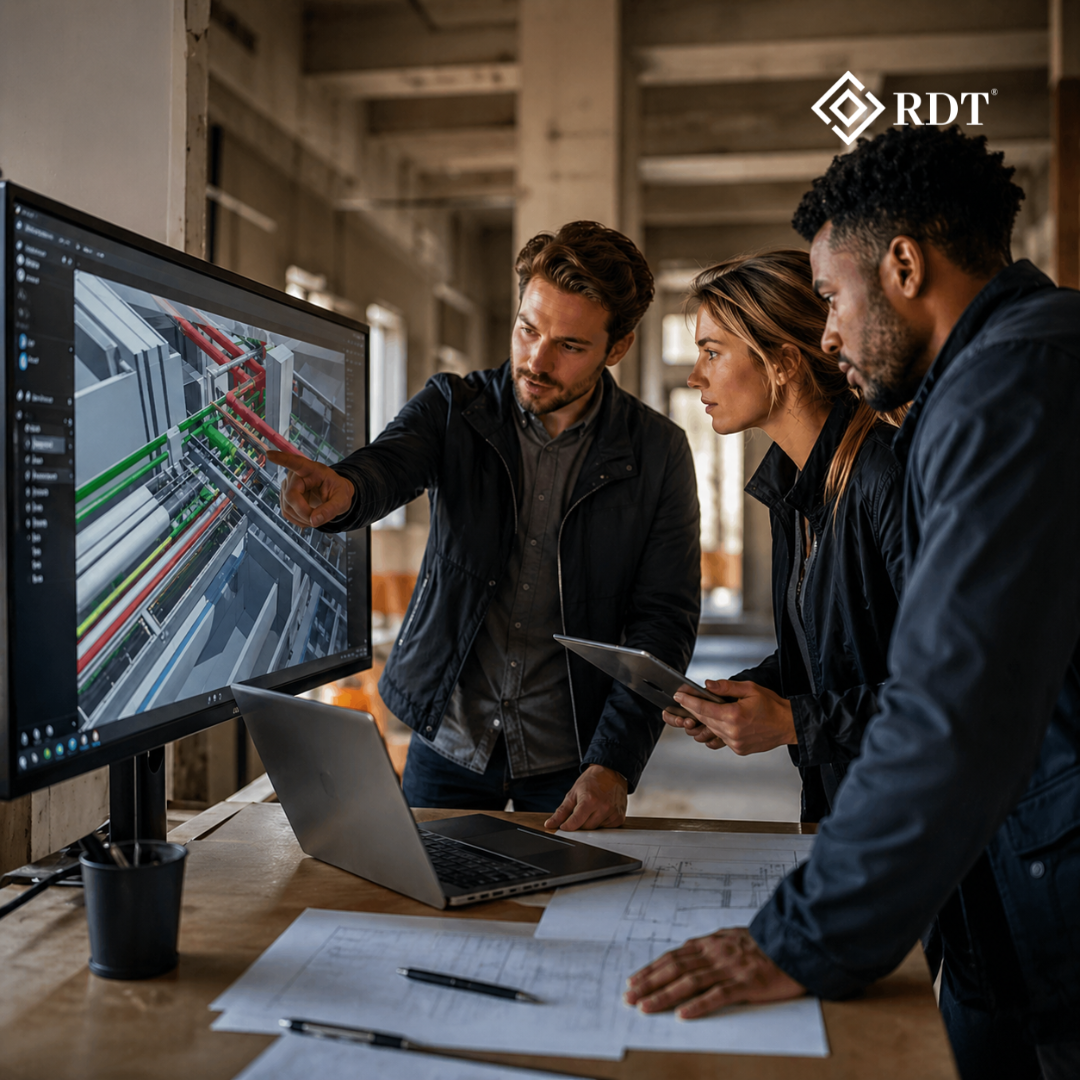
- Teams can detect clashes, inconsistencies, and design gaps
- Owners can “see” the final built environment long before construction
This shift dramatically reduces rework, which is one of the biggest drains on project budgets. Studies show that nearly 30% of rework originates from design errors and coordination issues—exactly the problems Virtual Design eliminates.
2. Better, Faster Decision-Making for All Stakeholders
AEC projects often suffer because critical decisions happen too late. Clients struggle to imagine spaces. Engineers work on assumptions. Contractors interpret drawings differently. By the time a conflict surfaces on-site, the cost of resolving it can be massive.
Virtual Design creates an environment of visual clarity and real-time decision support, enabling:
- Owners to understand spaces intuitively
- Architects to validate proportions, finishes, and layout quickly
- Engineers to test systems and performance
- Contractors to anticipate constructability challenges
- Facility teams to understand long-term operations
When clients can walk through a virtual building, misunderstandings disappear. When engineers can overlay their systems in a unified 3D environment, errors vanish. This alignment not only accelerates approvals but significantly strengthens trust between all parties involved.
3. Processes Become Predictable, Repeatable, and Scalable
One of the biggest challenges in AEC is maintaining consistency across projects. Every new project requires reinventing workflows due to variations in scale, team structure, or discipline involvement. Virtual Design introduces a framework that simplifies and standardizes the entire process.
With standardized virtual workflows:
- Teams can repeat successful project strategies
- Quality becomes consistent across deliverables
- Documentation becomes accurate and data-rich
- Chances of missing information drop dramatically
- Schedules become predictable rather than reactive
Because virtual models drive drawings, reports, quantities, and even simulations, human error naturally declines. Firms that adopt virtual workflows consistently report fewer RFIs, reduced redesign cycles, and stronger control over submission timelines.
4. Eliminating Clashes Before They Become Costly Mistakes
A major reason firms move toward Virtual Design is clash detection and resolution. When architecture, structure, and MEP systems collide in the real world, the cost implications are immediate and severe—material waste, halted work, additional manpower, and timeline disruptions.
With virtual environments:
- Mechanical ducts cutting structural beams get flagged instantly
- Plumbing lines intersecting slab drops become visible
- Electrical conduits interfering with fire systems can be resolved digitally
- Equipment clearances and servicing zones are validated early
This not only prevents mistakes; it also ensures the design aligns with construction sequencing and field realities. The earlier a clash is identified, the cheaper and easier it is to fix.
5. Enhancing Collaboration Across Distributed Teams
AEC teams rarely work from the same location. Architects may be in one city, engineers in another, contractors on-site, and clients across the globe. Virtual Design creates a unified digital environment where all contributors work with the same source of truth.
By adopting cloud-enabled virtual workflows:
- Teams collaborate in real time
- Updates are synchronized instantly
- Models evolve collaboratively instead of independently
- Version control becomes effortless
- Remote teams stay aligned without friction
This democratization of information ensures that every stakeholder—designer, contractor, or client—remains aligned throughout the project lifecycle.
6. Improved Constructability and Cost Predictability
When a building is virtually constructed before physical work begins, project teams gain insights that dramatically improve constructability and budgeting accuracy. Virtual models allow:
- Early quantity estimation
- Verification of construction methods
- Detection of sequencing conflicts
- Assessment of site logistics
- Optimization of material usage
This leads to tighter cost control, fewer surprises, and strong alignment between design intent and construction methods. Contractors benefit from virtual mock-ups that reveal risks or inefficiencies long before hitting the job site.
7. Better Client Experience and Competitive Advantage
Clients today expect transparency and confidence in their investments. AEC firms that offer Virtual Design aren’t just delivering drawings—they are delivering clarity, precision, and vision.
It elevates the client experience by enabling:
- Interactive design reviews
- Virtual walkthroughs of spaces
- Realistic visualizations
- Side-by-side comparison of design options
- Clear understanding of finishes, materials, and lighting
Firms that provide this level of engagement win more bids because they offer certainty in outcomes. In a market where competition is fierce, Virtual Design becomes a strategic advantage rather than a technical upgrade.
8. Supporting Sustainability and Performance Goals
Sustainability is no longer optional. Virtual Design supports sustainable building practices by allowing teams to simulate and analyze:
- Natural light distribution
- Building orientation
- HVAC load calculations
- Energy efficiency
- Material environmental impact
- Green certification requirements
Virtual workflows give project teams data-backed insights that help make better decisions earlier, ensuring sustainability goals are achieved without costly redesigns later.
9. Future-Proofing AEC Businesses
The next decade of the AEC industry will be characterized by:
- Digital twins
- AI-assisted design
- Automated documentation
- Robotics and off-site fabrication
- Sensor-driven facility management
All of these future technologies rely on the foundation established by Virtual Design. Without adopting virtual workflows today, AEC firms risk falling behind competitors who are building long-term digital capabilities now.
Virtual Design is not a temporary fix; it is the digital backbone that future AEC innovations will depend on.
Sum up: Virtual Design Is No Longer Optional
AEC firms worldwide are transitioning from traditional workflows toward integrated digital models. This shift isn’t driven by software adoption—it’s driven by the need for smarter, faster, more reliable project delivery.
Virtual Design empowers teams to:
- Reduce errors
- Increase predictability
- Enhance collaboration
- Boost efficiency
- Impress clients
- Save cost and time
With project complexity rising and clients demanding higher transparency, Virtual Design becomes the strongest competitive edge an AEC firm can have today.