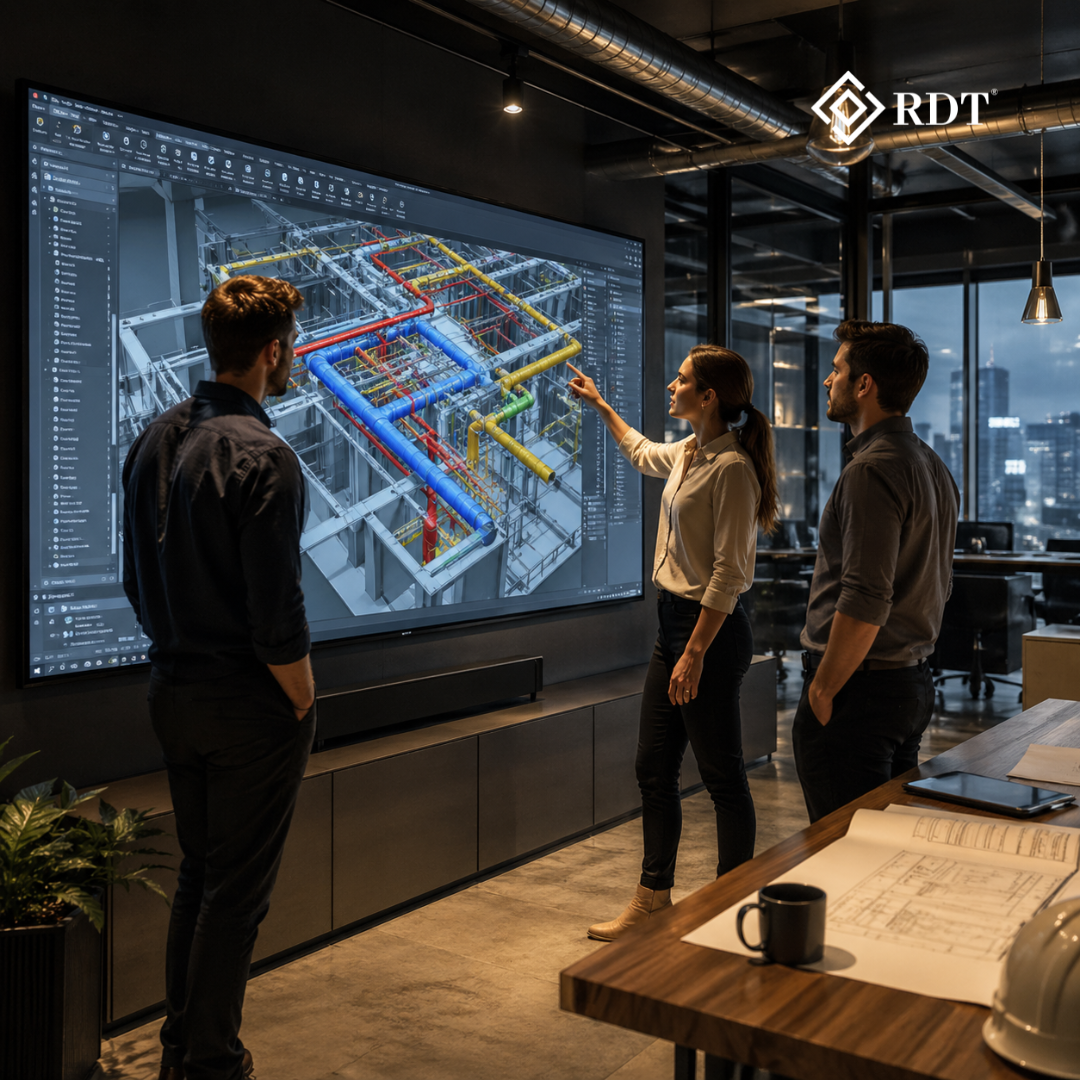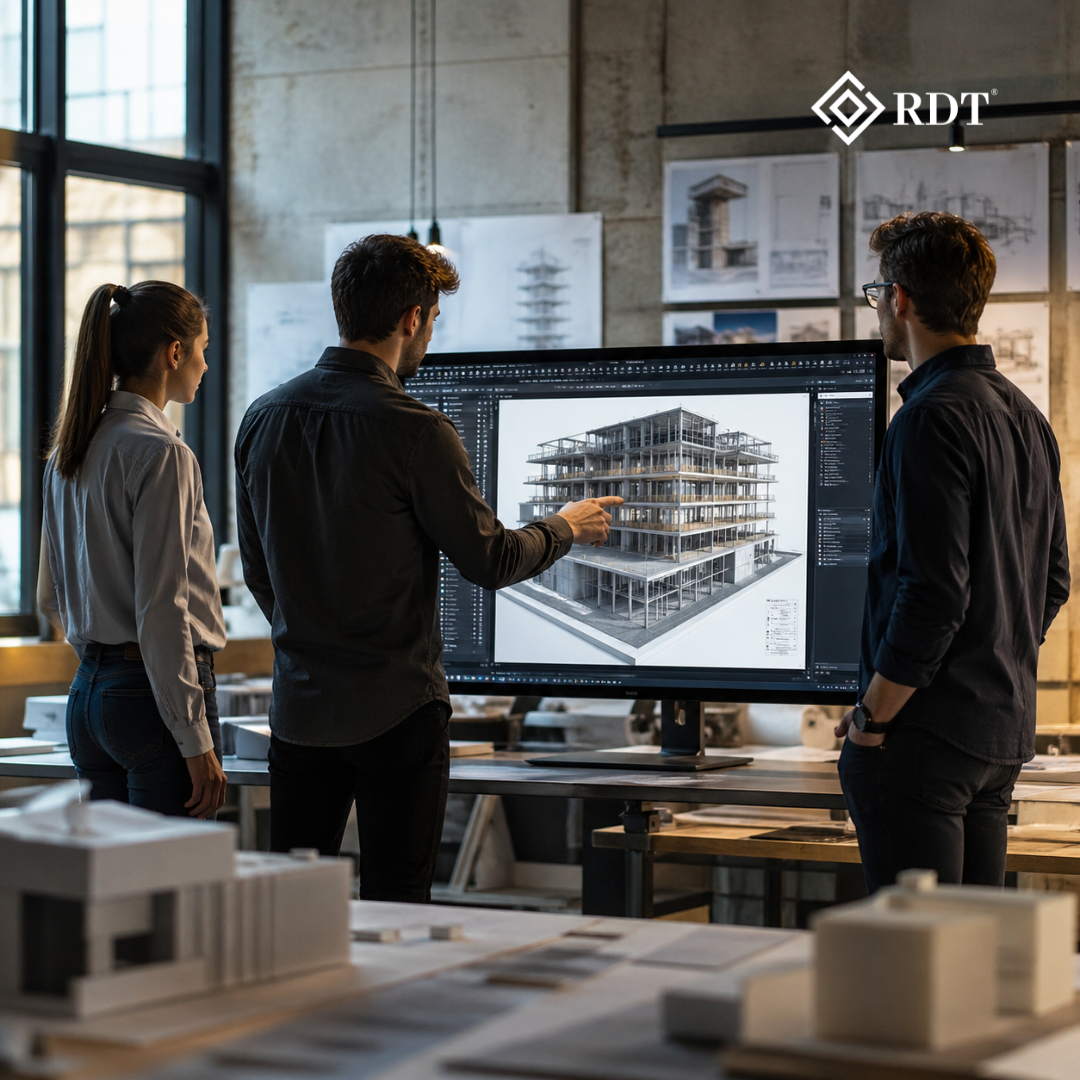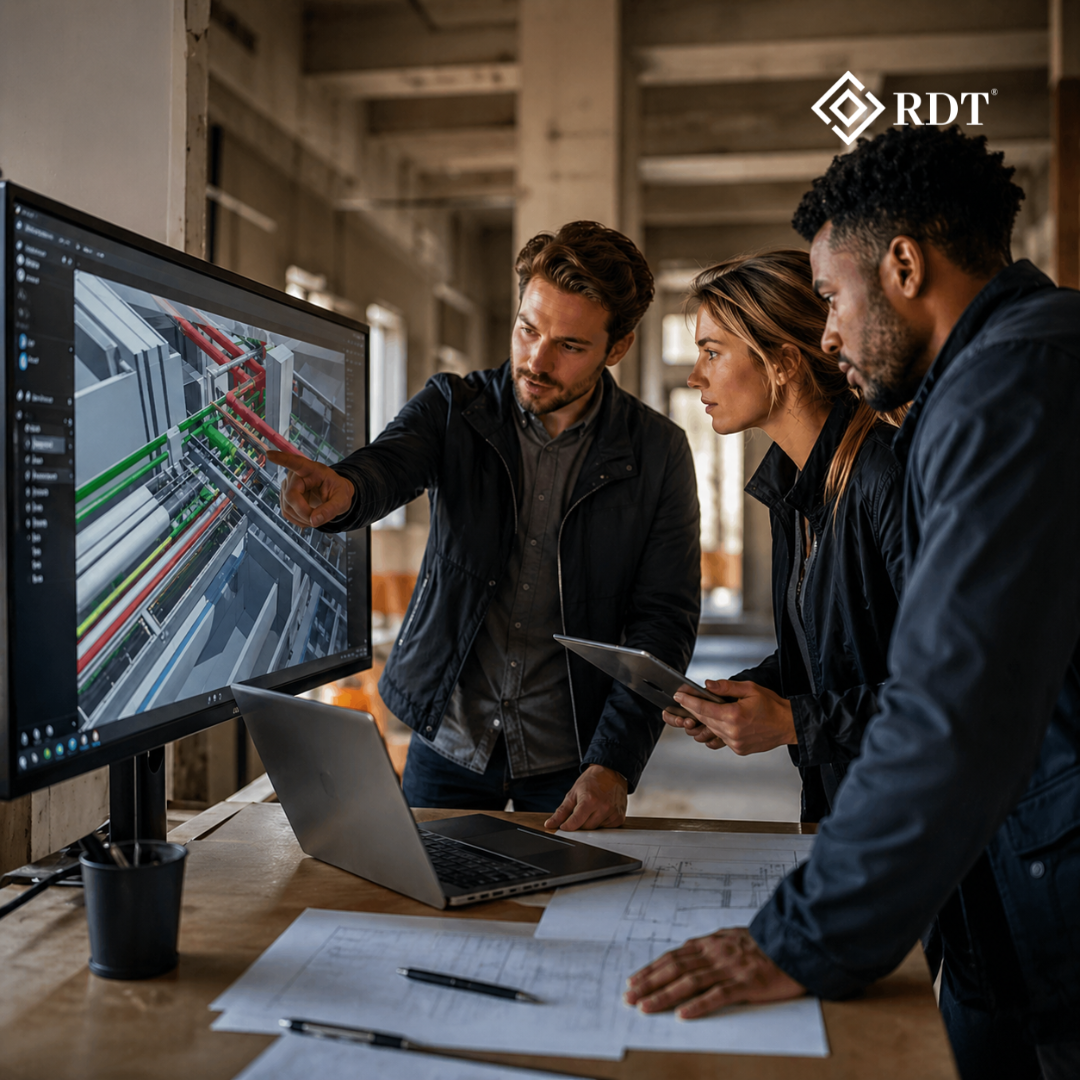

The architecture, engineering, and construction (AEC) industry is undergoing a profound transformation in 2025. No longer defined solely by manual workflows or siloed decision-making, the modern AEC landscape is now driven by intelligent systems that integrate vast data sets, simulate future outcomes, and optimize every stage of the design and construction process. At the core of this revolution lies Artificial Intelligence (AI) — a technology that is no longer theoretical but actively reshaping how the built environment is envisioned, executed, and maintained.
At RDT Technologies, we’ve always believed that the future of AEC lies at the intersection of innovation and collaboration. Our deep expertise in BIM, VDC, and digital construction workflows is now enhanced by AI-driven capabilities, enabling our partners to work smarter, deliver faster, and build better. Below are the seven most impactful ways AI is transforming architecture and construction in 2025.
1. Generative Design for Faster, Smarter Iterations
In traditional design processes, iteration can be time-consuming, subjective, and limited by human bandwidth. AI-powered generative design flips this model by empowering architects and engineers to generate hundreds — sometimes thousands — of viable design alternatives within minutes.
Using predefined goals such as spatial requirements, budget constraints, material choices, energy efficiency targets, and structural parameters, generative design platforms can:
- Explore vast solution spaces in a fraction of the time.
- Reveal unexpected design options that a human may not have considered.
- Simulate performance outcomes for lighting, airflow, energy consumption, and more.
More than just speed, the value lies in data-informed decision-making. Architects aren’t replaced — they are equipped with a broader, better set of possibilities, which leads to more optimized outcomes. The result? Better buildings that are designed with both creativity and performance in mind from the very beginning.
2. AI-Powered Site Monitoring and Safety Compliance

Construction sites are inherently complex, with multiple teams, moving equipment, and evolving hazards. In 2025, AI-driven computer vision systems and drone surveillance are transforming site monitoring from a reactive process into a proactive, intelligent one.
These systems, powered by deep learning algorithms, can:
- Detect unsafe behaviors such as improper harnessing, PPE violations, or unauthorized access zones.
- Track asset utilization and labor productivity across the jobsite.
- Generate real-time dashboards that visualize progress, highlight bottlenecks, and ensure compliance with safety protocols.
For project managers and general contractors, this means enhanced situational awareness, fewer incidents, and improved coordination. By connecting AI monitoring systems to BIM models and digital twins, construction teams can ensure that what’s happening on-site aligns precisely with what was planned, down to the smallest detail.
3. Smart Scheduling and Resource Planning
AI is solving one of the most chronic pain points in construction: project delays and inefficient scheduling. Traditional scheduling tools rely heavily on static Gantt charts and assumptions that often fall apart when real-world variables — weather, supplier delays, labor availability — come into play.
In contrast, AI-driven platforms analyze:
- Historical project performance data.
- Supply chain information and vendor reliability.
- Labor patterns, equipment downtime, and local conditions.
This allows AI to predict delays before they happen and optimize resource allocation dynamically. When integrated with 4D BIM, these tools offer visual, time-based simulations of construction sequences, empowering stakeholders to make better-informed decisions and keep projects on track.
4. Predictive Maintenance and Asset Performance Modeling

The buildings and infrastructure we design today are increasingly expected to be resilient, adaptive, and long-lasting. AI plays a critical role in achieving these goals through predictive maintenance models that begin operating long before the building is even completed.
By combining AI with IoT sensor networks, building systems can be continuously monitored to:
- Detect wear, inefficiency, or malfunction in HVAC, plumbing, structural components, and electrical systems.
- Trigger alerts for maintenance before costly failures occur.
- Optimize energy usage based on real-time occupancy and environmental data.
When linked with digital twins, these AI models simulate asset behavior under different conditions, allowing building operators to plan for contingencies and reduce operational costs. The shift from reactive to predictive maintenance represents a major advancement in long-term asset performance and sustainability.
5. Client-Centric Design with AI-Driven Preference Analysis
Clients today are more informed and involved than ever. They want buildings that not only meet technical specifications but also reflect their values, lifestyles, and preferences. AI is now being used to bridge the gap between what clients express and what architects deliver.
Using tools that analyze:
- Client interviews and survey data.
- Past design preferences and social media interactions.
- Industry trends and demographic behaviors.
AI can help generate personalized design suggestions that align with a client’s vision, cultural context, and psychological needs. Furthermore, when combined with immersive technologies like AR/VR, clients can walk through real-time simulations of design options, giving feedback and making decisions early, before costly changes occur later in the process.
This level of personalization, backed by data, not only improves satisfaction but also shortens timelines and reduces revision cycles.
6. Automated Code Compliance and Regulatory Checks

Navigating the maze of zoning laws, energy codes, fire safety regulations, and structural standards has traditionally required extensive manual effort and expert consultation. AI now automates this process, reducing risk and accelerating approvals.
AI-enabled compliance systems:
- Parse legal documents and code libraries.
- Scan architectural and structural models for violations or nonconformities.
- Offer real-time suggestions for correction directly within design tools like Revit.
These tools are especially powerful when linked to BIM workflows, where changes can be made collaboratively and instantly reflected across all documentation sets. The result is fewer surprises during plan review, reduced regulatory friction, and faster project timelines, particularly critical in complex or high-density urban projects.
7. AI + BIM Integration: Building a Smarter Ecosystem
Perhaps the most transformative development in 2025 is the deep integration of AI into Building Information Modeling (BIM) environments. Rather than treating AI and BIM as separate tools, forward-thinking firms like RDT Technologies are embedding AI into the very foundation of their digital delivery process.
This AI+BIM synergy supports:
- Intelligent clash detection, where issues are not just identified but ranked based on impact, cost, and timeline sensitivity.
- Real-time cost estimation (5D BIM) that updates as the design evolves — supported by market data and predictive cost algorithms.
- Sustainability modeling (6D BIM) that simulates the environmental impact of different materials and construction methods.
By automating repetitive tasks and enhancing the intelligence of design and documentation, AI enables more time for innovation, collaboration, and creativity.
Final Thoughts: Building Smarter, Building Better
AI is not a passing trend. It’s a foundational shift that is reengineering how we think about architecture and construction. In 2025 and beyond, buildings will be designed not just to exist, but to adapt, evolve, and perform.
At RDT Technologies, our mission is to help clients leverage this transformative power with confidence. From concept to completion, our AI-enhanced BIM and VDC workflows ensure that every project is faster, smarter, safer, and more efficient.
As the industry moves toward a future shaped by intelligence and automation, the opportunity is clear: Those who embrace AI will lead the built world of tomorrow.
Let’s build that future together.