The construction industry has transformed significantly over the last decade. Projects are becoming more complex, stakeholders are more involved, and clients demand greater transparency throughout the lifecycle of a development. In this evolving landscape, collaboration is no longer just a desirable trait. It is a critical requirement for delivering successful outcomes.
Building Information Modeling has become a central driver of this collaborative shift. BIM is more than three dimensional modeling. It is a process that integrates design, engineering, construction, and operational data into a unified digital environment. By connecting people, processes, and information, BIM improves coordination and reduces inefficiencies across all project phases.
Below are the top five BIM features that play a crucial role in strengthening collaboration in modern construction projects.
1. Centralized Data Environment
One of the most powerful aspects of BIM is the creation of a centralized data environment. Traditional construction workflows often involve multiple disconnected systems. Drawings are shared via email, revisions are stored in different folders, and teams frequently struggle to identify the most updated version of a document.
BIM addresses this issue by providing a single shared platform where all project information is stored and maintained. Architects, engineers, contractors, and project managers can access the same model and related documentation in real time. When updates are made, they are reflected across the system immediately.
This shared access eliminates confusion and significantly reduces miscommunication. Team members no longer rely on outdated drawings or isolated data sets. Instead, everyone works from a unified source of truth. This consistency enhances accountability and fosters trust among stakeholders.
A centralized environment also improves traceability. Every change made within the model can be tracked, along with the time and individual responsible for the modification. This transparency minimizes disputes and promotes a more collaborative project culture.
2. Real Time Clash Detection
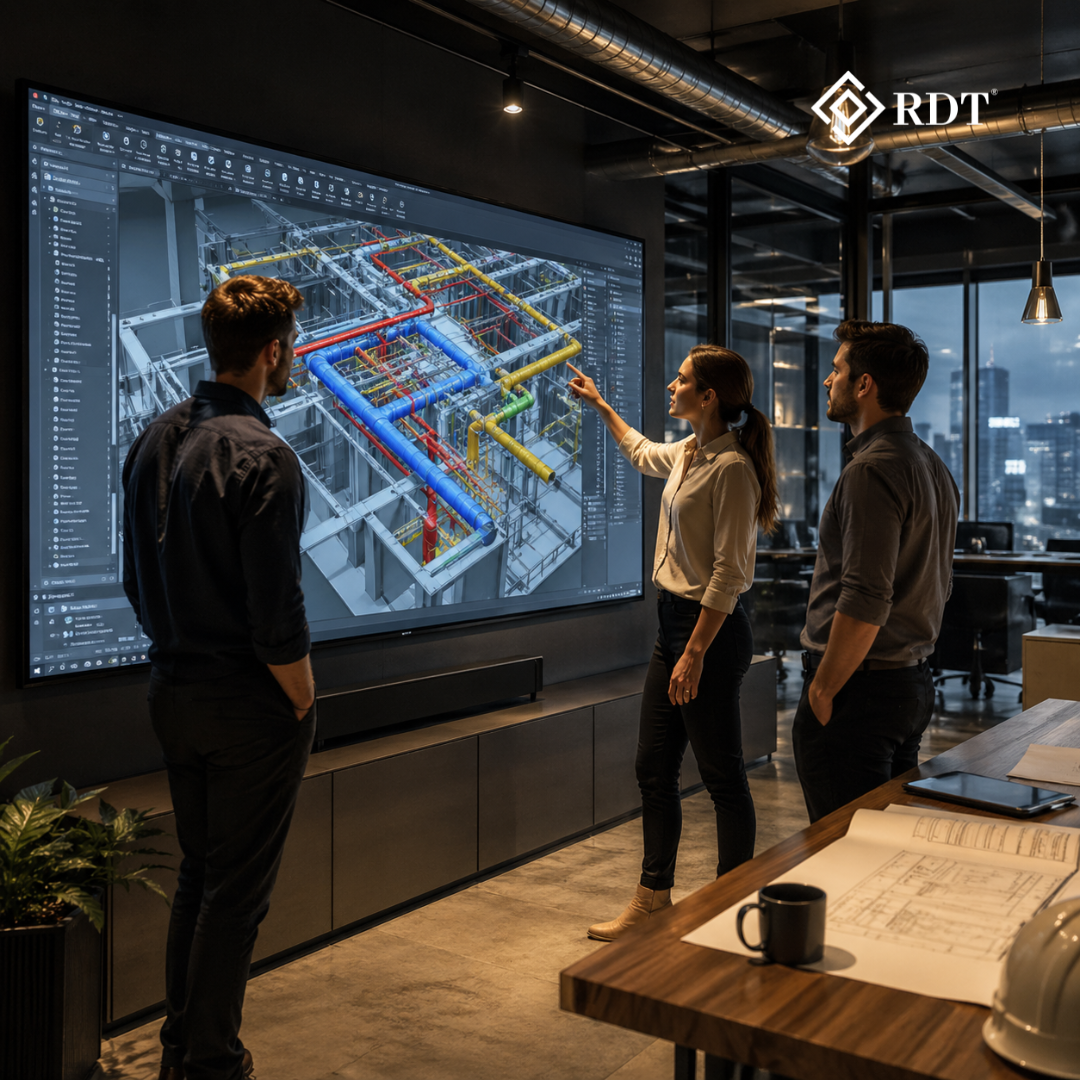
Clash detection is one of the most valuable collaborative features within BIM workflows. In traditional design processes, conflicts between structural elements and mechanical, electrical, or plumbing systems are often discovered during construction. These late discoveries can result in costly rework, delays, and strained relationships between teams.
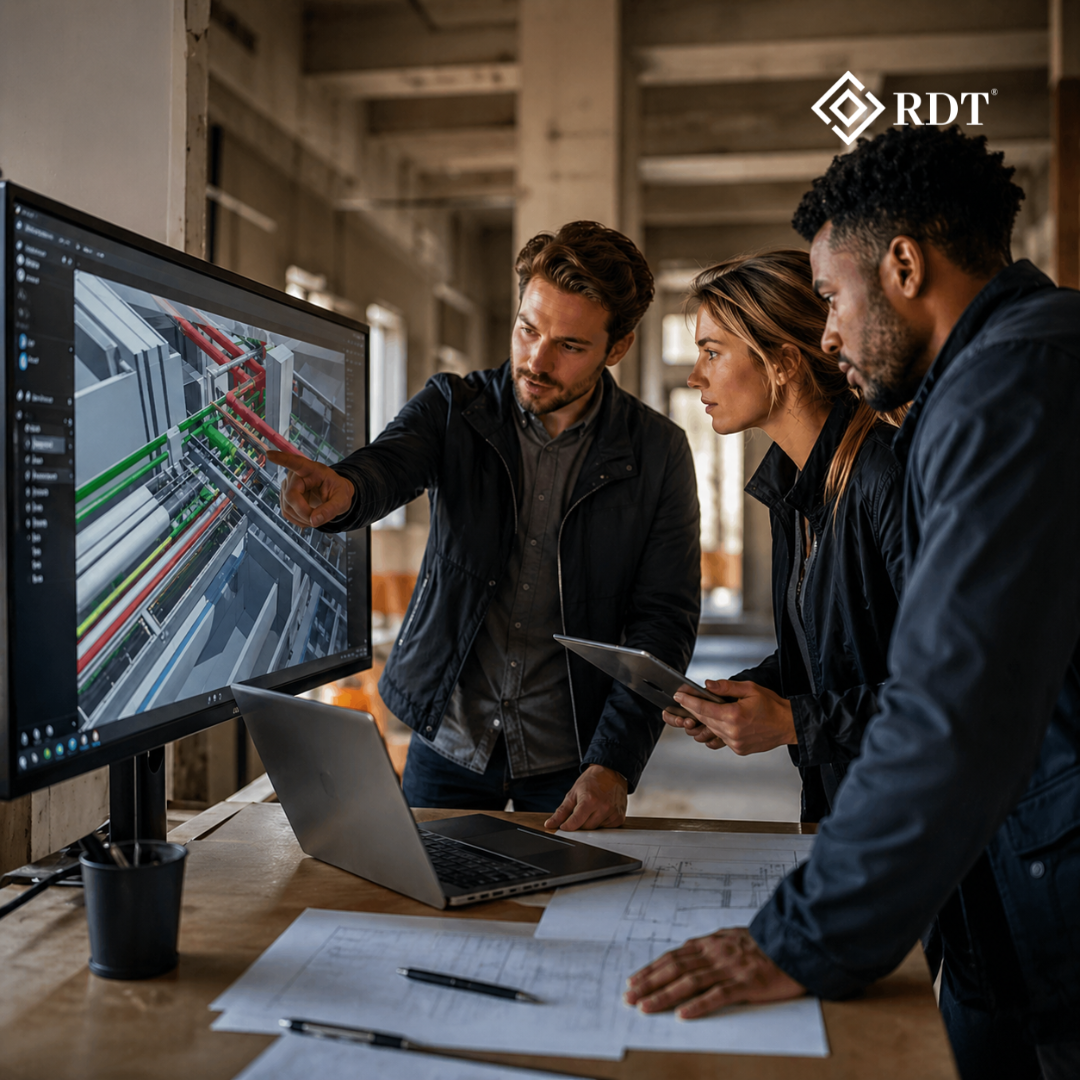
BIM enables automatic identification of clashes before construction begins. By integrating all disciplines into a coordinated model, potential conflicts are detected digitally during the design stage. Structural beams intersecting with ductwork or pipes passing through walls can be resolved long before materials are delivered to the site.
This early conflict identification transforms collaboration. Instead of addressing problems reactively, teams can engage in proactive coordination sessions. Architects, structural engineers, and MEP consultants work together to resolve issues collectively within the model environment.
The result is a smoother construction process with fewer surprises. By eliminating coordination errors early, BIM reduces stress on project teams and promotes a more cooperative approach to problem solving.
3. Integrated Communication and Documentation
Clear communication is the foundation of successful collaboration. In conventional workflows, communication often takes place through scattered emails, phone calls, and paper based markups. Important information can be lost, misinterpreted, or delayed.
BIM platforms integrate communication directly into the project model. Team members can add comments, attach supporting documents, assign tasks, and highlight specific elements within the digital environment. This contextual communication ensures that discussions are directly linked to relevant components of the model.
When an engineer identifies a concern, they can mark the precise location within the model and provide detailed notes. Other stakeholders can respond within the same environment, creating a structured and traceable conversation thread. This eliminates ambiguity and reduces the risk of misunderstandings.
Integrated documentation also improves project oversight. Managers can monitor open issues, track progress, and ensure that responsibilities are clearly defined. By centralizing communication within the model, BIM strengthens coordination and enhances overall project clarity.
4. 4D Scheduling and Construction Planning
Time management is a critical factor in modern construction projects. Delays in one phase can disrupt the entire schedule, leading to cost overruns and reduced client satisfaction. Traditional scheduling methods often exist separately from design information, making it difficult to visualize the relationship between time and physical components.
BIM introduces 4D modeling, where scheduling data is integrated with the three dimensional model. Construction activities are linked to specific building elements, allowing teams to visualize how the project will evolve over time.
This visual representation improves collaboration by making the construction sequence easier to understand. Instead of relying solely on complex charts, stakeholders can see how different phases will unfold. This clarity enables better coordination between trades and reduces the likelihood of overlapping activities in the same space.
4D scheduling also supports more effective resource planning. Contractors can align labor and equipment allocation with the projected timeline. Suppliers can coordinate deliveries according to installation schedules. Clients gain improved insight into project milestones and progress.
By connecting design and time within a single environment, BIM enhances coordination and ensures that teams remain aligned throughout execution.
5. Accurate Quantity Takeoffs and Cost Transparency
Financial management is closely tied to collaboration. Misaligned cost estimates can create tension between stakeholders and undermine project trust. Traditional quantity takeoffs are often performed manually from drawings, making them susceptible to errors and inconsistencies.
BIM models contain detailed data about materials, dimensions, and specifications. Quantities can be extracted directly from the model, providing a more accurate basis for cost estimation. When design changes occur, quantities update automatically, ensuring that financial calculations remain aligned with the latest design.
This capability improves collaboration between designers, estimators, and contractors. All parties rely on consistent data, reducing discrepancies and minimizing disputes related to measurement differences. Clients benefit from enhanced transparency and can make informed decisions based on reliable cost information.
Accurate quantity takeoffs also support better procurement planning. Contractors can anticipate material requirements more precisely, reducing waste and preventing shortages. By aligning financial and design data, BIM fosters greater trust and smoother coordination across project teams.
The Broader Impact of BIM on Collaborative Workflows
Beyond these five features, BIM promotes a fundamental shift in how construction teams operate. It encourages early stakeholder involvement, integrated project delivery approaches, and data driven decision making.
Instead of working in isolation, disciplines collaborate within a shared digital ecosystem. Designers gain a clearer understanding of construction constraints. Contractors better comprehend design intent. Owners receive a comprehensive digital asset that supports facility management after project completion.
This integrated approach reduces fragmentation and enhances efficiency. Communication becomes structured. Decisions are supported by accurate data. Risks are identified and addressed before they escalate into costly issues.
As construction projects grow increasingly complex, the need for seamless collaboration becomes even more critical. BIM provides the framework necessary to manage this complexity effectively.
Conclusion
Modern construction projects demand high levels of coordination, accuracy, and transparency. Collaboration is no longer optional. It is essential for delivering projects on time, within budget, and to the expected quality standards.
The five BIM features discussed above demonstrate how digital modeling enhances teamwork across all project phases. A centralized data environment ensures consistent information access. Clash detection eliminates coordination conflicts before construction begins. Integrated communication improves clarity and accountability. 4D scheduling strengthens planning and execution. Accurate quantity takeoffs enhance cost transparency and financial alignment.
Together, these capabilities create a cohesive and collaborative project environment. BIM is not simply a design methodology. It is a comprehensive approach that connects stakeholders, streamlines workflows, and supports informed decision making.
If your organization is looking to improve project coordination and achieve better outcomes in modern construction projects, partnering with experienced BIM professionals is crucial.
Take advantage of expert BIM solutions delivered by RDT Technology and strengthen collaboration across every stage of your construction projects.