
Construction planning has always relied on technical drawings to guide design and execution. For decades, blueprints served as the primary language of architects, engineers, and contractors. They represented geometry, structure, and intent through lines and symbols that required expertise to interpret.
However, the construction industry is undergoing a major transformation. 3D rendering has moved from being a visual luxury to a strategic planning tool. It is reshaping how projects are designed, approved, coordinated, marketed, and built. Instead of relying solely on flat drawings, teams now explore realistic digital environments that simulate the final structure before construction begins.
This shift is not just about aesthetics. It is about clarity, accuracy, efficiency, and confidence in decision making.
The Limitations of Traditional Blueprints in Modern Construction
Blueprints remain essential in construction, but they have inherent limitations in modern complex projects. A blueprint is a two dimensional representation of a three dimensional reality. Understanding spatial relationships, material finishes, lighting, and design intent requires technical expertise and imagination.
For non technical stakeholders such as developers, investors, or clients, interpreting blueprints can be difficult. Misunderstandings at the planning stage often lead to late design changes, delays, and cost overruns.
Moreover, modern buildings involve intricate systems such as HVAC, electrical networks, plumbing, structural elements, and smart technologies. Representing all these layers in two dimensional drawings increases the risk of clashes and coordination errors.
3D rendering addresses these challenges by transforming abstract drawings into immersive visual environments that anyone can understand.
What 3D Rendering Means for Construction Planning
3D rendering is the process of converting digital models into realistic images or animations that depict how a building will look and function. When integrated with BIM models and engineering data, renderings become more than visual presentations. They become planning instruments that influence every stage of a project lifecycle.
By visualizing the design in realistic form, stakeholders gain a clear understanding of spatial layout, material choices, lighting conditions, landscaping, and user experience long before construction starts. This eliminates guesswork and aligns expectations.
Enhanced Visualization for Better Decision Making
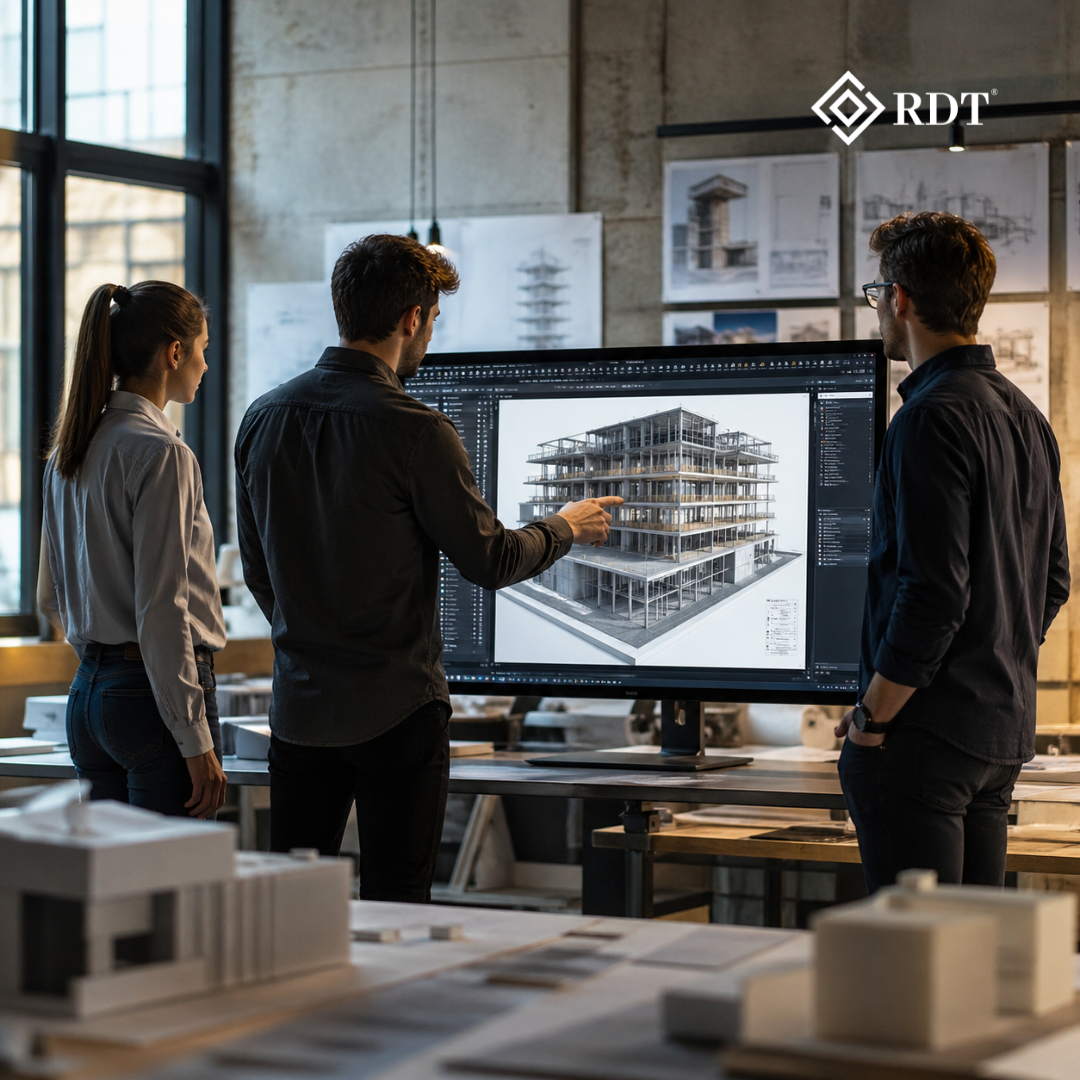
One of the biggest impacts of 3D rendering in construction planning is visualization. Traditional blueprints require technical knowledge to interpret, while 3D visuals communicate design intent instantly.
Stakeholders can see how a building will look from multiple angles, explore interior spaces, and understand proportions and scale. This improves confidence in decisions related to layout, façade design, material selection, and spatial planning.
According to industry insights, 3D visualization eliminates guesswork by providing realistic previews that help teams align design goals from the beginning.
This clarity reduces the risk of design misunderstandings that often surface during construction.
Faster Approvals and Stakeholder Alignment
Approvals are one of the biggest bottlenecks in construction planning. Regulatory authorities, investors, and clients often require detailed clarification before approving a project.
3D renderings speed up this process by presenting a comprehensive visual narrative of the project. When decision makers can clearly see what is being proposed, they are more likely to approve plans quickly.
Visual presentations also help bridge communication gaps between technical teams and non technical stakeholders. Contractors, designers, and clients can collaborate using a common visual reference, reducing disputes and confusion.
Research shows that 3D visualization significantly improves communication and alignment among stakeholders, which reduces costly revisions and delays.
Early Error Detection and Clash Identification
One of the most valuable advantages of 3D rendering is its ability to reveal errors before construction begins. In traditional workflows, many design conflicts are discovered only on site, leading to rework and schedule disruptions.
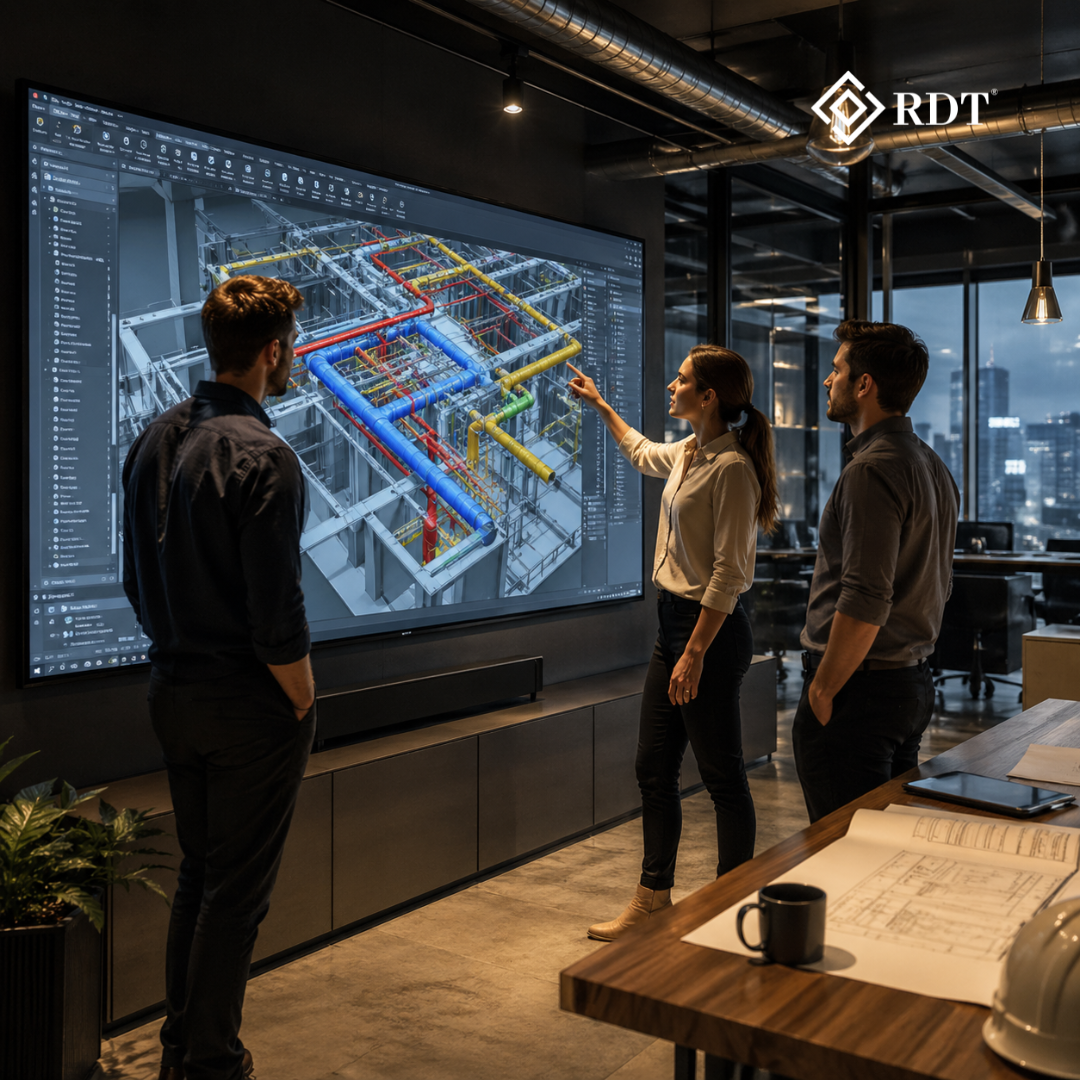
By integrating rendering with BIM models, teams can identify clashes between structural components, mechanical systems, and architectural elements. This proactive approach prevents errors such as ductwork intersecting with beams or misaligned piping systems.
Detecting these issues digitally saves significant time and money and improves construction quality.
Industry data indicates that 3D modeling can reduce project lead time and errors, helping teams fix issues before they reach the field.
Improved Collaboration Across Disciplines
Construction planning involves architects, structural engineers, MEP specialists, contractors, and project managers. Each discipline works with its own drawings and data sets, which can lead to fragmentation.
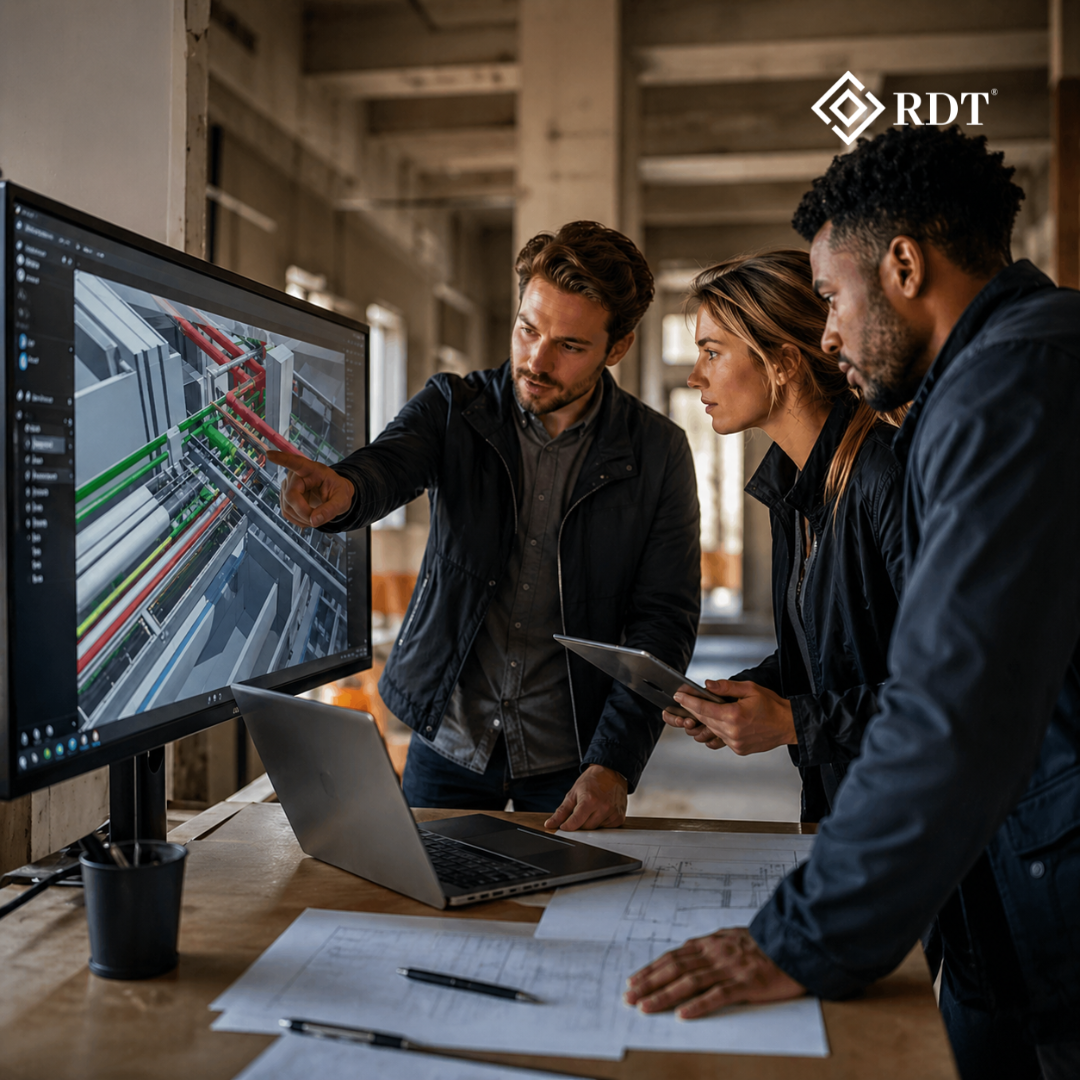
3D rendering acts as a unified visual platform where all disciplines can review and coordinate the design. Teams can collaborate in real time, visualize updates instantly, and maintain a single source of truth.
Cloud based 3D tools allow stakeholders to access updated models instantly, improving coordination and reducing miscommunication.
This collaborative environment enhances productivity and ensures everyone works toward the same design intent.
Accelerating Design Iterations and Flexibility
In traditional workflows, design revisions require redrawing blueprints, updating multiple documents, and coordinating changes across teams. This process is time consuming and prone to errors.
With 3D rendering, changes can be visualized instantly. Designers can test different layouts, materials, and design options without redrawing entire plans. Clients can see variations in real time and provide feedback early in the planning stage.
This flexibility reduces late stage modifications and speeds up the design process.
Cost Savings Through Digital Planning
Construction errors and redesigns are expensive. Rework, delays, and material waste significantly impact project budgets.
3D rendering helps optimize planning by enabling accurate visualization, material estimation, and sequencing. Project managers can simulate construction phases, identify inefficiencies, and allocate resources effectively.
Studies show that early detection of design flaws and improved visualization can reduce project costs by up to 15 to 38 percent while accelerating timelines.
These savings make 3D rendering a strategic investment rather than an optional service.
Enhancing Construction Scheduling and Sequencing
Beyond visual aesthetics, 3D rendering supports construction planning through scheduling simulations. When integrated with 4D BIM, renderings can illustrate the construction sequence over time.
Project teams can visualize site logistics, crane placement, material deliveries, and workflow sequences. This helps identify potential bottlenecks and optimize construction strategies before work begins.
Simulating construction phases digitally ensures smoother execution and fewer surprises on site.
Transforming Client Engagement and Marketing
3D rendering has become a powerful tool for client engagement and project marketing. Developers use realistic visuals, walkthroughs, and animations to attract investors and buyers even before construction starts.
These visuals help stakeholders emotionally connect with the project, increasing confidence and accelerating investment decisions.
High quality renderings also support branding, sales presentations, and project storytelling, making them indispensable in competitive real estate markets.
Supporting Sustainable and Smart Design Decisions
Sustainability is a major focus in modern construction. 3D rendering combined with BIM enables simulation of energy performance, daylighting, and material efficiency.
Designers can analyze building orientation, insulation, lighting, and material choices to optimize environmental performance. This data driven approach supports green building certifications and long term operational savings.
Rendering also helps communicate sustainability features to stakeholders in a visually compelling way, making complex data easy to understand.
From Static Drawings to Digital Experiences
Traditional blueprints are static documents. They show what is designed but not how it will feel or function.
3D rendering transforms planning into an interactive experience. Stakeholders can explore virtual environments, walk through spaces, and evaluate usability before construction begins.
This shift from static drawings to immersive experiences represents a fundamental change in how buildings are conceived and approved.
Integration with BIM and Digital Twins
The true power of 3D rendering emerges when integrated with BIM and digital twin technologies. BIM provides technical data such as structural loads, quantities, schedules, and cost estimates. Rendering translates this data into visually understandable outputs.
This integration enables predictive planning, scenario analysis, and lifecycle management. Teams can simulate performance, maintenance, and future upgrades, creating smarter and more resilient buildings.
The synergy between BIM and rendering improves decision making, communication, and cost control throughout the project lifecycle.
Changing the Role of Architects and Engineers
3D rendering is not replacing architects or engineers. Instead, it is enhancing their capabilities. Designers can communicate ideas more effectively, engineers can detect technical issues earlier, and project managers can plan execution more accurately.
Professionals who leverage rendering tools gain a competitive advantage by delivering faster approvals, fewer errors, and better client experiences.
Challenges and Adoption Considerations
While 3D rendering offers significant benefits, adopting it requires investment in software, hardware, and training. Firms must integrate rendering workflows with existing BIM and CAD systems.
Data management, model accuracy, and collaboration protocols must be established to ensure reliable outputs.
However, the long term benefits far outweigh the initial investment, especially for complex and large scale projects.
The Future of Construction Planning
3D rendering is evolving rapidly with technologies such as virtual reality, augmented reality, and artificial intelligence. In the future, stakeholders will explore digital twins in immersive environments, simulate real time construction progress, and analyze performance scenarios before building.
Blueprints will continue to exist, but they will no longer be the primary decision making tool. Visual and data driven digital environments will dominate planning workflows.
Construction planning is shifting from paper based interpretation to digital visualization and simulation. This transformation is redefining how buildings are designed, approved, and delivered.
Conclusion
3D rendering has moved far beyond being a presentation tool. It is now a strategic planning asset that improves visualization, accelerates approvals, enhances collaboration, reduces errors, and optimizes project execution.
By transforming traditional blueprints into immersive digital experiences, 3D rendering empowers stakeholders to make informed decisions with confidence. It reduces risk, saves costs, and improves project outcomes.
As the construction industry continues to embrace digital transformation, 3D rendering will become a standard component of construction planning rather than an optional enhancement.
If you want to transform your construction planning with realistic 3D visualization, BIM integrated rendering, and advanced digital workflows, partner with RDT Technology.
RDT Technology delivers world class 3D rendering and BIM services engineered for seamless planning, faster approvals, and error free execution for complex construction projects.
Contact RDT Technology today to discuss your project requirements and discover how our digital construction solutions can help you plan smarter, reduce risks, and deliver projects with confidence.