
Introduction
Digital transformation has reshaped almost every industry in the world. Banking has gone fully online, healthcare relies on digital diagnostics and telemedicine, manufacturing runs on automation and smart factories, and retail has embraced e-commerce and data driven personalization. Yet the Architecture Engineering and Construction industry, often called AEC, still struggles with digital adoption.
While other industries treat digital tools as essential infrastructure, AEC often treats them as optional add ons. Many firms still rely on spreadsheets, emails, manual drawings, disconnected workflows, and outdated documentation methods. This hesitation is not just slowing projects down. It is costing time, money, and opportunities.
This blog explores why the AEC industry still fears digital transformation, what it is missing, and how companies that embrace technology are gaining a powerful competitive advantage.
The Legacy Mindset in AEC
The AEC industry is deeply rooted in tradition. For decades, projects were designed on paper, coordinated through meetings, and executed through physical site supervision. Many professionals built their careers in this environment, and the systems worked well enough to deliver projects.
However, this legacy mindset creates resistance to change. When something has worked for years, people hesitate to replace it. Digital tools are often seen as complicated, expensive, or disruptive. There is also a belief that construction is a physical industry that cannot be fully digitized.
This mindset is one of the biggest barriers to progress. Digital transformation does not remove physical construction. It enhances planning, coordination, and decision making before physical work begins.
Fragmentation Across the Industry
Unlike banking or manufacturing, the AEC industry is highly fragmented. A single project involves architects, engineers, contractors, subcontractors, consultants, suppliers, and clients. Each stakeholder uses different tools, formats, and workflows.
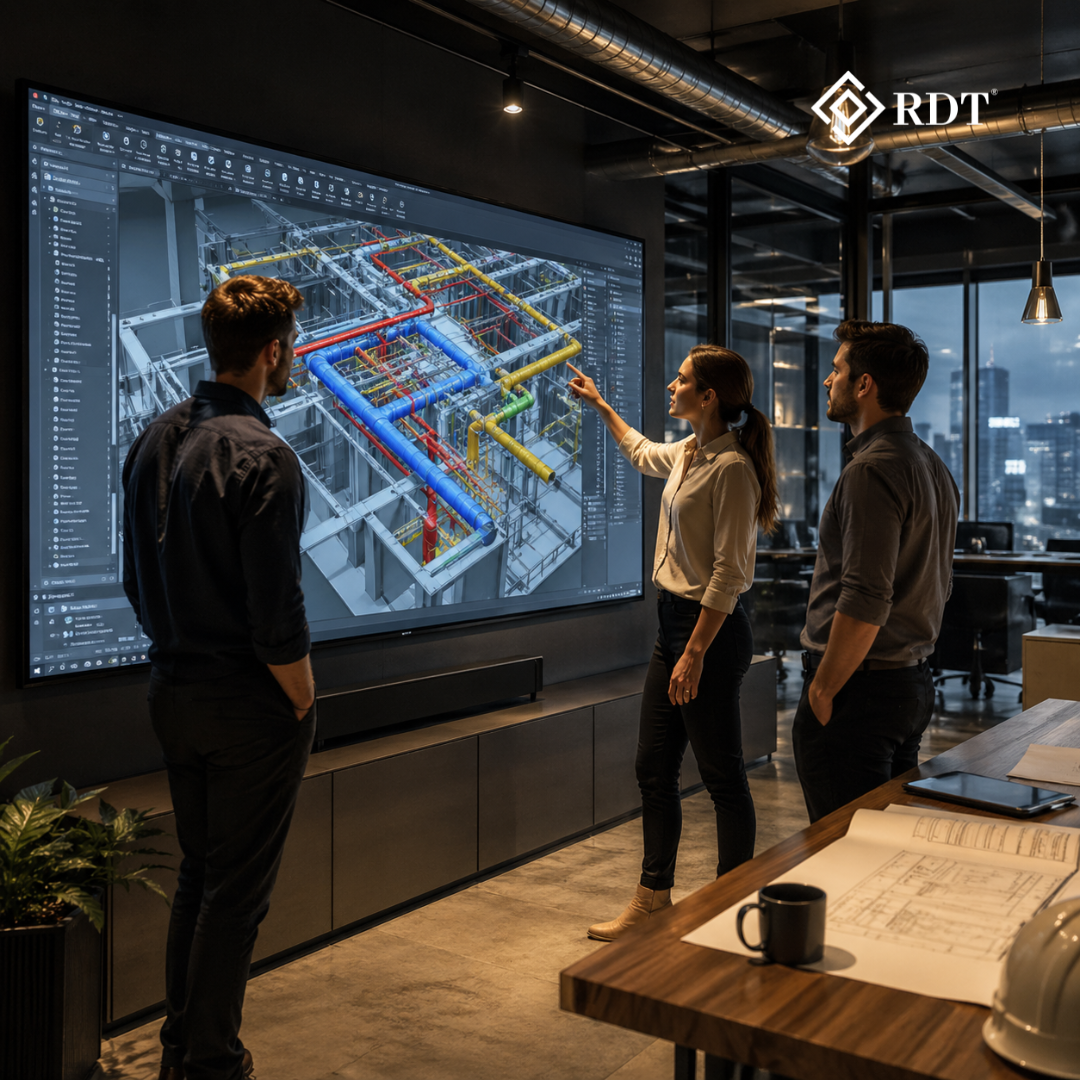
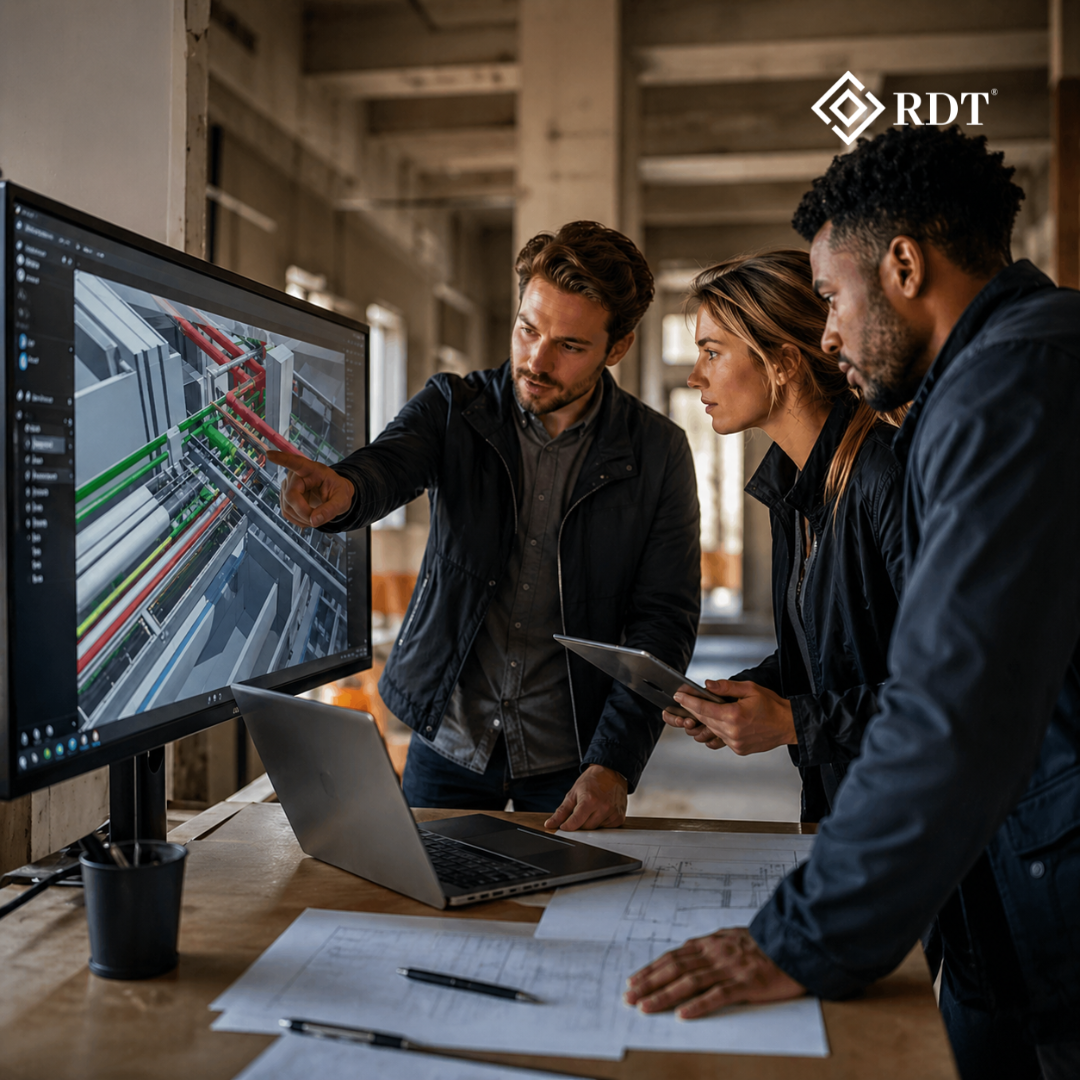
This fragmentation makes digital integration difficult. When one team uses advanced BIM tools and another relies on basic CAD or PDFs, collaboration becomes complex. Many companies fear that adopting new technology will create compatibility issues with partners who are not digitally mature.
However, fragmentation is exactly why digital platforms are needed. Shared models, common data environments, and cloud collaboration tools reduce misunderstandings and improve coordination across all stakeholders.
Fear of Cost and Return on Investment
One of the most common reasons AEC companies hesitate to adopt digital tools is cost. Software licenses, training, hardware upgrades, and implementation efforts require upfront investment. Many firms operate on thin margins and are cautious about new expenses.
There is also uncertainty about return on investment. Decision makers ask questions like Will this actually reduce costs Will it speed up delivery Will clients pay more for digital services
The reality is that digital transformation often delivers measurable returns. Clash detection reduces rework. 4D and 5D modeling improve scheduling and cost control. Digital twins optimize building operations. Automation reduces manual labor and errors. Companies that measure these benefits often find that digital tools pay for themselves quickly.
Cultural Resistance and Skill Gaps
Digital transformation is not just about technology. It is about people and culture. Many AEC professionals are highly skilled in design, engineering, and construction but may not be comfortable with advanced digital tools.
There is a fear of learning new software, changing workflows, or becoming less productive during the transition period. Senior professionals may worry about losing relevance, while younger professionals may feel frustrated by outdated processes.
Bridging this gap requires training, leadership support, and a culture that encourages experimentation. Companies that invest in upskilling their teams create a workforce that is confident, efficient, and future ready.
Complexity of Projects and Risk Aversion
AEC projects are complex, high value, and high risk. Mistakes can lead to delays, cost overruns, legal disputes, and safety issues. Because of this, many companies prefer proven methods over new technologies.
Digital transformation is sometimes seen as risky. What if the software fails What if data is lost What if the model is wrong These concerns lead to cautious adoption.
However, digital tools are designed to reduce risk, not increase it. Real time data, simulations, and predictive analytics provide better insights than traditional methods. Cloud platforms offer secure backups and version control. The risk of staying analog is often greater than the risk of going digital.
Data Silos and Poor Information Management
One of the biggest inefficiencies in AEC is data silos. Design data, cost data, schedule data, and site data are often stored in separate systems. Teams spend hours searching for information, reconciling discrepancies, and updating documents.
Digital transformation aims to create a single source of truth. Building information models, common data environments, and integrated project management platforms connect all project data. This reduces errors, improves transparency, and enables data driven decisions.
The fear here is not technology itself but the effort required to reorganize data workflows. Many firms underestimate the long term benefits of structured digital information.
Client Expectations Are Changing
Clients are becoming more digitally savvy. Developers, investors, and owners expect visualizations, simulations, dashboards, and performance analytics. They want to see projects before they are built and understand costs, timelines, and risks clearly.
Firms that rely only on traditional drawings and reports risk losing clients to digitally advanced competitors. Digital transformation is no longer optional for client engagement. It is a differentiator that influences project awards and partnerships.
Global Competition and Market Pressure
The AEC industry is becoming increasingly global. Firms compete across borders, and digital capability is often a key evaluation criterion. International clients expect BIM, digital twins, and smart construction workflows.
Companies that fear digital transformation may find themselves excluded from high value projects. Digital maturity is becoming a prerequisite for large scale infrastructure and commercial developments.
The Benefits of Embracing Digital Transformation
Despite the fears, the benefits of digital transformation in AEC are significant.
Improved collaboration through shared models and cloud platforms
Reduced rework and clashes through coordinated BIM models
Better cost control with 5D modeling and real time budgeting
Optimized schedules with 4D simulations and predictive analytics
Enhanced client communication through realistic visualization and virtual walkthroughs
Data driven asset management through digital twins and smart building systems
Increased productivity through automation and standardized workflows
These benefits directly impact profitability, reputation, and project success.
Why Some AEC Companies Are Leading the Digital Shift
While many firms hesitate, others are fully embracing digital transformation. These companies view technology as a strategic investment, not a cost. They appoint digital leaders, invest in training, and integrate technology into every project phase.
They use BIM as a central project platform, adopt cloud collaboration tools, implement AI driven analytics, and explore robotics and prefabrication. These firms deliver projects faster, with fewer errors, and higher client satisfaction.
Their success stories prove that digital transformation is not just possible in AEC. It is transformative.
The Future of AEC Is Digital
The AEC industry cannot afford to fear digital transformation any longer. Urbanization, sustainability goals, smart cities, and complex infrastructure demand digital workflows. Governments and regulatory bodies are also pushing for BIM mandates and digital documentation standards.
Future projects will rely on digital twins, real time sensors, AI driven design optimization, and automated construction. Companies that start their digital journey today will be leaders tomorrow. Those that resist will struggle to survive.
Conclusion
AEC is one of the last major industries to fully embrace digital transformation, but that is changing rapidly. The fears are understandable, rooted in tradition, cost concerns, skill gaps, and risk aversion. However, the cost of inaction is far greater than the cost of change.
Digital transformation is not about replacing professionals. It is about empowering them with better tools, data, and insights. It is about delivering projects smarter, faster, and more efficiently.
The industry stands at a crossroads. Those who embrace digital will redefine construction. Those who fear it will be left behind.
If you want to future proof your projects and gain a competitive edge in the AEC industry, it is time to embrace digital transformation. RDT Technology provides world class BIM, 3D visualization, and digital engineering solutions designed to streamline workflows, reduce risk, and enhance project outcomes. Partner with RDT Technology today and transform the way you design, build, and deliver projects.