
Every construction project begins the same way: with drawings.
Before there’s a site office, before materials are procured, before anyone argues about sequencing, there are drawings on a screen or spread across a table. They describe the building. They assign responsibility. They quietly shape what will happen months later.
And still, everyone who has spent time on site knows this—drawings can be accurate and confusing at the same time.
The issue rarely shows up during design reviews. It appears later, usually when work is already underway. Someone stops, looks at the drawing again, and hesitates. A duct looks like it will fit, but only just. A clearance feels uncomfortable. A detail that seemed logical in isolation now clashes with everything around it.
Nothing is “wrong” on paper. But something isn’t lining up with reality.
That gap is where visualization earns its place.
Drawings depend on interpretation
Understanding drawings isn’t natural. It’s learned. People spend years training themselves to read plans, sections, and details and mentally turn them into space.
Even then, it’s still an act of imagination.
Each drawing shows only a slice of the story. The full picture exists only in the reader’s mind. And that’s where the trouble starts—because no two people picture it exactly the same way.
Those differences usually stay hidden until construction removes the safety net. On site, walls don’t shift easily. Services don’t negotiate. Once something is built, every assumption becomes physical.
As buildings get denser and more constrained, there’s less room for interpretation. Modern projects stack structure, services, fire requirements, acoustics, and sustainability into tight zones. There’s very little tolerance for “we’ll figure it out later.”
Visualization reduces how much imagination is required. Instead of asking people to assemble fragments mentally, it shows how things actually come together.
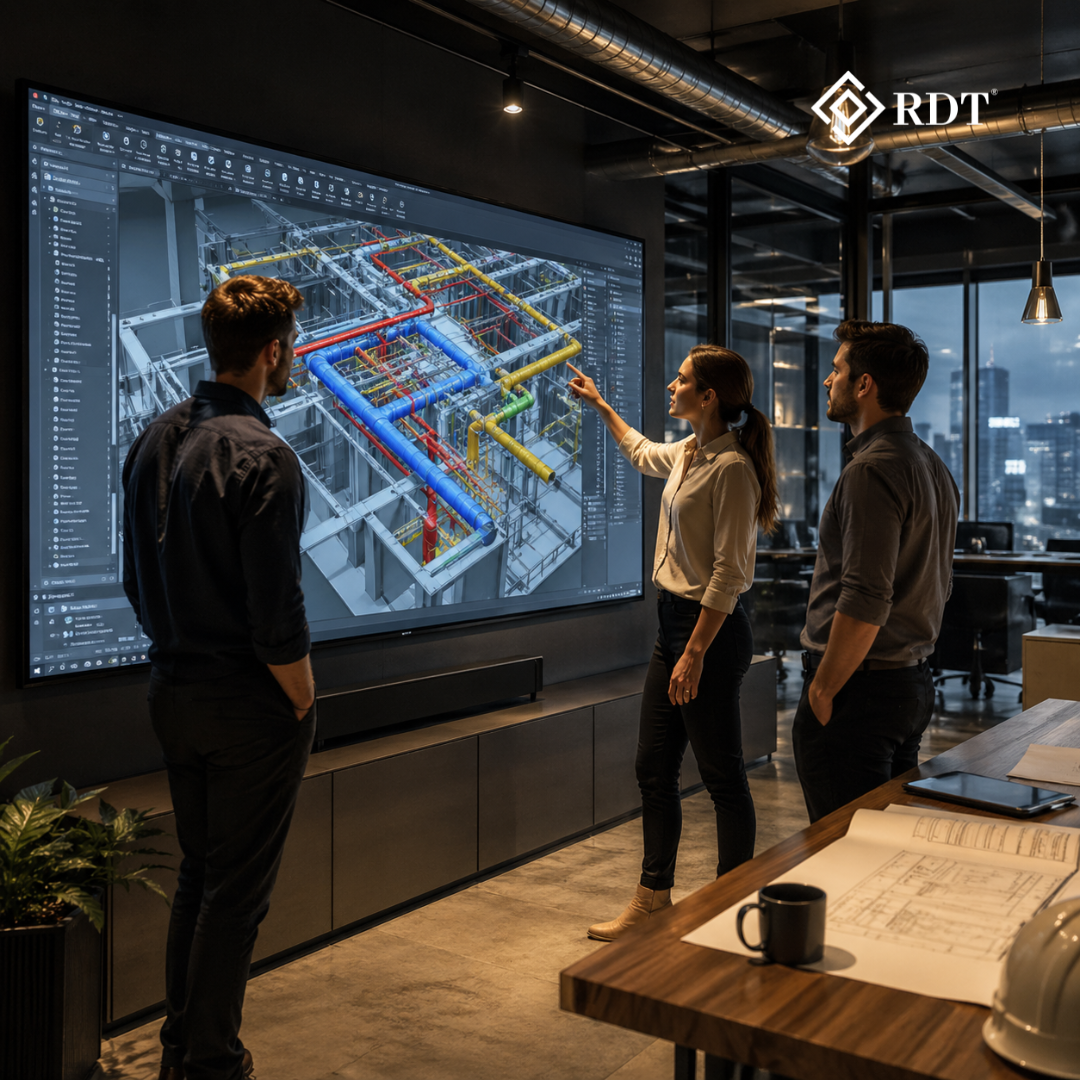
When everything is visible, conflicts don’t hide
Many coordination issues aren’t caused by poor design. They happen because disciplines develop their work separately for too long.
Architectural drawings look fine. Structural drawings look fine. MEP drawings look fine. But buildings don’t exist as separate sets—they exist as one physical object.
On drawings, clashes can stay invisible. On site, they appear immediately.
Visualization brings all systems into the same space early. It makes overlaps obvious and exposes where compromises will be needed. That might mean adjusting a beam depth, rerouting a service, or rethinking a ceiling zone.
Small decisions like these are far easier when nothing has been built yet.
It also changes behavior. Instead of defending individual scopes, teams start focusing on what actually works for the building.
Conversations change when people can see the same thing
One of the most neglected advantages of visualization is how it clarifies communication.
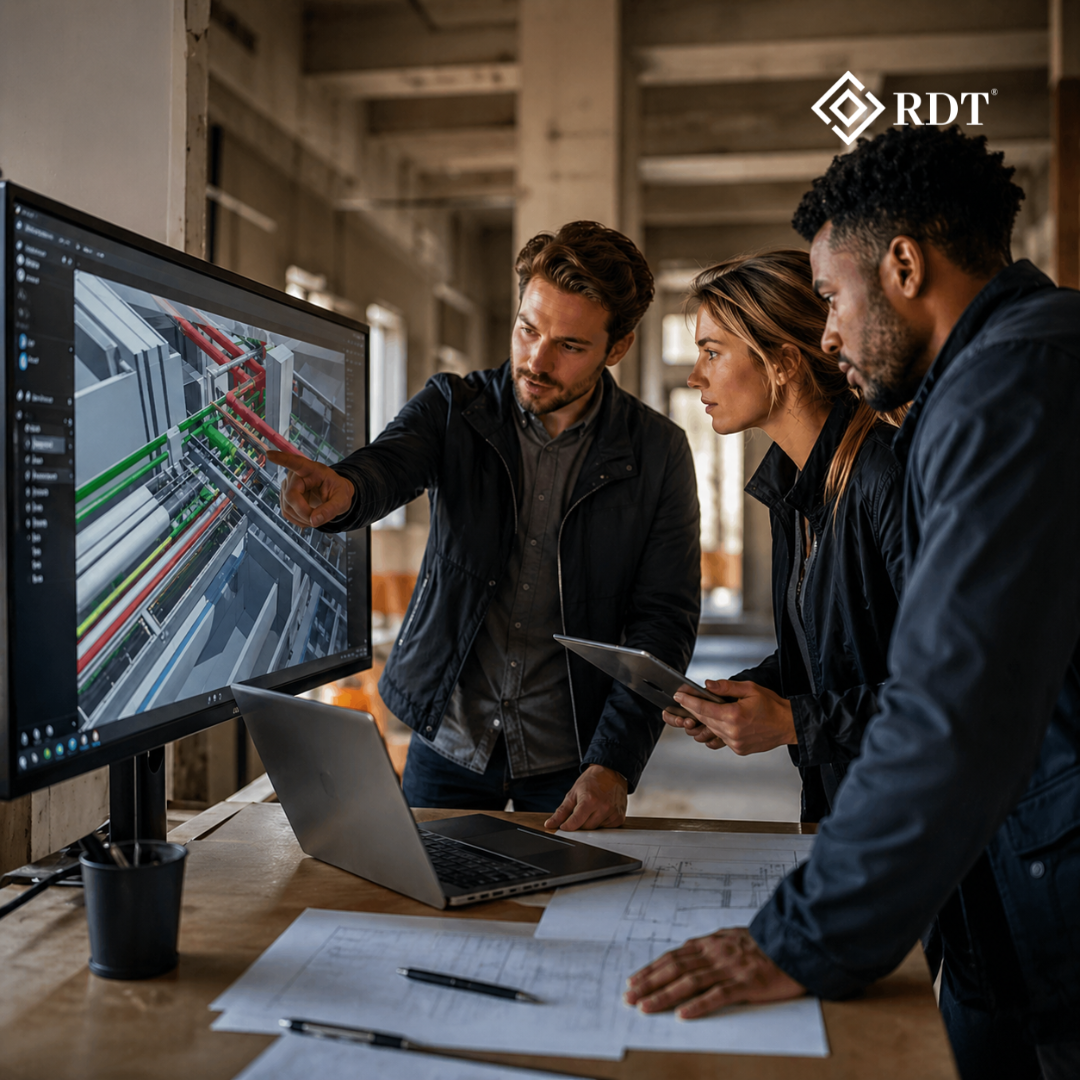
People stop explaining and start pointing. Meetings become shorter. Arguments become clearer. Assumptions surface naturally instead of hiding behind technical language.
Clients, in particular, respond differently. Drawings can feel abstract and distant. Visualization lets them understand space without needing translation. They ask better questions and make decisions earlier, when change is still manageable.
Inside project teams, misunderstandings surface sooner. That alone can prevent weeks of back-and-forth later.
Design intent doesn’t vanish—it fades
Design intent is rarely lost in one dramatic moment. More often, it’s worn down gradually.
A small change to fix a site issue. Another adjustment to meet a deadline. A compromise to fit services. Each decision makes sense on its own. Together, they dilute the original idea.
Visualization helps teams see those cumulative effects. Changes are not reviewed in separation—they are seen in context. That makes it simpler to determine what can flex and what should remain secure.
The aim isn’t to freeze the design. It’s to change it knowingly.
Problems are best solved before they’re built
Almost every construction issue sounds familiar once it happens. “We should have seen this coming.”
Visualization makes that possible.
Access issues, installation challenges, maintenance constraints—these are much easier to spot when you can see the space as it will actually exist. Fixing them in a model takes effort. Fixing them on site takes time, money, and patience.
Catching issues early doesn’t just protect budgets. It protects schedules, working relationships, and trust.
Better visibility leads to better decisions
Projects aren’t derailed by one bad call. They struggle because of many small decisions made with partial information.
Visualization improves decision-making by showing consequences. Options can be compared side by side. Trade-offs are easier to understand when their impact is visible.
For planners and managers, this is especially valuable. Sequencing, logistics, safety planning—these all benefit from being seen rather than imagined.
Value that lasts beyond construction
Once a project is complete, drawings often disappear into archives. Visual models, when built properly, remain useful.
They help facility teams understand layouts and systems. They support future modifications. They reduce uncertainty years after handover.
In that way, visualization becomes part of the building’s long-term knowledge, not just a design-phase tool.
Making performance easier to grasp
Performance goals—energy use, daylight, comfort—are often discussed in abstract terms. Visualization brings those conversations into real space.
Seeing how light enters a room or how systems interact makes performance tangible. It connects technical decisions to everyday experience.
That clarity supports better collaboration and more realistic expectations across the team.
Visualization at RDT
At RDT, visualization isn’t treated as presentation material. It’s a working procedure.
Models are advanced to consider how buildings are really constructed, not only how they look. Authenticity, coordination, & constructability come first.
By integrating visualization into BIM and documentation workflows, RDT helps teams reduce uncertainty, resolve conflicts earlier, and move through projects with confidence.
From drawings to real understanding
Visualization doesn’t replace drawings. It gives them context.
It fills in what drawings can’t show all at once. It reduces ambiguity before decisions become permanent. And it helps teams align while there’s still room to adjust.
In an industry where mistakes are expensive and clarity is hard-earned, visualization offers something simple but powerful: shared understanding.
That’s when drawings stop being instructions—and start becoming certainty.