
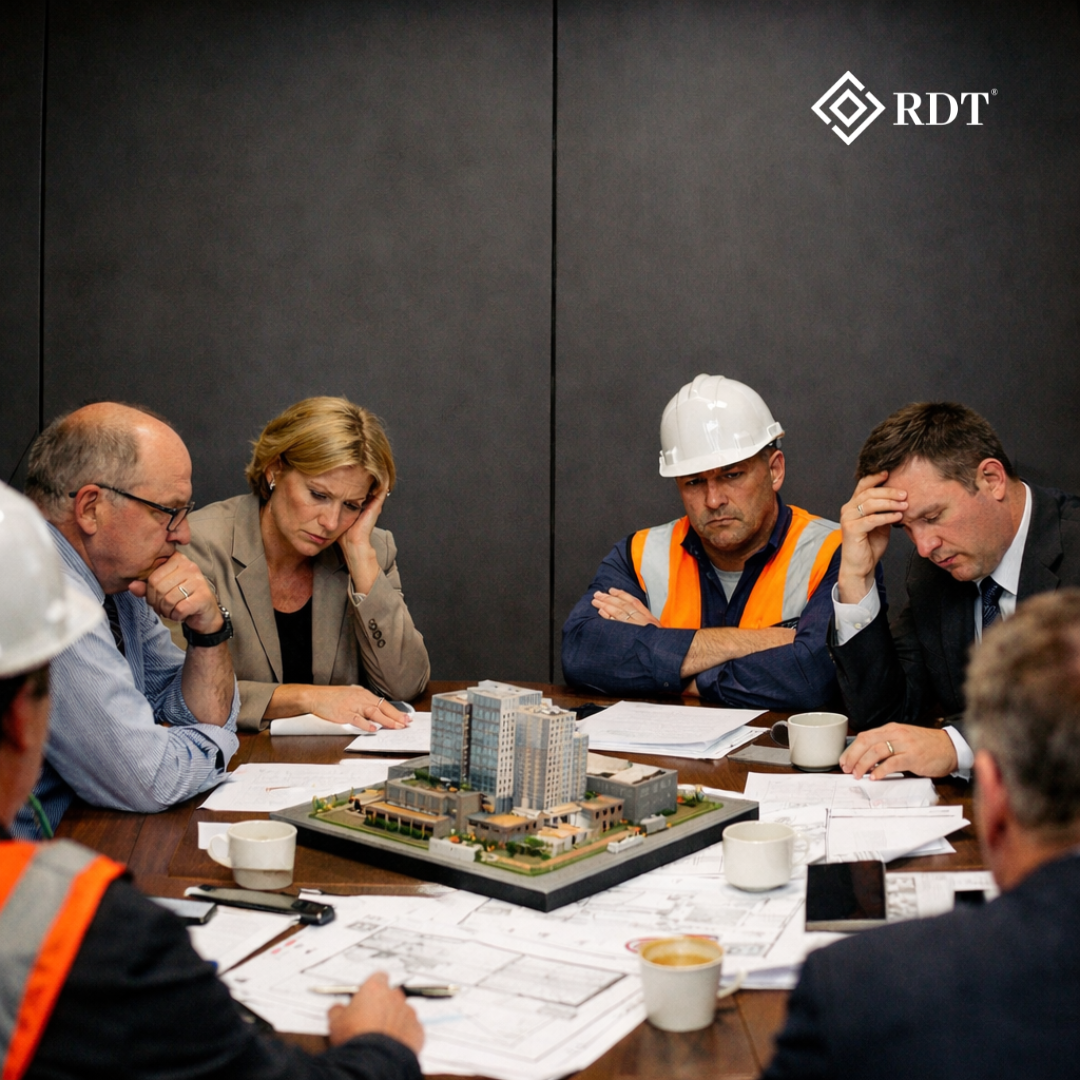
Visualisation has always played a role in construction, but for a long time it sat on the edges of the process. Renderings were created to communicate intent in a broad way, often after key decisions had already been made. Their purpose was largely illustrative. As long as the image looked convincing, it served its role.
That technique does not coordinate with how projects are submitted today.
Advanced developments function under rigorous controls, better inspection, and far less indulgence for ambiguity. Visual information is no longer supplementary. It directly influences how people assess risk, interpret intent, and decide whether a proposal is ready to move forward. When renderings remain generic, they slow progress rather than support it.
Generic rendering has become a quiet but consistent contributor to delayed approvals and hesitant decision making.
Approvals Are Built on Understanding
Approval bodies rarely delay projects without reason. In most cases, hesitation comes from ambiguity instead of resistance.
When auditors look at a submission, they are trying to reply to practical questions. What precisely is being constructed? How does it connect to its surroundings? Does it comply with planning controls? Will it create unintended impacts?
Generic renderings struggle to answer these questions clearly. They often present an idealised version of a project without showing the constraints that shape it. The image may appear polished, but it lacks the detail reviewers need to feel confident.
When clarity is missing, caution takes over. Requests for clarification follow. Additional material is asked for. Time is lost, not because the project is flawed, but because it is not clearly understood.
Visuals Shape the Pace of Decisions
Decision makers depend on visuals to convert technical data into something tangible. Drawings & reports explain needs, but images support people grasp scale, proportion, & result.
A rendering that focuses only on atmosphere does little to support this process. It may suggest quality, but it does not explain implications. Questions emerge quickly. How large is it really? What changes if the layout shifts. What happens to cost or access.
Because generic visuals do not answer these questions, decisions stall. Meetings end without resolution. Follow up material is requested. What could have been a clear decision becomes a prolonged discussion.
Speed in decision making depends on confidence. Generic rendering erodes that confidence.
Teams Interpret Generic Visuals Differently
One of the less visible impacts of generic rendering is how it fragments understanding across project teams.
Architects may read intention into an image. Engineers may see unresolved assumptions. Contractors may question buildability. Clients may assume certainty where none exists.
Because the rendering is not closely tied to real constraints, each group fills in the gaps differently. Alignment weakens. Conversations drift away from solutions and toward interpretation.
These issues often surface late. By the time differences are recognised, commitments have already been made. Correcting courses becomes expensive and disruptive.
A strong visual should unify understanding. A generic one does the opposite.
Authorities Prioritise Risk Over Appearance
Planning and regulatory authorities are not reviewing projects for visual appeal. Their responsibility is to assess impact, safety, and compliance.
When a rendering does not clearly show massing, setbacks, access, or context, reviewers cannot reliably assess risk. Even if the technical drawings contain the necessary information, the mismatch between documents and visuals introduces doubt.
That doubt triggers caution. Requests increase. Review cycles extend. What might have passed with clarity becomes a drawn out process.
Visuals that reflect reality support efficient review. Generic ones slow it down.
Context Is Essential for Confidence
Buildings exist within environments, not in isolation.
They influence streets, neighbours, movement, and public space. A rendering that removes or simplifies this context strips away critical information.
Decision makers want to see how a project fits.
Generic backgrounds and abstract surroundings remove these cues. Without them, reviewers and stakeholders hesitate. They cannot assess impact with confidence.
Context is not decoration. It is information.
Questions Are the Opponent of Momentum
Each unanswered question sums conflict to a project.
When investors ask whether a rendering is precise or either circumstances have been considered, progress delays. Each answer requires explanation, additional images, or revised submissions.
Generic rendering is often chosen because it appears efficient. In practice, it creates more work by triggering repeated clarification.
True efficiency comes from visuals that reduce questions, not create them.
Faith Relies on Alliance With Reality
Faith is created when what people see harmonizes with what they later undergo.
When a common rendering creates hopes that cannot be met, conviction suffers. Investors become careful. Sanctions become more conservative. Decisions need extra verification.
Once faith is vanished, even precise data is examined more severely. Time is spent rebuilding conviction in place of progressing the project.
Precise visualisation defends faith by setting practical outlook early.
Simplifying Too Much Creates Bigger Problems Later
Complex projects cannot be made simple by hiding complexity.
Layered systems, phased construction, and competing requirements are part of modern development. Generic visuals often attempt to smooth over these realities.
This does not eliminate complexity. It postpones it.
Decision makers ultimately face the real problems, frequently at a phase where adaptability has reduced. What could have been discussed early becomes more difficult to solve.
Good visualisation explains complexity rather than concealing it.
Clear Visuals Enable Faster Approvals
When a rendering is grounded in actual information and precisely contemplates the proposal, it becomes a realistic analysis tool.
Evaluators can examine compliance visually. Stakeholders can understand the impact. Teams can identify conflicts early.
Inspection still lives, but it becomes concentrated & profitable. Lesser questions give rise to quicker decisions.
Sanctions move quicker when visuals reply to the right questions.
Generic Rendering Separates Design From Construction
When renderings are produced independently of design development, they exist outside the delivery process.
Decisions made based on those images do not always translate smoothly into drawings or construction. Adjustments follow. Expectations must be reset. Rework occurs.
When visualisation reflects actual constraints, decisions align more closely with what can be built. The gap between design and delivery narrows.
Precision Improves Collaboration
When visuals are precise, conversations change.
Teams stop debating interpretation and start discussing outcomes. Issues are identified earlier. Solutions emerge faster.
Meetings become more efficient. Collaboration improves.
Generic rendering rarely supports this level of clarity.
The Hidden Cost of Generic Visuals
The cost of generic rendering rarely appears as a line item. It shows up as lost time, extended reviews, and reduced momentum.
These costs accumulate quietly. By the time they are recognised, schedules have slipped and confidence has been tested.
Investing in accurate visualisation early reduces these hidden losses.
The Industry Has Outgrown Surface Level Imagery
Construction today operates under tighter margins and higher expectations. Visualisation must meet those realities.
Generic rendering belongs to an earlier phase of the industry, when visuals were optional and consequences were limited.
Today, visuals influence approvals, funding, and delivery directly.
Conclusion
Generic rendering delays approvals and decisions because it prioritises appearance over understanding.
It creates uncertainty where clarity is needed and hesitation where confidence should exist.
Advanced projects move quicker when people view the similar reality.
Sanctions are given sooner when evaluators understand precisely what is being proposed.
Decisions improve when visuals explain impact rather than suggest atmosphere.
Generic rendering no longer serves the needs of contemporary development. Clear, accurate visualisation does.
Collaborate with RDT Technology to bring clarity, confidence, and alignment to your approvals process, where purposeful visualisation supports informed decisions and collaborative project delivery from concept to completion.