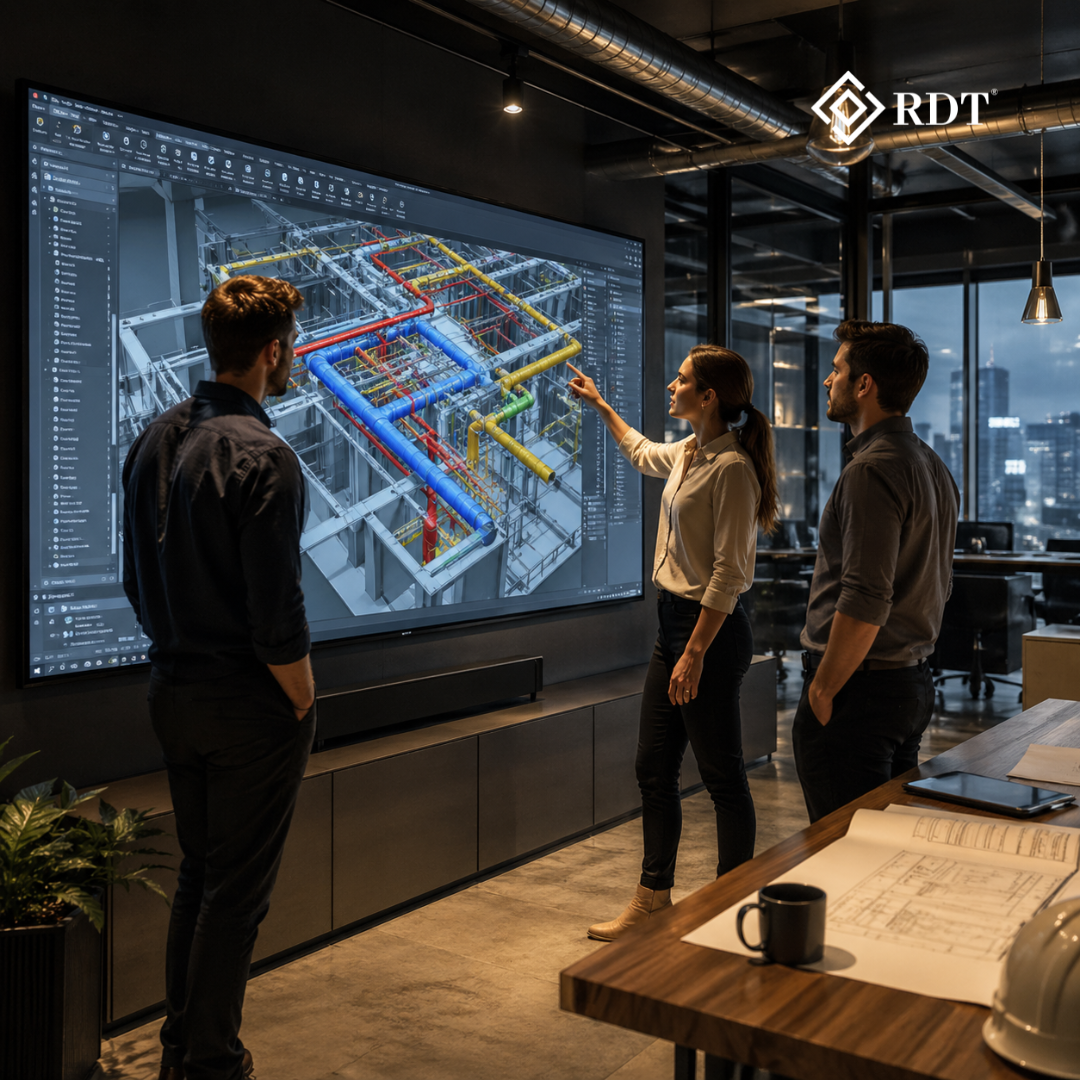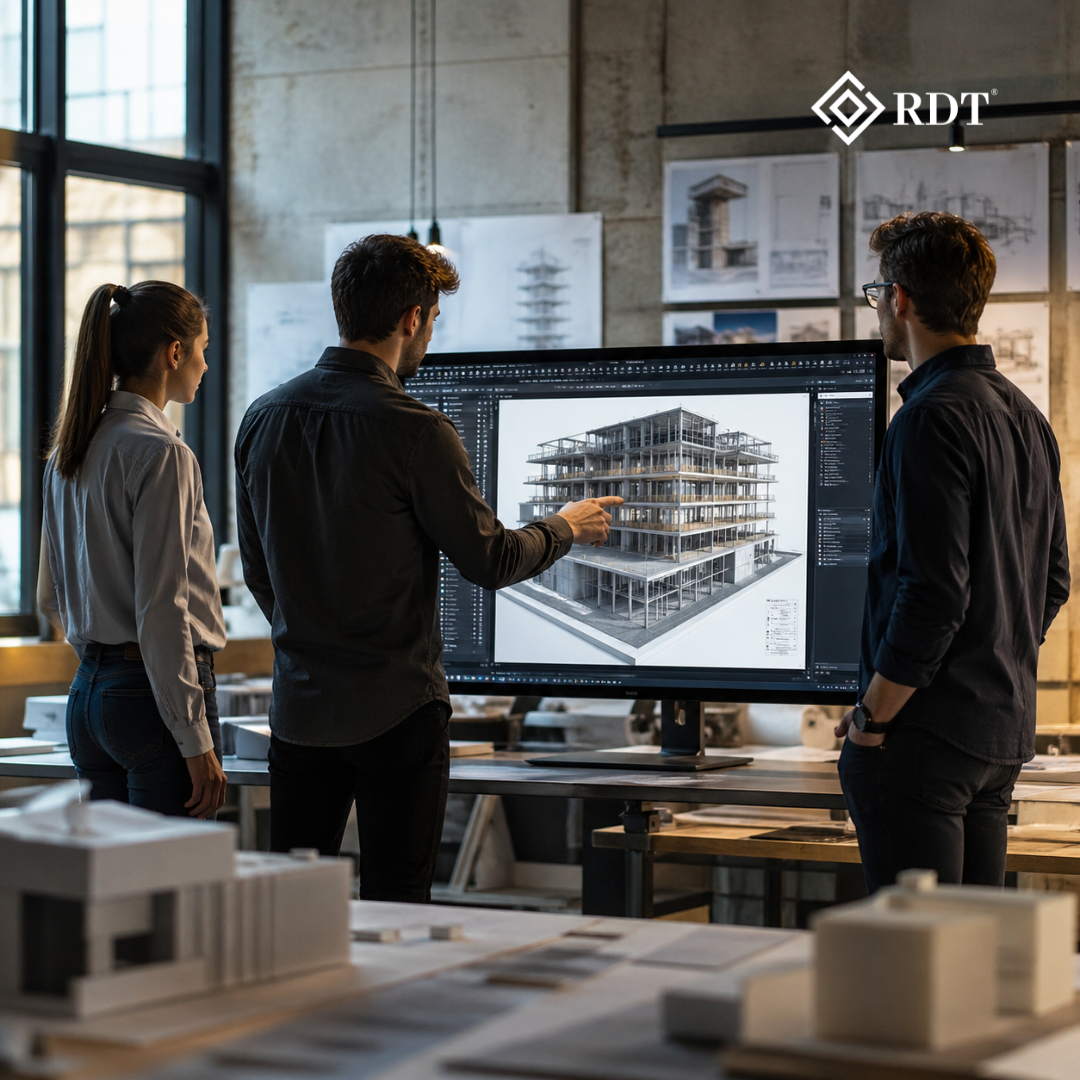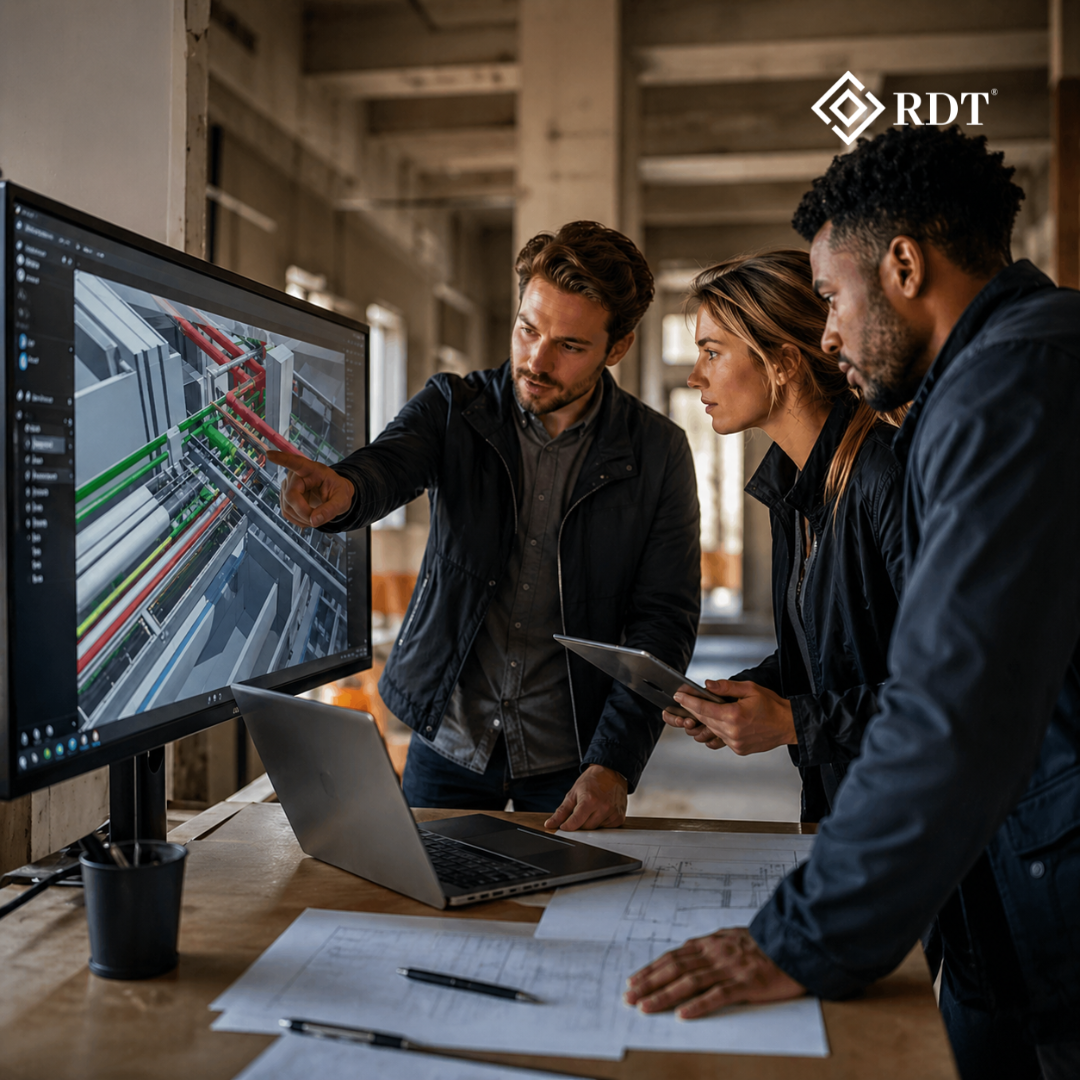
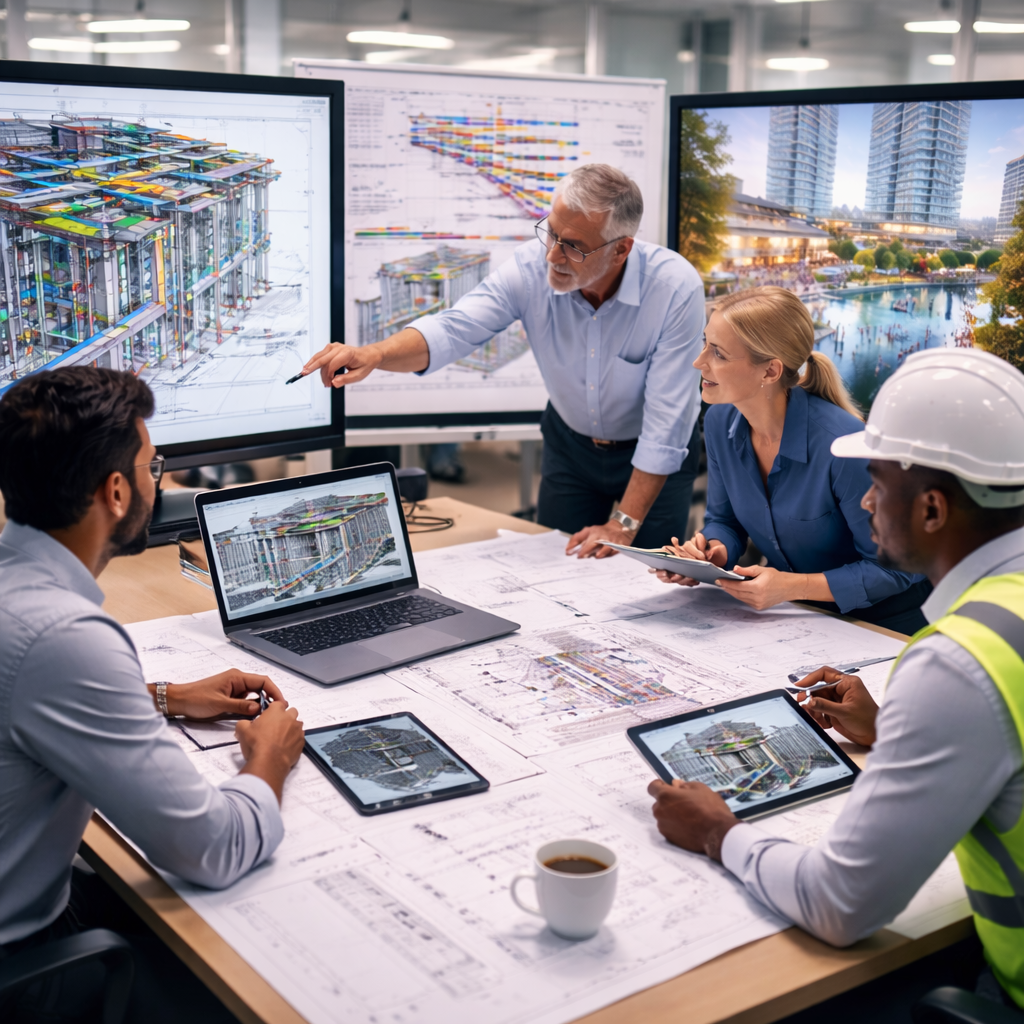
For much of the last decade, the AEC industry treated digital capabilities as tools—BIM for modeling, rendering for visualization, documentation for delivery. Each had its own purpose, its own team, its own workflow. When used well, these tools improved outcomes. When used in isolation, they created silos.
2025 exposed the limits of tool-based thinking. BIM proved it could manage complexity, rendering proved it could accelerate decisions, and documentation proved it could define risk. But projects still struggled when these capabilities operated independently.
As the industry moves into 2026, a clear shift is underway. The future will not reward firms that simply use advanced tools. It will reward those who connect them into integrated systems.
In 2026, success will belong to organizations that understand one fundamental truth: BIM, rendering, and documentation are not separate services—they are interdependent parts of a single delivery ecosystem.
The End of the “Tool-Centric” Era
The traditional approach to digital delivery looked something like this:
- BIM teams modeled the building
- Rendering teams created visuals, often late in the process
- Documentation teams translated designs into drawings
Each group worked sequentially. Information passed from one to the next, often losing accuracy along the way. This approach worked when projects were simpler. It does not work anymore.
In 2025, projects became:
- More complex
- More compressed in timelines
- More scrutinized by clients and regulators
- More data-driven
Under these conditions, disconnected tools created friction instead of efficiency.
Why 2025 Was the Wake-Up Call
2025 proved three important things—individually.
- BIM works when models are coordinated and data-rich
- Rendering works when visuals are realistic and decision-focused
- Documentation works when it is precise, consistent, and aligned
But 2025 also revealed something uncomfortable: when these functions are not integrated, their value is capped.
Common issues included:
- Renderings that didn’t match BIM models
- Drawings that conflicted with visuals
- BIM updates that didn’t flow into documentation
- Late-stage surprises despite “digital” workflows
The problem wasn’t the tools. The problem was the lack of a system.
2026: The Shift from Tools to Systems
In 2026, the industry will stop asking:
- Which tools are you using?
And start asking:
- How well are your systems integrated?
A system is not just a collection of tools. It is a connected workflow where information flows seamlessly, accurately, and purposefully across every stage of a project.
Integrated BIM, rendering, and documentation form the backbone of that system.
What Integration Really Means (And What It Doesn’t)
Integration does not mean:
- Using the same software licenses
- Exporting files back and forth
- Creating visuals from outdated models
True integration means:
- A single source of truth
- Shared standards and data structures
- Continuous alignment across disciplines
- Visuals, models, and documents evolving together
In an integrated system, nothing is created in isolation.
BIM as the Core Intelligence Layer
In 2026, BIM will act as the central intelligence layer of project delivery.
The BIM model is not just geometry. It contains:
- Spatial logic
- System relationships
- Quantities and parameters
- Constructability intent
When BIM is integrated properly:
- Renderings pull directly from coordinated models
- Documentation reflects real-time design decisions
- Changes propagate automatically across outputs
BIM becomes the brain of the system—not just a modeling tool.
Rendering as a Validation and Confidence Layer
Rendering’s role evolves dramatically when it is integrated into the system.
Instead of being:
- A late-stage presentation asset
Rendering becomes:
- A design validation tool
- A decision accelerator
- A confidence builder
When rendering is directly linked to BIM:
- Visuals reflect real materials, dimensions, and context
- Stakeholders see what is actually being designed—not an interpretation
- Feedback is meaningful and actionable
In 2026, rendering will validate design intent—not decorate it.
Documentation as the Control and Execution Layer
Documentation completes the system by translating intent into execution.
In an integrated workflow:
- Drawings are generated from coordinated BIM models
- Details align with rendered visuals
- Revisions are controlled, traceable, and consistent
Documentation becomes:
- A control mechanism
- A contractual reference
- A risk-management tool
When documentation is integrated, it no longer chases changes—it governs them.
The Power of a Unified Information Flow
The biggest advantage of integrated systems is information continuity.
In disconnected workflows:
- Information is recreated multiple times
- Errors multiply with every handoff
- Accountability becomes blurred
In integrated systems:
- Information is created once
- Verified visually and technically
- Delivered consistently across outputs
This continuity is what 2026 will reward.
Clients Will Demand Systems, Not Silos
Clients are becoming more sophisticated. By 2026, many will expect:
- Visuals that match drawings
- Drawings that match models
- Models that reflect what will actually be built
They will also expect:
- Faster decisions
- Fewer surprises
- Clear accountability
Firms that cannot demonstrate integrated workflows will be seen as higher risk partners—regardless of how advanced their individual tools may be.
Integrated Systems Reduce Risk at Every Stage
Integration is not about convenience—it is about risk reduction.
Design Risk
Visual and model alignment exposes issues early.
Approval Risk
Clear, consistent outputs reduce reviewer confusion.
Cost Risk
Accurate quantities and scope definition stabilize budgets.
Construction Risk
Coordinated documentation minimizes site conflicts.
In 2026, integrated systems will be one of the strongest forms of risk control available.
Speed Without Chaos: The Real Productivity Gain
Many firms believe speed comes from working faster. In reality, speed comes from working coherently.
Integrated systems allow teams to:
- Make changes once, not multiple times
- Reduce rework and duplication
- Respond quickly without losing control
This is how projects move faster without sacrificing quality.
From Deliverables to Outcomes
One of the most important mindset shifts of 2026 will be moving from deliverables to outcomes.
Instead of asking:
- Did we deliver the model?
- Did we produce the renderings?
- Did we issue the drawings?
Leading firms will ask:
- Did we enable confident decisions?
- Did we reduce uncertainty?
- Did we protect project value?
Integrated systems are outcome-driven by design.
The Competitive Advantage of Integration
As BIM, rendering, and documentation become standard, integration becomes the differentiator.
Two firms may offer the same services. The one that:
- Connects them seamlessly
- Maintains consistency across outputs
- Delivers clarity at every stage
will consistently outperform the one that doesn’t.
In 2026, integration will influence:
- Winning bids
- Client retention
- Long-term partnerships
- Profitability
The Skills Shift: System Thinkers Over Tool Operators
Another major change in 2026 will be the type of expertise that is valued.
The industry will increasingly reward professionals who:
- Understand end-to-end workflows
- Think across disciplines
- Anticipate downstream impacts
- Manage information holistically
Tool operators will always be needed—but system thinkers will lead.
Technology Enables Integration—Strategy Sustains It
Software advancements make integration possible. Strategy makes it sustainable.
True integration requires:
- Defined standards
- Clear workflows
- Cross-team coordination
- Leadership alignment
Without strategy, tools remain disconnected—even if they are powerful.
Preparing for 2026: Building Integrated Delivery Systems
Organizations that want to stay ahead should focus on:
- Aligning BIM, rendering, and documentation teams
- Establishing shared data standards
- Creating workflows where outputs evolve together
- Partnering with service providers who understand integration, not just execution
The goal is not to add more tools—but to connect existing ones intelligently.
The Bigger Picture: Systems Create Trust
At its core, integration is about trust.
Trust that:
- What is shown is what will be built
- What is documented is what was intended
- What is decided today will hold tomorrow
In 2026, trust will be the most valuable currency in project delivery—and systems are how it is earned.
Conclusion: 2026 Will Reward Connection, Not Collection
The industry is moving beyond the age of isolated excellence. Having great tools is no longer enough.
2026 will reward integration.
It will reward firms that:
- Treat BIM as intelligence
- Treat rendering as validation
- Treat documentation as control
- And connect all three into a single, reliable system
From tools to systems, the future of project delivery belongs to those who build clarity, confidence, and control into every connection.
Build fully integrated BIM, rendering, and documentation systems that deliver clarity and control—partner with RDT Technology.