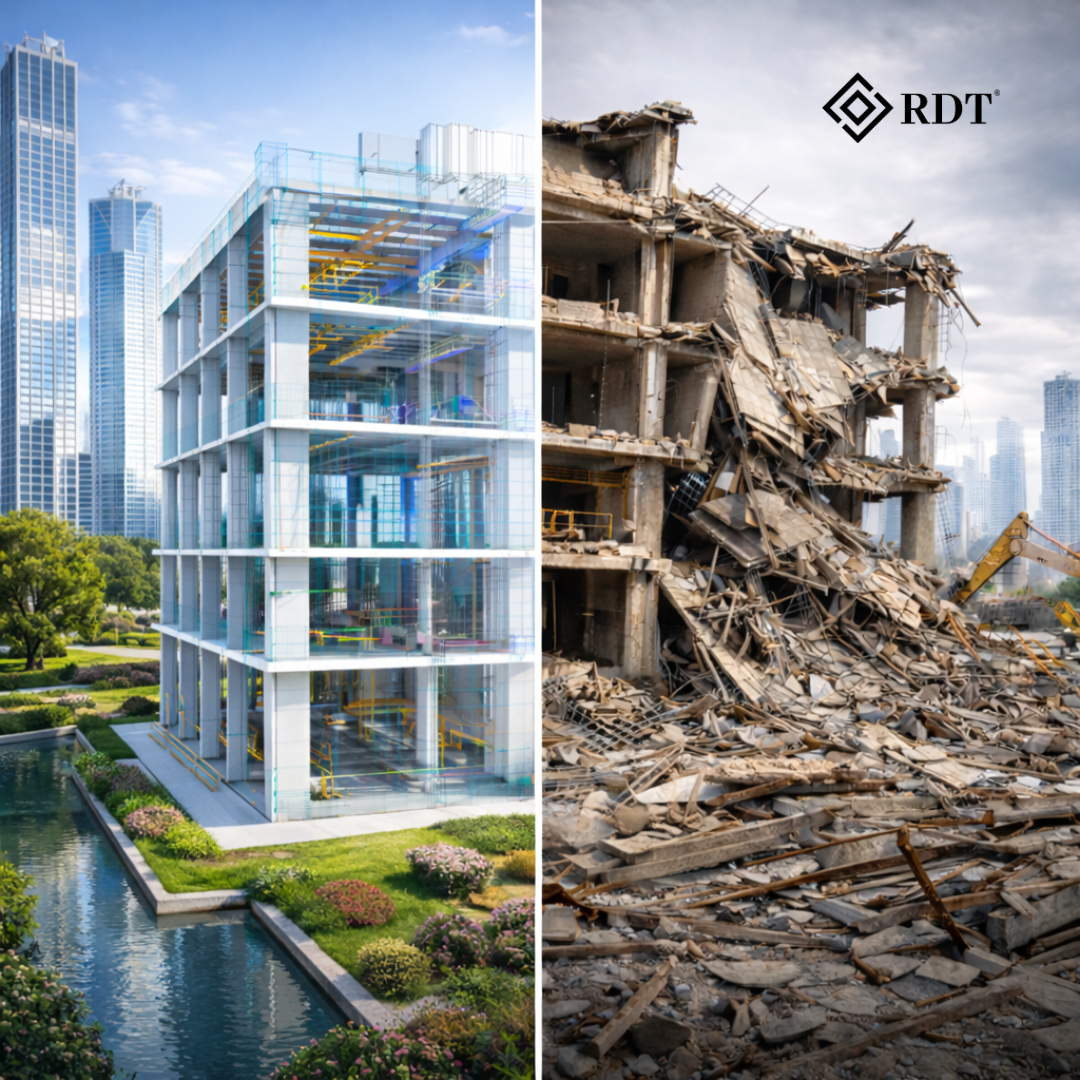
In today’s construction and design landscape, risk rarely announces itself loudly. It doesn’t always appear as a dramatic structural failure or a public dispute. More often, risk begins quietly—inside underdeveloped models, vague drawings, missing parameters, and assumptions that slip through coordination meetings unnoticed. By the time the problem becomes visible on site, the damage is already done.
One of the most underestimated sources of project risk in modern construction is insufficient detail in Revit models. While many teams proudly claim to be “using BIM,” the truth is that not all BIM is created equal. A Revit model without the right level of detail is not a digital asset—it’s a liability.
This blog explores why detailed Revit models are no longer optional, how lack of detail introduces hidden risks across project stages, and why firms that prioritize model intelligence consistently outperform those that treat Revit as a drafting tool rather than a decision-making engine.
The Illusion of Safety in Basic Revit Models
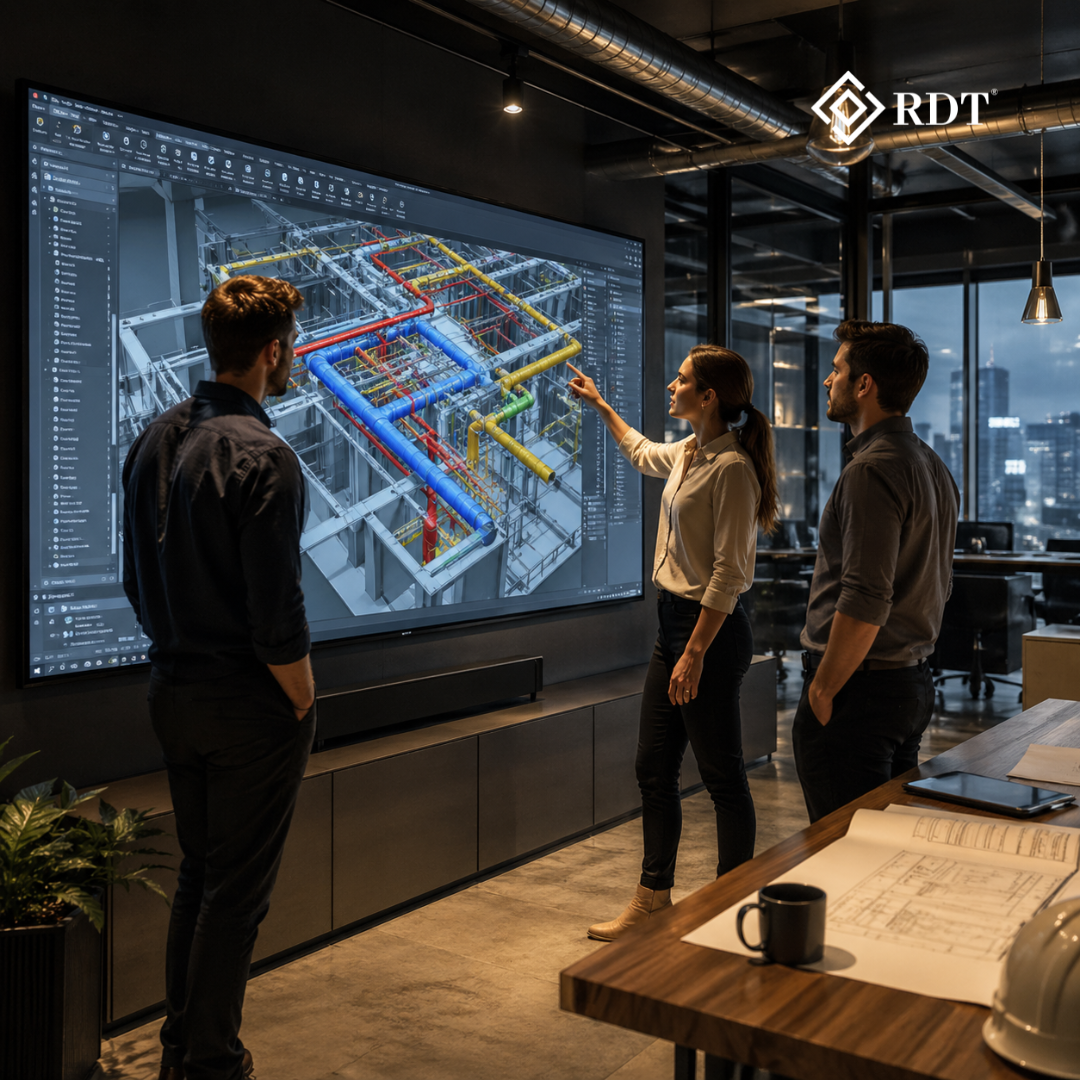
At first glance, a basic Revit model looks convincing. Walls are located, floors are coordinated, and systems appear to coexist in 3-dimensional harmony. Investors walk throughout the model, permissions are given, and schedules move forward. Everything seems under control.
But beneath the surface, these models often lack constructible intelligence.
Missing connection details
Unresolved junctions
Generic families without real-world constraints
Incomplete parameters
Unverified system clearances
These gaps don’t raise alarms during early reviews because they are invisible—until construction begins.
A model that looks complete but lacks depth creates a false sense of confidence. Teams assume coordination has occurred, quantities are accurate, and constructability has been validated. In reality, the model may only represent geometry, not buildability.
This is where risk begins to compound.
Detail Is Where Design Becomes Construction-Ready
The difference between a conceptual Revit model and a detailed one is the difference between design intent and execution certainty.
Detailed Revit models go beyond visual representation. They embed data that directly affects how a building is procured, fabricated, installed, & sustained. Every element is modeled with purpose, precision, and coordination in mind.
A detailed model accounts for:
• Accurate material specifications
• Real-world tolerances
• System interfaces
• Installation sequences
• Manufacturer-specific constraints
• Code and compliance parameters
When these levels of detail are absent, squads are obliged to make decisions later—on site, in difficulties, and at a higher price.
Coordination Risk: Where Most Projects Break
One of the exceedingly crucial functions of a detailed Revit model is clash prevention. While fundamental clash detection can detect clear overlaps, it can not address deeper coordination breakdowns caused by inadequate modeling detail.
For instance:
A duct may technically clean a beam in the model, but does it permit space for insulation, hangers, & upkeep access?
A pipe path may ignore structural components, but does it interrupt with firewall or enlargement joints?
An electrical plate may fit structurally, but does it regard voltage separation needs?
Without detail, these conflicts remain hidden until installation begins. By then, solving them needs restyle, rework, & schedule modifications—all of which inaugurate risk.
Detailed Revit models minimize coordination threat by solving clashes digitally, where the price of change is slightest and the effect is controlled.
Cost Risk: The Price of Inaccurate Quantities
Another major risk introduced by low-detail Revit models is financial unpredictability.
Quantity take-offs derived from incomplete models are inherently unreliable. Generic components, missing parameters, and placeholder elements distort material counts and cost estimates. This leads to:
• Budget overruns
• Inaccurate procurement planning
• Material shortages or excess
• Contractor disputes
When a model lacks detail, cost estimation becomes guesswork masked by digital precision.
In contrast, detailed Revit models authorize authentic volume extraction because each modeled component matches a real, buildable element. This generates cost clarity, empowers bids, and diminishes economic surprises in the course of construction.
Schedule Risk: Postpones Hidden in Plain Sight
Time risk often originates from unresolved design questions that surface too late.
When details are deferred, construction teams are forced to pause work while waiting for clarifications, RFIs, or revised drawings. These delays cascade across trades, compress schedules, and increase labor costs.
Detailed Revit models mitigate schedule risk by answering questions before they are asked.
Clear assemblies
Defined interfaces
Resolved transitions
Verified installation logic
When models are detailed early, construction becomes a sequence of execution rather than problem-solving. This predictability is invaluable in complex projects where time margins are tight and coordination windows are limited.
Documentation Risk: When Drawings Fail to Communicate
Revit models do not replace documentation—they inform it.
Poorly detailed models produce ambiguous drawings. Missing sections, unclear annotations, inconsistent dimensions, and incomplete schedules all stem from insufficient modeling depth.
This creates documentation risk, where different stakeholders interpret the same information differently. Contractors make assumptions. Fabricators improvise. Site teams rely on experience rather than instruction.
Detailed Revit models assist as an individual source of fact. They guarantee that drawings, schedules, and details are constant, harmonized, & construction-ready.
For firms like RDT Technology, documentation is not an afterthought—it is a strategic deliverable driven by model intelligence.
Lifecycle Risk: Thinking Beyond Construction
The danger of insufficient Revit detail does not end at project handover.
Owners progressively depend on BIM details for facility administration, upkeep preparation, & future refurbishments. Models lacking accurate parameters, asset information, and system data lose their value the moment construction ends.
Detailed Revit models extend risk mitigation into the operational phase by enabling:
• Asset tracking
• Maintenance scheduling
• Performance analysis
• Future retrofit planning
A model built only for visualization fails the building’s lifecycle. A detailed model supports it.
Why “Good Enough” Modeling Is No Longer Enough
In an industry under constant pressure to deliver faster and cheaper, there is a temptation to treat Revit as a compliance tool rather than a strategic asset.
But as project complication rises, tolerance for mistakes diminishes.
Mega-improvements, infrastructure projects, health care facilities, data centers, & high-rise buildings need accuracy. In these surroundings, unfinished modeling is not an insignificant oversight—it is a systemic danger.
Firms that continue to rely on minimal Revit detail are not saving time. They are deferring risk to later stages where correction is expensive and disruptive.
The RDT Technology Approach to Risk-Driven BIM
At RDT Technology, detailed Revit modeling is not about adding complexity—it is about removing uncertainty.
Each model is advanced with constructability, cooperation, & documentation in mind. The concentrate is not only on how a building looks, but on how it is constructed, kept, & handled.
RDT’s approach emphasizes:
• Discipline-specific accuracy
• Coordination-led modeling
• Documentation-ready outputs
• Data-rich, parameter-driven elements
• Alignment between design intent and construction reality
This methodology transforms Revit from a modeling tool into a risk management platform.
The Competitive Advantage of Detail
Projects delivered with detailed Revit models experience fewer disputes, smoother coordination, predictable costs, and stronger stakeholder confidence.
In a competitive AEC landscape, detail is no longer just technical—it is strategic.
Clients trust teams that deliver certainty. Contractors prefer models they can build from. Owners value assets that remain useful long after handover.
Detail is what separates visualization from execution.
Final Thought: Risk Is a Design Decision
Every project carries risk. The question is not whether risk exists—but where it is addressed.
You can resolve risk early, inside a detailed Revit model, where decisions are deliberate and informed. Or you can confront it later, on site, where time is short and costs are high.
If your Revit model needs detail, your project is previously at danger.
More drawings, more meetings, and more revisions won’t fix the problem.
The solution is better modeling—done right, from the start.